
 321-236-2899
The Credit Union New Branch Opening Playbook: From Strategic Location to Sustainable Growth
Opening a new credit union branch is both an investment in your community and a strategic move to drive membership growth. But success doesn’t happen by accident. It requires a comprehensive marketing strategy that begins long before the ribbon-cutting ceremony and continues well after the grand opening balloons deflate.
This playbook will guide you through every phase of your new branch launch—from selecting the optimal location to sustaining long-term growth. Whether you’re a VP of Marketing managing a lean team or a Director looking to prove measurable ROI to your CEO, this guide provides the actionable framework you need to execute a compliant, high-impact branch opening.
Key Takeaways
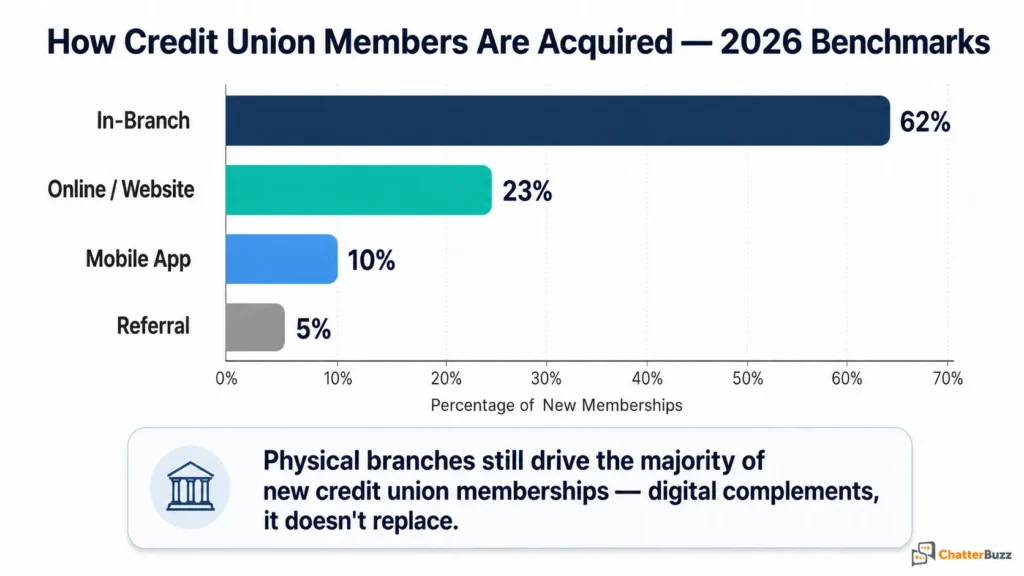
- Physical branches still drive 60%+ of new credit union memberships — digital complements them, it doesn’t replace them. Your branch strategy is a growth strategy.
- Market intelligence comes first: demographic analysis, competitive density mapping, traffic pattern data, and employer proximity analysis should drive location selection — not gut instinct.
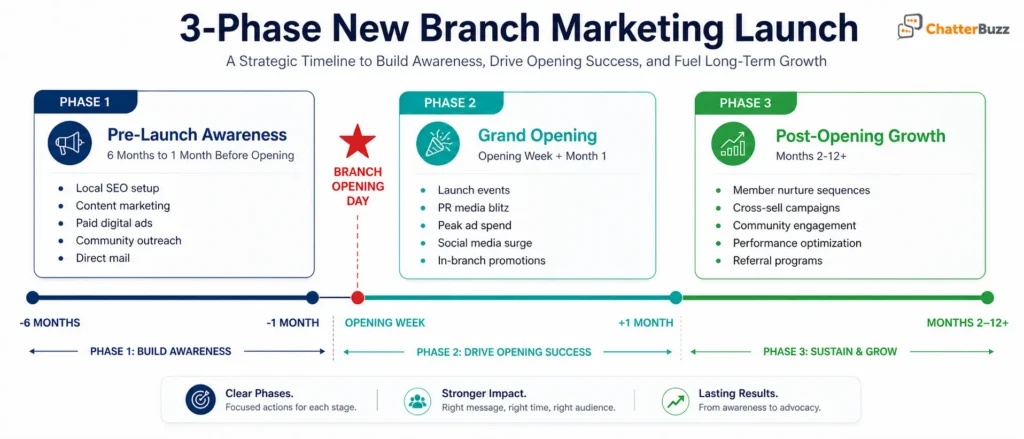
- A 3-phase marketing launch model (Pre-Launch → Grand Opening → Post-Opening Momentum) prevents the “grand opening spike, then flatline” pattern that kills most new branches.
- Local SEO must be live 3-6 months before the branch opens — Google Business Profile, local citations, location-specific landing pages, and geo-targeted content need time to index and rank.
- Post-opening is where most credit unions fail. Member onboarding sequences, cross-sell campaigns, and community engagement must be systematized — not improvised after the ribbon cutting.
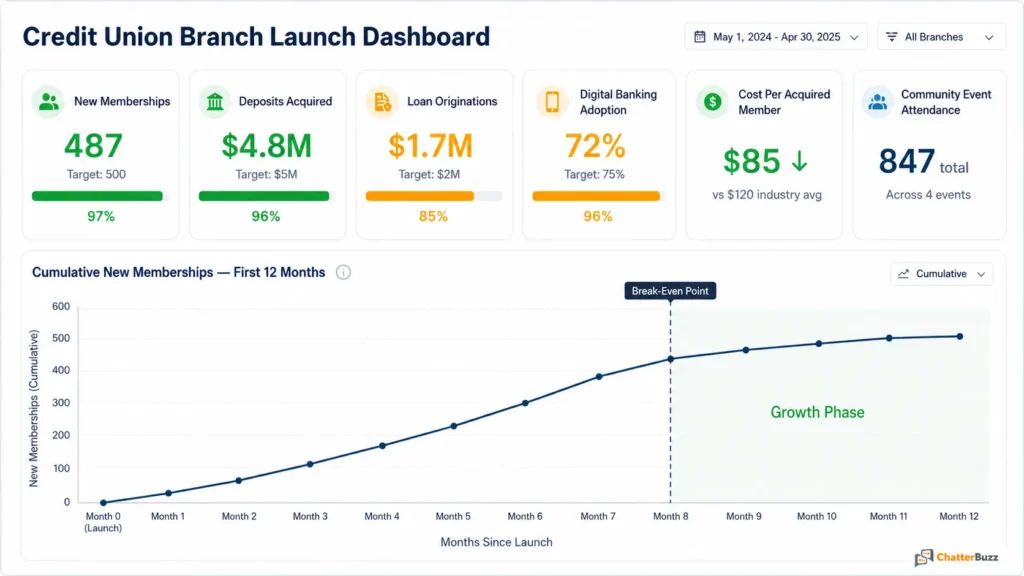
- Every dollar of branch marketing spend should be traceable to KPIs: new memberships, deposit growth, loan originations, digital banking adoption, and cost per acquired member.
Why Physical Branches Still Matter for Credit Unions
Despite the digital banking revolution, physical branches remain vital touchpoints for member relationships. A 2023 study by the NCUA found that credit unions with strategic branch networks experienced 23% higher member satisfaction scores and 18% better deposit growth compared to those focused exclusively on digital channels. Your new branch represents more than square footage—it’s a community commitment, a trust signal, and a relationship hub where members can receive personalized financial guidance. The challenge is ensuring your target market knows about it, understands its value, and becomes engaged members who drive sustainable revenue.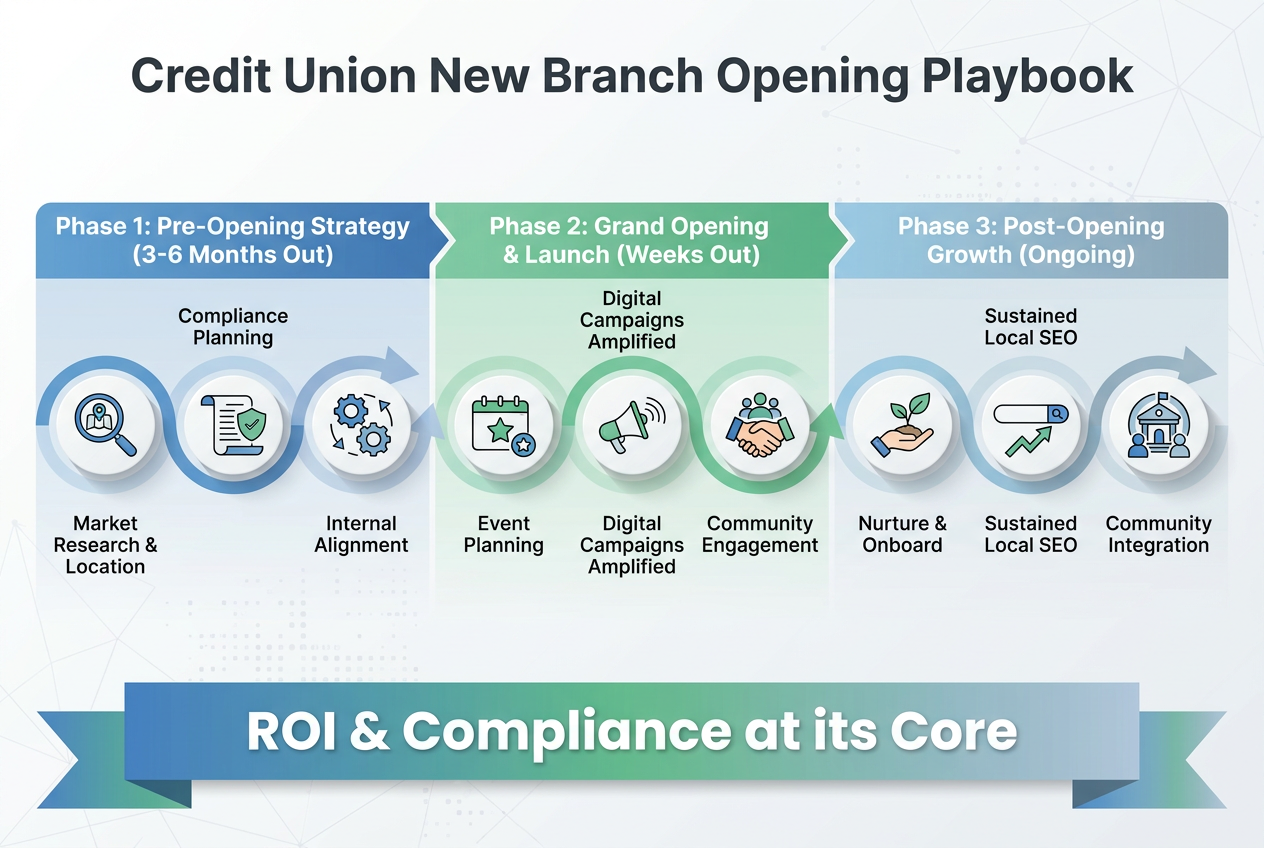
I. Strategic Foundations: Before You Break Ground
A. Market Intelligence & Location Selection: The Data-Driven Approach
The most effective branch marketing begins with the most fundamental question: are you opening in the right place? Location selection isn’t just about available real estate—it’s about identifying genuine market opportunities where your credit union can serve unmet needs and achieve sustainable growth. Key Data Points to Analyze: Population Demographics & Growth Trends Examine Census data and local economic development reports to understand population density, age distribution, and projected growth. Look for areas with demographic profiles that align with your target member personas—whether that’s young professionals, families, retirees, or a specific community you serve. Median Household Income & Economic Indicators Analyze income levels, employment rates, and housing values. These metrics help you understand the deposit potential and loan demand in the area. Don’t overlook economically distressed or underserved communities—these areas often represent significant opportunities for credit unions to fulfill their mission while capturing market share. Competitive Analysis Map existing bank and credit union locations within a 3-5 mile radius. Identify market saturation (too many competitors) versus genuine gaps in service. Pay special attention to areas where large banks have closed branches, creating opportunities for community-focused financial institutions. Accessibility & Visibility Factors Evaluate traffic patterns, proximity to retail centers, public transportation access, and parking availability. The best branch locations combine high visibility with convenient access for your target members. According to research by Vibrant Brands, credit unions that conduct comprehensive market analysis before site selection experience 34% lower member acquisition costs and 28% faster break-even timelines compared to those relying primarily on instinct or convenience.B. Compliance & Regulatory Planning: Navigating the NCUA Landscape
Before your marketing campaigns launch, ensure you have a solid regulatory foundation. The NCUA requires a comprehensive business and marketing plan for new branches, particularly for field of membership expansions or charter conversions. Essential Compliance Considerations:- Field of Membership Requirements: Verify that your new location aligns with your credit union’s field of membership designation
- Community Definition: Clearly document how you’ve defined the community and local population you’ll serve
- Financial Projections: Prepare realistic projections for membership growth, deposits, loans, and operational expenses
- Marketing Budget Justification: Detail your planned marketing expenditures with clear rationale for each channel and tactic
C. Internal Alignment & Training: Empowering Your Branch Team
Your branch staff will be the face of your new location, so their preparation is essential to marketing success. Pre-Opening Staff Development:- Product Knowledge: Ensure every team member can confidently explain your credit union’s full suite of products and their competitive advantages
- Local Market Training: Educate staff about the community they’re serving—its history, needs, demographics, and local organizations
- Member Engagement Skills: Train staff on consultative selling techniques that prioritize member needs over product pushing
- Role Definition: Clearly define responsibilities for lead capture, member onboarding, and community outreach
II. The New Branch Marketing Launch Playbook: Phased Execution for Impact
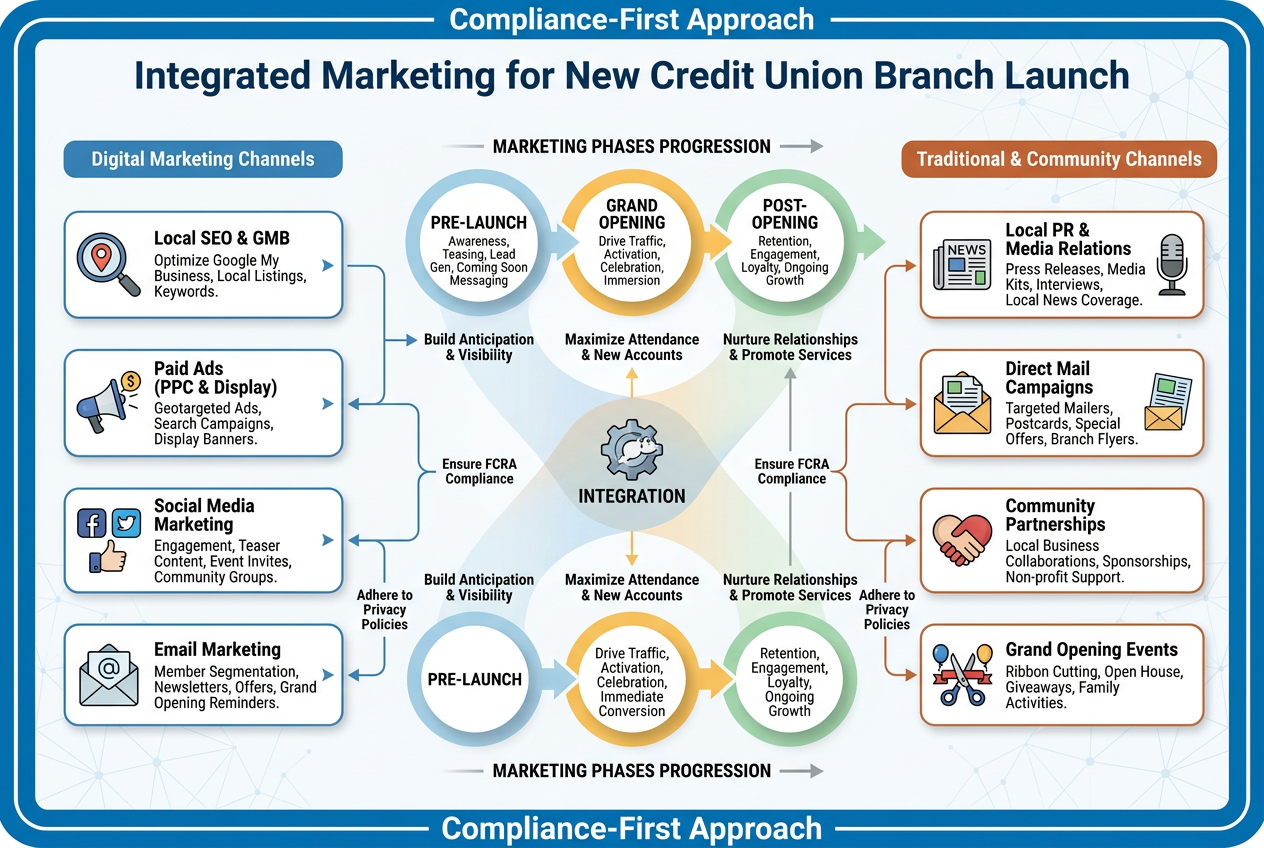
Phase 1: Pre-Launch Hype & Awareness (3-6 Months Out)
The pre-launch phase is your opportunity to build anticipation, establish your digital presence, and begin capturing early interest from prospective members.
A. Digital Infrastructure & Local SEO Dominance
Dedicated Branch landing page conversion Create a dedicated webpage for your new branch that serves as the central hub for all information. Essential elements include:- Complete address with embedded Google Maps
- Hours of operation (even if opening date is TBD, list planned hours)
- Contact information (phone number that goes live before opening)
- Services offered (be specific about unique offerings or specializations)
- Branch manager and staff introductions with photos
- High-quality photos of the location (exterior, interior when available)
- Clear calls-to-action for pre-registration or email updates
- Accurate NAP (Name, Address, Phone) information that matches your website exactly
- Primary and secondary business categories
- Complete business description highlighting your credit union’s mission and community focus
- High-quality photos of the location (add construction progress photos to build anticipation)
- Accurate opening date once confirmed
- Services offered (deposits, loans, financial counseling, etc.)
- Regular Google Posts announcing milestones and the upcoming opening
- “[Your Credit Union] [Neighborhood] branch”
- “Credit union near [Landmark/Area]”
- “Best credit union in [City/Neighborhood]”
- “[Financial Service] in [Location]”
B. Content Marketing: Storytelling Your Arrival
Content marketing allows you to control the narrative around your new branch while providing value to your community before the doors open. Blog Posts & News Announcements Publish content that builds excitement while demonstrating your community commitment:- “Announcing Our New [Neighborhood] Branch: Bringing Community Banking to [Area]”
- “Meet [Branch Manager Name]: Your Local Financial Partner”
- “Why We Chose [Location]: Our Commitment to [Community/Cause]”
- “What to Expect from [Credit Union’s] Newest Location”
- “Local Business Spotlight: [Business Name] Serves [Neighborhood] for 20 Years”
- “Community Heroes: Meet the Volunteers Behind [Local Organization]”
- “Neighborhood Guide: The Best of [Area]”
- Time-lapse footage of branch construction or renovation
- “Coming Soon” teaser videos for social media
- Video interviews with your branch manager discussing their vision for serving the community
- Virtual tours of the new space (once available)
C. Targeted Paid Digital Advertising
Paid advertising ensures your message reaches beyond your existing member base to capture new market opportunities. Google Search Ads Launch geo-targeted search campaigns that capture high-intent searchers looking for financial services in your new area. Key strategies include:- Local Intent Keywords: Bid on searches like “credit union near me,” “credit union in [neighborhood],” and “[financial product] [location]”
- Competitor Conquesting: Target branded searches for competing banks and credit unions, highlighting your superior rates, service, or community commitment
- Product-Specific Campaigns: Create ad groups for your most competitive products (e.g., “Best Auto Loan Rates in [City]”)
- Coming Soon Messaging: Use ad copy that builds anticipation: “Opening Soon in [Location] | Join [Credit Union] Today”
- Hyper-Local Targeting: Use radius targeting centered on your new branch (typically 3-10 miles depending on market density)
- Demographic Layering: Add demographic filters that match your ideal member profiles (age, income, interests, life events)
- Lookalike Audiences: Create lookalike audiences based on your best existing members to find similar prospects in your new market
- Coming Soon Creative: Use engaging visuals of your new branch with compelling copy: “Your New Community Credit Union Opens [Date] | Better Rates, Real Relationships”
- Early Adopter Offers: Promote special incentives for members who join before your grand opening
D. Community & Traditional Groundwork
Digital marketing should be complemented by high-touch, relationship-driven community engagement. Strategic Partnerships Three to six months before opening, your branch manager and marketing team should begin building relationships with:- Local Schools: Offer financial literacy workshops, sponsor programs, or establish student-run credit union branches
- Non-Profit Organizations: Partner with community service organizations aligned with your mission, offering financial education or support
- Local Businesses: Develop co-marketing opportunities, business banking relationships, and cross-promotional partnerships
- Chambers of Commerce: Join and actively participate in local business associations
- Community Events: Identify existing community events where you can establish a presence before your opening
- Write and distribute press releases to local newspapers, business journals, and community news sites
- Offer exclusive “sneak peek” interviews or tours to local media before your opening
- Position your branch manager as a local financial expert available for media commentary
- Contribute op-eds or expert columns on financial topics relevant to your community
- “Save the Date” Postcards: Send postcards to residents within your service area announcing your grand opening date
- Pre-Opening Offers: Include special incentives for members who join before or during your opening week
- Target Selection: Use demographic data to target households matching your ideal member profiles (homeowners, specific income ranges, life stage)
Phase 2: The Grand Opening Celebration & Peak Engagement (Opening Week & Month)
Your grand opening is your single biggest opportunity to create buzz, drive foot traffic, and convert prospects into members. This phase requires maximum marketing intensity across all channels.A. Event Marketing & Execution
A well-executed grand opening event serves multiple purposes: it generates immediate member acquisition opportunities, strengthens community relationships, and creates shareable content that extends your reach beyond attendees. Grand Opening Event Best Practices: Community-Centered Activities – Free financial health checks or consultations – Kid-friendly activities (face painting, balloon artists, games) – Local food vendors or food trucks – Live music or entertainment from local artists – Prize drawings and giveaways (avoid gambling-style promotions that may violate regulations) Relationship-Building Opportunities – Invite local dignitaries (mayor, city council members) for remarks or ribbon-cutting – Recognize your community partners with formal acknowledgments – Provide space for local non-profits to share information about their work – Offer branch tours led by staff members Lead Generation & Conversion – Set up account opening stations with trained staff – Offer grand opening specials (higher deposit rates, waived fees, bonus incentives) – Create a digital sign-up process for prospects not ready to open accounts immediately – Capture email addresses for follow-up marketing Shareable Moments – Photo opportunities with branded backdrops or props – Social media contest encouraging attendees to share photos with a branded hashtag – Live social media coverage throughout the event The most successful credit union grand openings balance promotional goals with genuine community celebration. Your event should feel like a neighborhood block party, not a high-pressure sales environment.B. Amplified Digital Campaigns
During the weeks leading up to and immediately following your opening, intensify your digital marketing efforts to maximize awareness and drive attendance. Social Media Acceleration- Event Pages & Promotion: Create Facebook event pages for your grand opening and promote them with paid ads targeting local audiences
- Live Streaming: Broadcast live from your event on Facebook and Instagram, showing the celebration and creating FOMO (fear of missing out) for those who couldn’t attend
- User-Generated Content: Encourage attendees to share photos and tag your credit union, then reshare the best content
- Staff Introductions: Post daily “meet the team” content featuring your branch staff in the weeks before opening
- Countdown Campaign: Create a countdown series (“5 Days Until We Open!”) with daily posts highlighting different aspects of your branch or services
- Local Lifestyle Bloggers: Share your grand opening event and document their experience
- Community Advocates: Partner with respected community leaders who can authentically endorse your credit union’s mission
- Local Business Owners: Collaborate with influential entrepreneurs who can share their positive experiences with your business banking services
C. Traditional Media Blitz
While digital channels dominate marketing conversations, traditional media still effectively reaches specific demographics and creates legitimacy for your new location. Local Radio Advertising Radio spots create frequency and reach within your local market. Strategies include:- Morning and Evening Drive Times: Target commuters during peak listening hours
- Community-Focused Messaging: Emphasize your local ownership, community commitment, and relationship approach
- Grand Opening Announcements: Promote your event with time-sensitive offers
- Station Partnerships: Consider sponsoring relevant programs (local news, sports, community events)
- Grand Opening Announcements: Full-page or half-page ads in the week before opening
- Welcome Message: Introduce your branch manager and team to the community
- Rate Comparisons: Highlight your competitive advantage on key products
- High-Traffic Routes: Target billboards along major commuter routes near your branch
- Simple Messaging: Use clear, concise messages that can be absorbed quickly (“Now Open,” “Better Banking Starts Here”)
- Directional Signage: Use smaller outdoor ads that guide drivers to your location
Phase 3: Post-Opening Momentum & Sustainable Growth (Ongoing Strategy)
The grand opening celebration ends, but your marketing work continues. Phase 3 focuses on nurturing new members, sustaining local engagement, and integrating your new branch into your credit union’s broader marketing ecosystem.A. Nurturing New Members & Driving Adoption
The first 90 days of membership are critical for building lasting relationships and maximizing member lifetime value. Deploy a comprehensive onboarding strategy that welcomes new members and helps them discover the full value of your credit union. CRM-Powered Onboarding If your credit union uses a CRM platform (like HubSpot, Salesforce, or specialized financial services CRM), automate personalized onboarding sequences that guide new members through key milestones: Week 1: Welcome & Activation – Welcome email or text with account confirmation – Guide to accessing online and mobile banking – Tutorial videos for key digital features – Invitation to download your mobile app Week 2-4: Product Discovery – Personalized product recommendations based on their initial account opening – Educational content about credit building, savings strategies, or loan options – Special offers on additional products (e.g., credit cards, auto loans) Month 2-3: Relationship Deepening – Check-in call or email from their branch – Invitation to financial counseling or planning services – Community event invitations – Referral program introduction This automated nurturing ensures consistent member engagement while freeing your small marketing team to focus on strategic initiatives. Learn more about marketing automation for financial services to maximize efficiency. Hyper-Local Content Marketing Continue creating content that serves your new community and establishes your branch as a local resource:- Local Financial Guides: “First-Time Homebuyer’s Guide to [Neighborhood],” “Small Business Resources in [Area]”
- Community Event Coverage: Blog posts or social media coverage of local events, festivals, or causes
- Member Success Stories: Share testimonials or case studies from members in your new service area (with permission)
- Seasonal Financial Tips: Localized financial advice tied to seasonal needs or local economic trends
- Website Visitors: Show display ads or social media ads to people who visited your branch page but didn’t open an account
- Event Attendees: Use custom audiences (from email lists) to target grand opening attendees with follow-up offers
- Video Viewers: Retarget people who watched your branch videos with next-step calls-to-action
- Abandoned Applications: If someone started but didn’t complete an online account application, send reminder emails or display ads
B. Sustaining Community Engagement
Your initial community partnerships should evolve into ongoing relationships that continuously strengthen your local presence. Ongoing Partnership Activities:- Financial Literacy Programs: Establish recurring financial education workshops at local schools, libraries, or community centers
- Local Sponsorships: Sponsor youth sports teams, community festivals, or charitable events
- Cause Marketing: Partner with local non-profits for campaigns that support community needs (food drives, coat collections, fundraisers)
- Chamber Involvement: Maintain active participation in local business associations, including hosting networking events at your branch
- Google Review Campaigns: Email requests for Google reviews to members who’ve had positive interactions
- Success Story Collection: Proactively ask members if you can share their stories (with proper permissions and privacy protections)
- Social Media Engagement: Encourage members to tag your credit union when they have positive experiences
- Referral Programs: Incentivize existing members to refer friends and family
C. Branch-Specific Product Promotion
Analyze your new branch’s member demographics and local market characteristics to tailor product promotions that resonate with actual needs. Data-Driven Product Marketing: If you’ve opened in an area with significant new home construction, prioritize mortgage products and first-time homebuyer education. If your location serves a business district, emphasize merchant services and business banking. If you’re in a retirement community, focus on retirement planning and wealth management services. Localized Offers Examples:- “New to [Neighborhood]? We’re New Here Too—Special Rates for New Residents”
- “Supporting [Local High School]—Student Account Special”
- “Business Banking Built for [Area] Entrepreneurs”
III. Measuring Success: KPIs & Demonstrating ROI
Marketing without measurement is hope, not strategy. Establish clear Key Performance Indicators (KPIs) that track your new branch’s performance and demonstrate the return on your marketing investment.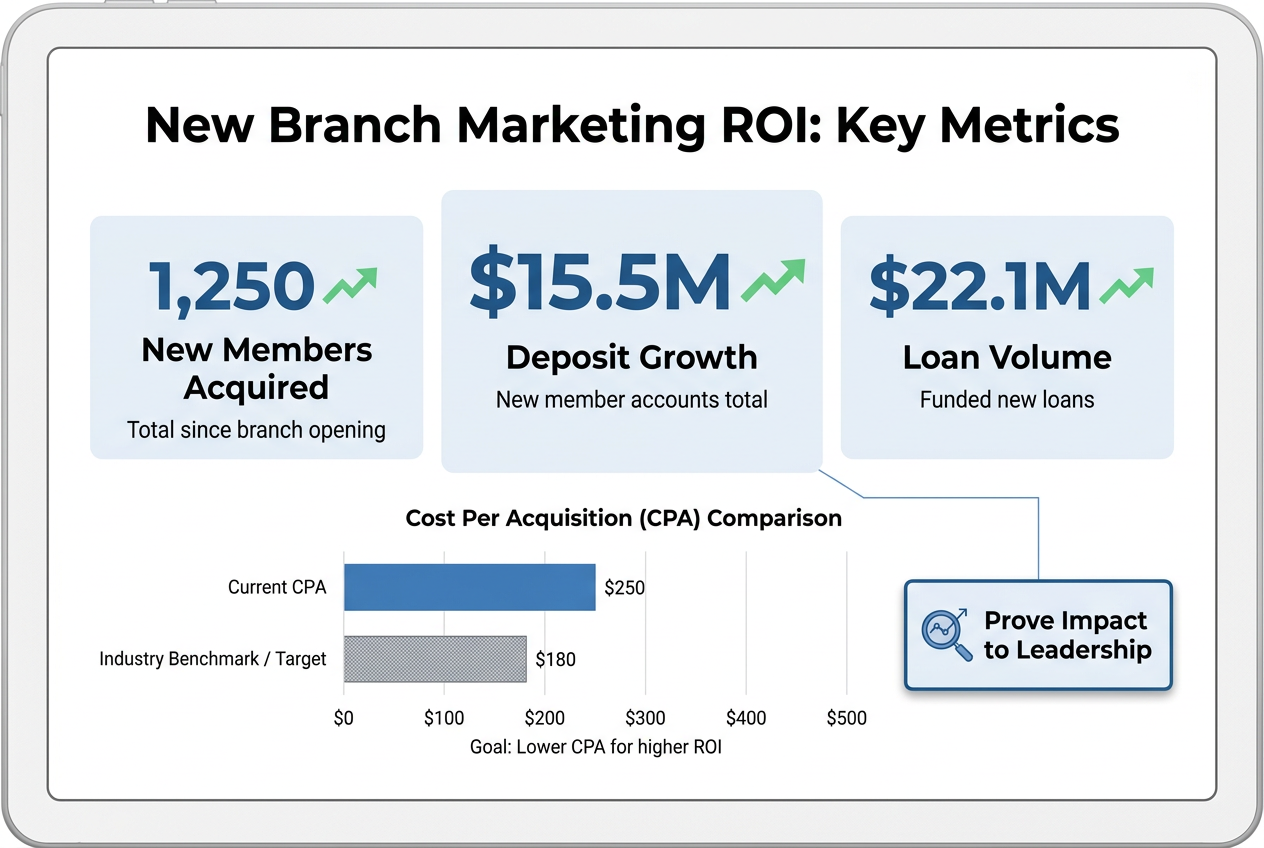
A. Key Performance Indicators (KPIs) for New Branch Launch
Membership Growth Metrics- Total New Members: Track monthly new account openings at your branch
- Member Acquisition by Channel: Attribute new members to specific marketing channels (Google Ads, social media, referrals, walk-ins, direct mail, etc.)
- Cost Per Acquisition (CPA): Calculate total marketing spend divided by new members acquired
- Member Quality: Measure not just quantity but quality—average account balances, product adoption rates, and engagement levels
- Deposit Growth: Track total deposits attributed to your new branch monthly
- Loan Volume: Measure loan originations (auto, mortgage, personal, business) from your new branch
- Product Penetration: Calculate average number of products per member
- Revenue Per Member: Track the actual revenue generated by new members over time
- Website Traffic to Branch Page: Monitor visits, time on page, and conversion actions
- Google My Business Performance: Track profile views, direction requests, phone calls, and website clicks
- Social Media Engagement: Measure reach, engagement rate, and follower growth on branch-specific content
- Email Performance: Track open rates, click-through rates, and conversion rates for branch-related campaigns
- Event Attendance: Track participation in your grand opening and subsequent community events
- Lead Generation: Measure prospective member information collected at events or through digital forms
- Community Partnership Value: Quantify member acquisitions resulting from partnership activities
- Online Review Metrics: Monitor review quantity, average rating, and sentiment
- Net Promoter Score (NPS): Survey new branch members about likelihood to recommend your credit union
- Member Retention Rate: Track percentage of members who remain active after 6, 12, and 24 months
- Online Reviews & Ratings: Monitor Google, Facebook, and other platform ratings
- Member Feedback: Collect and analyze qualitative feedback through surveys and direct conversations
B. Proving ROI to Leadership
Your CEO and CFO need to see marketing success translated into business outcomes. Present your new branch performance in terms they understand and value. Creating Effective ROI Reports: Connect Marketing Metrics to Business Results Don’t just report clicks and impressions—connect them to business outcomes:- “Our pre-launch digital campaigns generated 847 prospective member inquiries at $23 per lead, resulting in 312 new accounts with an average opening deposit of $3,450, generating $1,076,400 in deposits.”
- Industry benchmarks for member acquisition costs
- Your credit union’s historical performance at other branch openings
- The projected performance from your business plan
- Progress toward branch goals
- Marketing performance trends
- Adjustments made based on data
- Recommendations for optimization
IV. Compliance Considerations for Credit Union Marketing
Throughout your new branch marketing campaign, regulatory compliance must be foundational—not an afterthought. Credit unions operate in a heavily regulated environment, and even well-intentioned marketing can create compliance risks if not properly managed.General Compliance Principles
Truth in Advertising All marketing claims must be truthful, not misleading, and substantiated. If you advertise rates or terms, they must be accurate and currently available. Avoid vague superiority claims unless you can document them with objective data. Clear Disclosures When advertising specific products or rates, include required disclosures in clear, conspicuous language. This includes APR disclosures for loans, APY disclosures for deposits, and fee information where applicable. Fair Lending Marketing must not discriminate on the basis of protected characteristics (race, color, religion, national origin, sex, marital status, age, or receipt of public assistance). Review all marketing materials to ensure inclusive imagery and messaging. NCUA Insurance All advertising must include the official NCUA insurance disclosure: “Federally insured by NCUA” along with the official NCUA logo.Digital Marketing Compliance Specifics
Social Media Advertising Platforms like Facebook have specific restrictions on financial services advertising:- Credit, housing, and employment ads must use Special Ad Categories with limited targeting options
- All ads must comply with platform-specific disclosure requirements
- Testimonials or endorsements must include proper disclaimers
- Accurate “From,” “To,” and routing information
- Non-deceptive subject lines
- Clear identification that the message is an advertisement
- Valid physical postal address
- Clear opt-out mechanism that’s honored promptly
- Required rate disclosures (APR, APY)
- Fee schedules or clear links to fee information
- Terms and conditions
- Privacy policies
- Accessibility compliance (WCAG standards)
- Clearly disclosing data collection practices
- Obtaining proper consent before collecting personal information
- Providing opt-out mechanisms
- Implementing appropriate data security measures
Establishing Internal Review Processes
Create a marketing approval workflow that includes:- Marketing Team Review: Initial review for brand consistency, messaging effectiveness, and strategic alignment
- Compliance Review: Legal or compliance personnel review for regulatory compliance
- Final Approval: Senior leadership sign-off before public deployment
- Documentation: Maintain records of all marketing materials and approval processes
Frequently Asked Questions
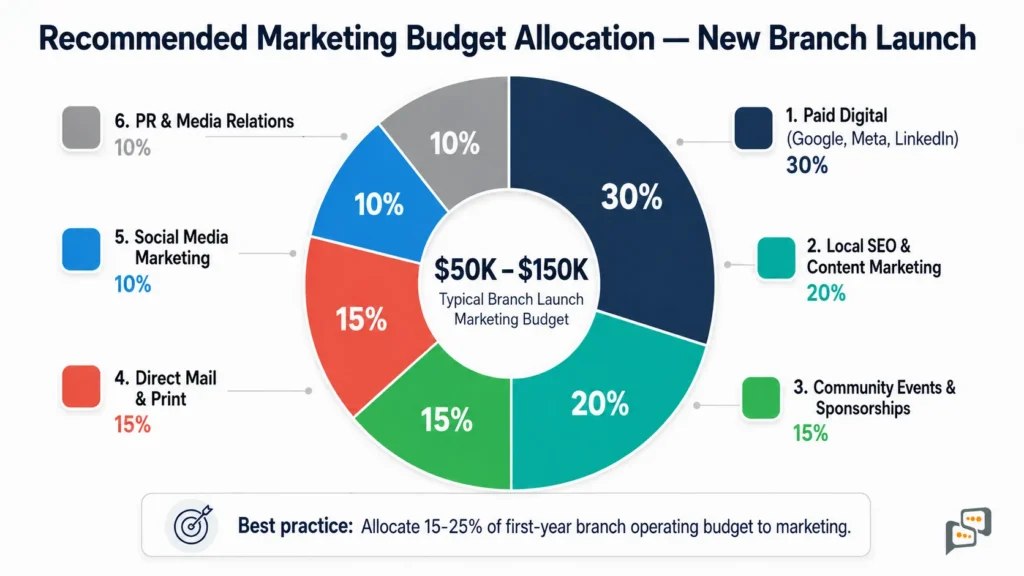
How far in advance should we start marketing a new credit union branch? Begin your marketing efforts 3-6 months before your planned opening date. This timeline allows you to establish your digital presence, build community relationships, generate pre-opening buzz, and create momentum leading into your grand opening. For smaller markets or more competitive environments, you may want to extend this timeline to 6-9 months. What marketing budget should we allocate for a new branch opening? A typical new branch opening marketing budget ranges from $50,000 to $150,000 for the first year, depending on market size, competition, and growth goals. This should cover pre-opening campaigns, grand opening event costs, ongoing digital advertising, content creation, and traditional media. Generally, allocate 60-70% to digital channels, 20-30% to traditional and community engagement, and 10-20% to your grand opening event. Your budget should be highest in the first 3-6 months, then stabilize for sustained growth efforts. How long does it take to see ROI from new branch marketing? Most credit unions begin seeing positive member acquisition within the first month of opening, but true ROI assessment requires a longer timeline. Expect to evaluate meaningful ROI at 6-12 months post-opening, when you can measure not just initial member acquisition but also product penetration, deposit growth, loan volume, and member retention. Remember that member lifetime value extends far beyond initial account opening, so your true ROI may take 2-3 years to fully materialize. Should we focus more on digital or traditional marketing for our new branch? An integrated approach typically delivers the best results. Digital marketing (local SEO, paid search, social media) excels at targeting specific demographics, measuring performance, and capturing high-intent prospects. Traditional marketing (direct mail, local radio, community events) effectively reaches older demographics, builds community credibility, and creates broad awareness. Most successful credit union branch openings allocate approximately 60-70% of budget to digital channels while maintaining meaningful traditional and community engagement investments. How do we compete with large banks that have bigger marketing budgets? Credit unions win by emphasizing what makes them different, not by trying to outspend banks. Focus your marketing on your competitive advantages: better rates, lower fees, personalized service, local decision-making, and genuine community investment. Tell authentic stories about members you’ve helped and communities you’ve served. Build deep local partnerships that banks can’t replicate at scale. Use targeted digital marketing to efficiently reach specific demographics rather than broadcasting generic messages. Your smaller size is actually an advantage—it enables relationship-based marketing that large banks struggle to deliver. What compliance considerations are most critical for new branch marketing? The most critical compliance areas include: (1) Truth in advertising—ensuring all rate and product claims are accurate and substantiated; (2) Required disclosures—including proper APR/APY disclosures, fee information, and NCUA insurance statements; (3) Fair lending—ensuring marketing doesn’t discriminate and uses inclusive imagery/messaging; (4) Data privacy—properly handling personal information collected through digital channels; (5) Platform-specific rules—following special requirements for financial services advertising on platforms like Facebook and Google. Establish an internal review process where compliance personnel review all marketing materials before publication. How can we measure the success of our community engagement and partnerships? Quantify community engagement success through both direct and indirect metrics. Direct metrics include: member acquisitions attributed to specific partnerships, event attendance numbers, leads generated from community activities, and website traffic from partner referrals. Indirect metrics include: social media engagement on partnership-related content, PR impressions and media mentions, brand sentiment in the community, and partnership longevity/renewal rates. Create unique tracking mechanisms (custom URLs, promo codes, referral questions in applications) to attribute new members to specific community initiatives. What role should our branch staff play in marketing the new location? Your branch staff should be active marketing participants, not passive recipients of leads. Empower them to: participate in community events and networking opportunities, create local content for social media (with proper approvals), build relationships with local businesses and organizations, gather member testimonials and success stories, and provide feedback on local market needs and opportunities. Your branch manager should function as a community ambassador and local spokesperson. The most successful branch marketing strategies integrate staff into marketing execution rather than treating marketing as solely the responsibility of your corporate marketing team.Your Partner in Credit Union Branch Expansion
Opening a new credit union branch is a significant investment—in infrastructure, in staff, and in your community. Your marketing strategy determines whether that investment delivers the membership growth, deposit increases, and community impact you envision. This playbook has provided you with a comprehensive framework for marketing your new branch from strategic location selection through sustained post-opening growth. But executing this strategy while managing the dozens of other responsibilities on your plate can feel overwhelming, especially for understaffed marketing teams. That’s where strategic partnership makes the difference. At Chatter Buzz, we specialize in helping credit unions navigate the complexity of new branch marketing with proven strategies that deliver measurable results. Our team understands the unique challenges of financial services marketing—the regulatory compliance requirements, the need for ROI justification, the balance between digital efficiency and high-touch community engagement. Ready to launch your new credit union branch with confidence? Contact Chatter Buzz today for a personalized New Branch Marketing Strategy Session. We’ll review your market opportunity, assess your current capabilities, and design a customized marketing plan that aligns with your budget, timeline, and growth goals. Schedule your free consultation or download our comprehensive New Branch Opening Marketing Playbook PDF for additional templates, checklists, and actionable resources you can implement immediately. Your community deserves excellent financial services. Let’s make sure they know you’re here to provide them.Need help with SEO? Explore our SEO agency services.

Noah Reed
Noah Reed is a growth marketing strategist at Chatter Buzz who helps credit unions and financial institutions grow membership, deposits, and loan volume through paid search, SEO, CRO, and full-funnel demand generation. Working within a Google Premier Partner team, he focuses on the metrics that actually move revenue, such as cost per acquired member, close rate, and lifetime value, rather than vanity metrics. Connect with Noah on LinkedIn.