
 321-341-2327
You’ve probably noticed digital marketing isn’t just an option anymore. It’s the heartbeat of modern business growth.
Whether you’re a startup trying to make your mark or an established brand ready to scale, your online presence determines how far and how fast you grow.
In this guide, you’ll learn exactly what digital marketing services are and how each channel, from SEO to social media to automation, works. Each process attracts and converts customers to build a winning strategy that delivers measurable ROI.
So, if you’re ready to stop guessing and start growing with confidence, you’re in the right place.
Book your free strategy call today and let’s map out a custom digital marketing plan designed to help your business grow smarter, faster, and stronger.
Key Takeaways:
- Digital marketing drives growth: A strategic mix of SEO, PPC, content, social media, and email turns your online presence into a measurable revenue engine.
- Integration is key: Owned, earned, and paid media work best when coordinated to create a seamless customer journey.
- Measure what matters: Tracking metrics like traffic, conversions, and ROI ensures every campaign drives real business results.
- Strategy beats guessing: A proven framework—Audit → Align → Activate → Accelerate—keeps your marketing purposeful, scalable, and high-performing.
What Is Digital Marketing?
Let’s start with the basics. Digital marketing refers to all online marketing efforts designed to attract, engage, and convert customers using digital channels.
Unlike traditional marketing (print ads, billboards, or radio), digital marketing allows you to reach your ideal audience where they already spend their time: online.
That includes your website, email inbox, social feeds, and search engines like Google. But here’s the kicker, digital marketing isn’t about being everywhere. It’s about being strategically visible where it matters most.
The Digital Ecosystem: Owned, Earned, and Paid Media
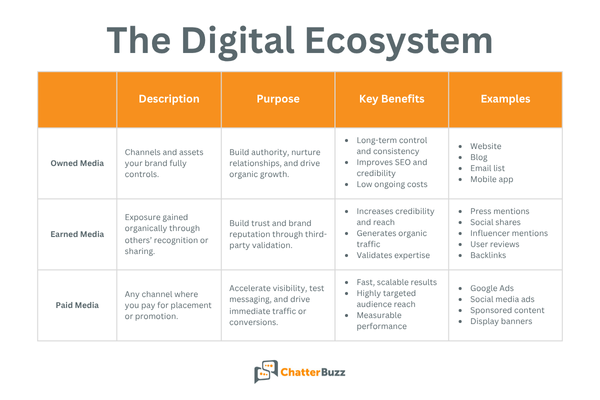
To understand how it works, think of your digital marketing ecosystem as three interconnected pillars.
Owned Media
These are assets you fully control, such as your website, blog, email list, and mobile apps. Owned media is the foundation of your digital presence because it allows you to communicate directly with your audience without interference from external platforms.
Owned media builds long-term authority and credibility. A well-structured website or blog not only educates prospects but also improves search engine rankings over time.
Example: A hotel chain creates an optimized blog with travel tips, local guides, and promotions. Over time, it attracts organic traffic, establishes thought leadership, and captures leads via email sign-ups.
Earned Media
Earned media is the recognition and exposure you get organically, through press mentions, social shares, user reviews, influencer mentions, and backlinks. Think of it as your brand’s reputation being endorsed by others.
Earned media signals trust and authority. People are more likely to engage with a brand that others recommend or share, which amplifies credibility without additional cost.
Example: A SaaS company receives a feature in a popular tech blog and sees a spike in traffic and demo requests. This type of recognition validates expertise and broadens audience reach.
Paid Media
It includes any channel where you pay to reach your audience, such as Google Ads, social media ads, display banners, or sponsored content. Paid campaigns are the accelerators; they help you get immediate visibility and test messaging at scale.
Paid media complements owned and earned channels by driving targeted traffic and generating leads faster. It’s measurable, controllable, and highly flexible, allowing you to scale what works and pause what doesn’t.
Example: An e-commerce brand launches a retargeting campaign on Facebook to re-engage users who visited product pages but didn’t purchase. The result? Increased conversions and reduced cart abandonment.
When these three work together, your brand becomes unstoppable. That’s where omnichannel marketing comes in, integrating every digital touchpoint to create a seamless experience from awareness to conversion.
Core Digital Marketing Services
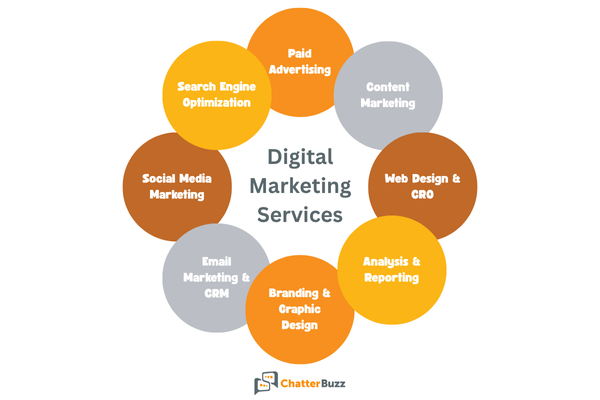
Digital marketing isn’t one-size-fits-all. Every business has a unique growth path, and the right mix of services makes all the difference.
Let’s break down the different types of digital marketing services that help businesses like yours attract, convert, and retain customers.
1. Search Engine Optimization (SEO)
Ever wondered why your competitors consistently show up on Google before you? That’s SEO in action. Search Engine Optimization is the art and science of improving your website’s visibility in search engines like Google, Bing, and Yahoo.
It ensures your ideal customers find you exactly when they’re searching for the products or services you offer. SEO isn’t just a tactic; it’s the foundation of every successful digital marketing strategy.
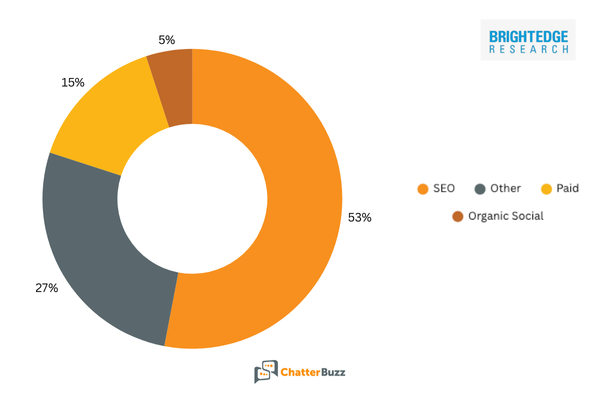
Why? Because 68% of online experiences begin with a search engine (BrightEdge). If your site isn’t ranking, your audience may never even know you exist.

Key Components of SEO
- Technical SEO: Optimize your site’s structure, speed, mobile responsiveness, and crawlability to enhance user experience and search engine indexing. For example, a slow-loading website can cause high bounce rates and lower rankings.
- On-page SEO: Align your pages, metadata, headings, and content with target keywords to make it clear to both users and search engines what your page is about. Well-optimized on-page SEO also improves engagement and time on site.
- Off-page SEO: Build high-quality backlinks, brand mentions, and social signals that boost domain authority and trustworthiness. Think of it as your website’s reputation score in the eyes of Google.
Why SEO Matters
Unlike paid campaigns, SEO drives consistent, long-term traffic without paying per click. It compounds over time; the more you invest in content, links, and optimization, the more momentum your site gains.
Common Pain Points Businesses Face
- Producing great content that no one finds
- Ranking on page 2 or beyond, where 75% of users never go
- Sudden drops in traffic due to algorithm updates
- Listening to phony SEO experts
Benefits of a Solid SEO Strategy
- Attract qualified leads organically, those actively searching for solutions you offer
- Improve conversion rates by aligning content with user intent
- Lower customer acquisition costs (CAC) compared to paid channels
- Build long-term authority that strengthens all other digital marketing efforts
Investing in SEO isn’t just about ranking; it’s about creating a foundation for sustainable online growth. When done correctly, SEO not only drives traffic but also supports your paid media, content, and social campaigns, creating a cohesive, high-performing digital ecosystem.
2. PPC & Paid Media
While SEO builds long-term visibility, pay-per-click (PPC) and paid media deliver immediate results. Think of it as a shortcut to the top of search results, social feeds, or display networks, right when your audience is actively looking for your products or services.
PPC allows you to target high-intent customers, control spend, and measure results with precision. Unlike organic strategies, paid campaigns can generate traffic, leads, and sales from day one, making them a critical component of any integrated digital marketing strategy.
Key Components of PPC & Paid Media
- Search Ads: Appear on search engines like Google or Bing when users search for your target keywords. These ads are perfect for capturing high-intent prospects actively looking for solutions.
- Display Ads: Visual ads on websites across the web that increase brand awareness and reach. Display campaigns are ideal for remarketing and keeping your brand top-of-mind.
- Social Media Ads: Platforms like Facebook, Instagram, LinkedIn, and TikTok allow precise audience targeting based on demographics, interests, and behaviors, helping you engage potential customers where they spend time online.
- Remarketing Campaigns: Re-engage users who have visited your website but haven’t converted, nudging them back with relevant offers.
Why PPC Matters
- Immediate visibility: Unlike organic traffic, paid campaigns put your brand in front of your audience instantly.
- Scalable results: You control budgets, bids, and targeting to match campaign goals.
- Measurable ROI: Every click, impression, and conversion can be tracked, providing actionable insights for optimization.
Common Pain Points
- Spending on ads that don’t convert
- Poor targeting or messaging leading to wasted budget
- Difficulty tracking ROI across multiple channels
Benefits of a Strong PPC Strategy
- Capture high-intent leads quickly, accelerating your sales cycle
- Complement SEO efforts by testing keywords and messaging that inform organic strategies
- Optimize campaigns based on real-time data, improving performance over time
- Lower customer acquisition costs by targeting the right audience with precision
Don’t just drive clicks, drive revenue. By integrating paid media with SEO, content, and CRO strategies, you can ensure every dollar spent contributes to a cohesive growth engine that strengthens your brand and maximizes ROI.
3. Content Marketing
Content marketing is more than blog posts or social media updates; it’s the backbone of meaningful engagement and lead generation. At its core, content marketing delivers value to your audience, educates them, and guides them along the buyer journey.
The goal isn’t just to create content, it’s to create content that converts.
Key Components of Content Marketing
- Blogging and Articles: Informative, SEO-optimized content that drives organic traffic and positions your brand as an authority in your industry.
- Ebooks, Guides, and Whitepapers: In-depth resources that educate your audience, capture leads, and build trust.
- Video Content: Engaging videos for social, email, and your website can increase conversions, boost dwell time, and improve brand recall.
- Infographics and Visual Content: Simplify complex ideas and make content more shareable across social media and industry networks.
- Case Studies and Testimonials: Highlight real results and success stories to establish credibility and social proof.
Why Content Marketing Matters
Content marketing fuels other digital marketing channels. SEO depends on high-quality content to rank, PPC landing pages need strong copy to convert, and social media thrives when you have shareable, valuable content.
According to Demand Metric, content marketing costs 62% less than traditional marketing and generates three times as many leads. This is proof that quality content pays off.
Common Pain Points
- Producing content that doesn’t reach or resonate with your audience
- Difficulty maintaining a consistent publishing schedule
- Challenges measuring ROI or linking content to conversions
Benefits of a Strong Content Strategy
- Attract and educate qualified leads with content tailored to their needs and stage in the buyer journey
- Support SEO and paid campaigns by providing optimized pages, lead magnets, and landing pages
- Build brand authority and trust, establishing your business as a go-to resource in your industry
- Increase conversions and retention by guiding prospects from awareness to purchase with valuable content
Don’t create content on a whim. Instead, craft strategic, integrated campaigns designed to drive traffic, engagement, and measurable revenue. Every piece of content should be designed to work with SEO, PPC, social media, and email to maximize impact across your digital ecosystem.
4. Social Media Marketing
Social media isn’t just for likes and shares; it’s a powerful channel for building relationships, driving traffic, and generating leads. With billions of users across platforms like Facebook, Instagram, LinkedIn, TikTok, and Twitter, social media allows businesses to reach their audience where they spend their time online.
Key Components of Social Media Marketing
- Organic Social Media: Posting regular, engaging content to build awareness, grow your following, and encourage interaction with your brand. Organic strategies foster trust and loyalty over time.
- Paid Social Advertising: Platforms like Facebook Ads, LinkedIn Sponsored Content, and TikTok Ads allow precise targeting based on demographics, interests, and behaviors. This helps you capture high-intent prospects quickly.
- Community Engagement: Responding to comments, messages, and mentions builds relationships and reinforces brand credibility. Social listening also uncovers opportunities and monitors sentiment.
- Influencer and Partnership Marketing: Collaborating with influencers or industry partners amplifies your reach and adds social proof to your brand.
Why Social Media Matters
Social media is a critical component of an integrated digital marketing strategy. It drives traffic to your website, supports SEO through content sharing, nurtures leads for email campaigns, and reinforces brand messaging across channels.
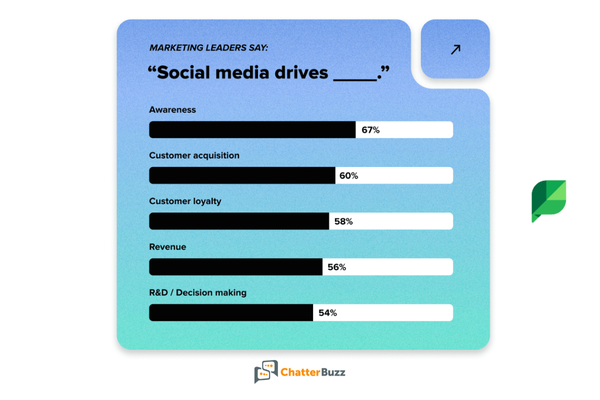
According to Sprout Social, 80% of marketing leaders plan to reallocate funds from traditional channels to social. The same report says that 67% of marketing leaders find social media drives awareness, and 60% said it boosts customer acquisition.
Common Pain Points
- Low engagement despite consistent posting
- Difficulty targeting the right audience or segmenting campaigns
- Measuring ROI and tying social media performance to revenue
Benefits of a Strong Social Media Strategy
- Boost brand awareness and reach new audiences organically and through paid campaigns
- Nurture leads and customers by keeping your brand top-of-mind
- Drive website traffic and conversions through strategically placed links, CTAs, and campaigns
- Provide actionable insights using analytics to refine campaigns and maximize ROI
Create social media strategies that don’t just attract followers; they drive measurable business results. By integrating social media with SEO, PPC, content, and email campaigns, we ensure every interaction supports your overall marketing goals and helps move prospects through the buyer journey.
5. Email Marketing & CRM Automation
Email marketing remains one of the most cost-effective ways to nurture leads, drive conversions, and retain customers. Combined with CRM automation, it allows businesses to deliver personalized, timely messages at every stage of the customer journey.
Unlike social media or paid ads, email gives you direct access to your audience’s inbox, a space you control.
Key Components of Email Marketing & CRM Automation
- Newsletter Campaigns: Keep subscribers engaged with updates, promotions, and educational content tailored to their interests.
- Drip Campaigns & Lead Nurturing: Automated sequences guide prospects through the buyer journey, delivering relevant content based on behavior and engagement.
- Transactional & Triggered Emails: Personalized messages triggered by specific actions, like abandoned cart reminders or post-purchase follow-ups, improve retention and conversions.
- Segmentation & Personalization: Target your audience by demographics, behavior, or purchase history to increase relevance and engagement.
- Analytics & Optimization: Track open rates, click-through rates, and conversion metrics to continuously refine campaigns for maximum ROI.
Why Email Marketing Matters
Email marketing and automation connect all your digital channels, reinforcing messaging from SEO, PPC, social media, and content campaigns. According to Litmus, for every $1 spent, email marketing generates $10-50 in ROI, making it one of the highest-performing channels for businesses of all sizes.
Automation ensures your campaigns are scalable, consistent, and highly personalized, creating an ongoing relationship with your audience without extra manual effort.
Common Pain Points
- Low open or click-through rates due to irrelevant content
- Difficulty segmenting or targeting leads effectively
- Challenges tracking ROI across campaigns or tying emails to revenue
Benefits of a Strong Email & Automation Strategy
- Nurture leads effectively with tailored messaging that moves prospects toward conversion
- Increase customer retention with timely updates, promotions, and follow-ups
- Lower acquisition costs by maximizing the lifetime value of existing contacts
- Support other channels by promoting content, social campaigns, and offers directly to engaged audiences
Design email and automation strategies that deliver the right message at the right time, ensuring every lead and customer receives a personalized experience. When integrated with SEO, PPC, social, and content, email marketing becomes a powerful engine for growth and revenue.
6. Branding & Graphic Design
Strong branding and compelling graphic design are more than just aesthetics; they communicate your value, build trust, and differentiate your business. In a crowded digital marketplace, a recognizable and consistent brand identity can make the difference between being noticed and being overlooked.
Key Components of Branding & Graphic Design
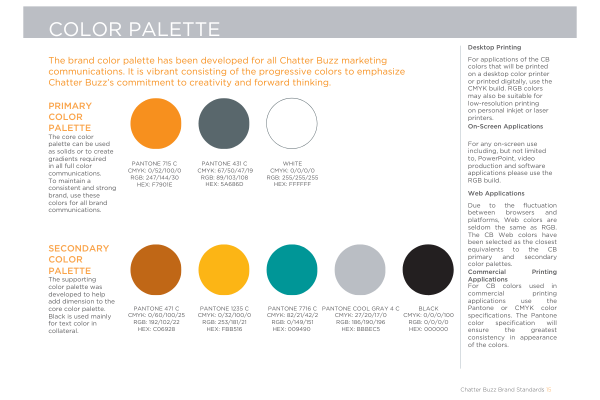
- Visual Identity: Logos, color palettes, typography, and imagery that reflect your brand personality and resonate with your audience.
- Brand Guidelines: A comprehensive style guide ensures consistency across all digital and offline channels, maintaining a professional and cohesive presence.
- Marketing Collateral: Digital assets like social media graphics, infographics, email templates, and display ads that support campaigns and enhance engagement.
- Website & Landing Page Design: Visually appealing, user-friendly designs that align with brand identity and improve conversion rates.
- Storytelling Through Design: Using visuals to convey your brand’s story and values, creating emotional connections that drive loyalty.
Why Branding & Graphic Design Matter
Effective branding builds trust, authority, and recognition, which are critical for customer acquisition and retention. According to Lucidpress, consistent branding across all channels can increase revenue by up to 23%.
Visual consistency ensures that your audience immediately recognizes your business, whether they see a social post, an email, or a paid ad.
Common Pain Points
- Inconsistent visuals across platforms that confuse or alienate customers
- Generic or outdated design that fails to reflect brand values
- Marketing campaigns that lack visual cohesion reduce engagement and conversions
Benefits of Strong Branding & Graphic Design
- Enhances brand recognition and builds credibility across all digital channels
- Supports other marketing efforts by making campaigns more visually engaging and effective
- Improves user experience and conversions on websites, landing pages, and ads
- Strengthens emotional connections with your audience, encouraging loyalty and repeat business
Craft branding and design strategies that align with your business goals and amplify your digital presence. Every design element should be carefully created to work seamlessly with your SEO, PPC, content, email, and social campaigns. By doing so, this ensures a high-impact digital ecosystem that drives growth and results.
7. Web Design & Conversion Rate Optimization (CRO)
Your website is more than just a digital brochure; it’s the central hub of your marketing ecosystem. Great web design ensures visitors have a seamless experience, while Conversion Rate Optimization (CRO) turns that traffic into leads and sales.
Together, they create a powerful engine for growth.
Key Components of Web Design & CRO
- Responsive Design: Websites must look and function flawlessly across desktops, tablets, and mobile devices. Mobile-first design is critical, as over 60% of web traffic comes from mobile.
- User Experience (UX): Intuitive navigation, clear calls-to-action (CTAs), and fast-loading pages ensure visitors can easily find what they need. Good UX reduces bounce rates and keeps users engaged.
- Landing Page Optimization: Tailored pages designed for specific campaigns or offers, optimized with strong copy, visuals, and CTAs to drive conversions.
- A/B Testing: Systematically testing elements like headlines, buttons, and forms to identify what drives the highest engagement and conversions.
- Analytics-Driven Adjustments: Using tools like Google Analytics and heatmaps to understand visitor behavior and continually refine your website for maximum impact.
Why Web Design & CRO Matter
A visually appealing, functional website builds credibility and trust, while CRO ensures your traffic translates into measurable results. According to HubSpot, businesses that regularly A/B test their pages see up to 30-40% more leads. By optimizing both design and conversions, every visitor becomes an opportunity, improving ROI across all marketing channels.
Common Pain Points
- High bounce rates or low engagement despite quality traffic
- Poorly designed pages that confuse visitors
- Campaign landing pages that fail to convert leads
Benefits of a Strong Web & CRO Strategy
- Maximizes conversions from existing traffic, reducing the need to spend more on paid ads
- Supports SEO and content marketing by improving engagement and dwell time
- Provides measurable insights to continually enhance the user experience and campaign performance
- Creates a cohesive, professional online presence that strengthens brand credibility
Design websites and implement CRO strategies that turn visitors into customers and customers into loyal advocates. By integrating web design and CRO with SEO, PPC, content, social, and email, you can create a complete, high-performing digital ecosystem that drives measurable growth.
8. Analytics & Reporting
Data is the backbone of every successful digital marketing strategy. Without analytics and reporting, you’re essentially guessing which campaigns are working and which aren’t.
Leverage analytics to track performance, uncover insights, and make data-driven decisions that improve ROI across all channels.
Key Components of Analytics & Reporting
- Website Analytics: Tools like Google Analytics measure traffic, bounce rates, session duration, and conversion rates. Understanding user behavior helps refine SEO, content, and CRO efforts.
- Campaign Reporting: Track the performance of PPC, social, and email campaigns to understand which strategies generate leads, clicks, and revenue.
- Custom Dashboards: Tailored dashboards consolidate metrics from multiple channels, providing a single source of truth for decision-making.
- Attribution Tracking: Identify which channels contribute most to conversions, helping you allocate budget to high-performing tactics.
- Regular Insights & Recommendations: Analytics isn’t just about numbers; it’s about actionable insights that guide optimizations and strategy adjustments.
Why Analytics & Reporting Matter
Analytics connects all your marketing channels, showing how SEO, PPC, content, social media, email, and CRO work together to drive results. HubSpot reports that 55% of marketers rely on data to identify their most effective strategies, 30% say it enhances ROI, and 27% find it helps them reach their target audience more efficiently.
Reporting ensures transparency and accountability, giving you confidence that every marketing dollar is well-spent.
Common Pain Points
- Inconsistent tracking across channels leads to incomplete insights
- Difficulty linking campaigns to revenue or ROI
- Overwhelming data that’s hard to interpret or act on
Benefits of Strong Analytics & Reporting
- Measure true ROI for every campaign and channel
- Identify opportunities and weaknesses quickly, enabling rapid optimization
- Make informed budget and strategy decisions that maximize growth
- Provide transparency for leadership and stakeholders
Don’t just report numbers, turn data into actionable strategies that drive growth. By integrating analytics with SEO, PPC, content, social, email, and CRO, you can ensure your marketing efforts are aligned, measurable, and designed to produce real results.
How These Services Work Together
Here’s the secret most businesses overlook: the real magic happens when your digital marketing services are fully integrated. Too often, companies treat SEO, PPC, content, social, email, branding, and CRO as separate silos. The problem?
When channels operate independently, opportunities are missed, and results are suboptimal. Integration ensures every touchpoint reinforces the other, creating a seamless customer journey from awareness to conversion. Here’s how they can work together to multiply results.
SEO
SEO drives organic traffic by helping your target audience find your website when they’re searching for solutions. It’s a long-term play that builds credibility, authority, and consistent traffic over time. Organic SEO traffic can also be retargeted through paid ads.
PPC
PPC & Paid Media capture high-intent visitors immediately. While SEO gains momentum, PPC ensures your brand appears at the top of search results or social feeds the moment prospects are looking for your product or service.
CRO
Conversion Rate Optimization (CRO) ensures that once visitors land on your website, they take action, whether that’s filling out a form, signing up for a newsletter, or making a purchase. CRO maximizes the value of every visitor, turning clicks into tangible results. High-converting landing pages optimized with CRO improve PPC ROI.
Content
Content Marketing, Email, and Social act as lead-nurturing engines. They keep your audience engaged, informed, and ready to convert again and again. Social content builds awareness, email campaigns nurture leads, and high-quality content educates prospects, reinforcing your brand’s authority at every stage.
Branding
Branding & Design tie it all together visually and emotionally, ensuring your messaging is consistent and memorable across every platform. The result? A holistic strategy where each channel strengthens the next, generating more leads, higher conversions, and greater revenue growth.
This is why at Chatter Buzz, we create custom integrated marketing plans designed for maximum impact. Request a free integrated marketing strategy call today.
Building a Digital Marketing Strategy
A strong digital marketing strategy is the difference between scattered efforts and measurable growth. Without a clear plan, even the best tactics, SEO, PPC, content, social media, email, and CRO can fall flat.
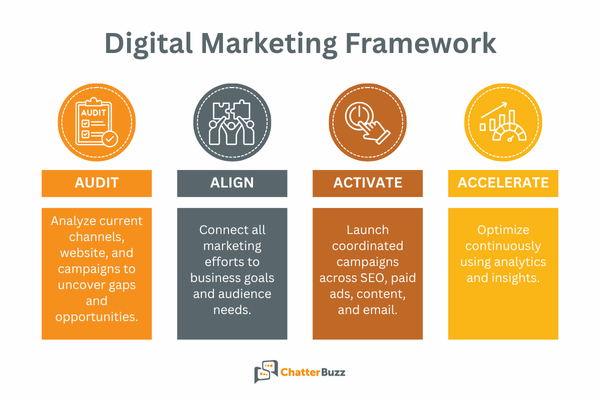
That’s why you should follow the proven “Audit → Align → Activate → Accelerate” framework to ensure every campaign delivers results.
1. Audit
The first step is understanding where you are now. Analyze your current channels, campaigns, website performance, and audience behavior to identify gaps and opportunities.
- Which channels drive the most traffic?
- Where are prospects dropping off in the sales funnel?
- Are your current keywords and SEO efforts targeting the right audience?
- How effective are your paid campaigns at generating ROI?
- Is your content engaging, shareable, and optimized for search?
- Are social media channels performing consistently, or is engagement lagging?
- How well is your website converting visitors into leads or sales?
- Are there technical issues, like slow loading speed or mobile responsiveness, affecting user experience?
- What are your competitors doing that you could adopt or improve on?
- Are there untapped opportunities for email campaigns or marketing automation?
A thorough audit provides the foundation for informed decision-making and prevents wasted effort on underperforming tactics.
2. Align
Next, align every effort with your business goals, KPIs, and audience targeting. This ensures resources are focused on initiatives that matter most.
- Define measurable goals: lead generation, sales growth, or brand awareness
- Map the buyer journey to understand what your audience needs at each stage
- Set clear KPIs to track performance and adjust strategies as needed
Alignment guarantees that marketing campaigns are not just active, they’re purpose-driven.
3. Activate
With insights and alignment in place, now you can launch campaigns across chosen channels. Whether it’s SEO, paid ads, content marketing, or email automation, every initiative is part of a cohesive strategy.
- Test different messaging and creatives to see what resonates
- Coordinate channels to reinforce each other for maximum impact
- Use marketing automation to streamline workflows and nurture leads efficiently
Activation transforms strategy into action, turning plans into measurable results.
4. Accelerate
The final step is continuous optimization. Using analytics, track performance and refine campaigns in real time to maximize ROI.
- A/B test landing pages, emails, and ad creatives
- Adjust budgets and bidding strategies based on channel performance
- Identify new opportunities to scale successful campaigns
Acceleration ensures your strategy evolves with the market, your audience, and business goals.
Pro Tips for a Winning Strategy:
- Set realistic budgets and timelines to avoid overextending resources
- Prioritize channels based on ROI potential, focus on what drives results
- Continuously measure performance and iterate campaigns to improve outcomes
With a structured, integrated approach like this, your digital marketing efforts aren’t just active, they’re strategic, measurable, and designed to grow your business.
Choosing the Right Digital Marketing Agency
Choosing a digital marketing agency isn’t just about hiring a vendor; it’s about forming a strategic growth partner. Your agency will influence everything from lead generation and brand visibility to customer engagement and revenue growth.
Picking the wrong partner can waste time, money, and opportunities, while choosing the right one can accelerate your business like nothing else.
So, how do you know which agency is the right fit? Start by evaluating these key factors.

1. Transparency in Communication
A great agency doesn’t just execute tasks; it communicates clearly and regularly. You should always know what’s being done, why it’s being done, and what results to expect.
- Are they proactive about updates and progress reports?
- Do they provide insight into strategies rather than just tasks?
- Will they answer your questions promptly and honestly?
Transparency builds trust, reduces frustration, and ensures your goals stay aligned.
2. Reporting and Analytics
You can’t improve what you don’t measure. The right agency provides real-time reporting and actionable insights.
- Do they track the KPIs that matter to your business?
- Can they show the impact of campaigns on leads, conversions, and revenue?
- Are reports easy to understand and not just a jumble of metrics?
An agency that emphasizes analytics ensures every marketing dollar is accounted for and tied directly to business growth.
3. Proven Experience Across Industries
Experience matters, but so does versatility. Agencies that have worked across different industries and business sizes bring fresh perspectives and innovative solutions.
- Have they delivered results for companies similar to yours?
- Do they understand the unique challenges of your market?
- Can they adapt strategies to fit evolving business needs?
A seasoned agency can anticipate obstacles, avoid common pitfalls, and tailor campaigns for maximum impact.
4. Ability to Provide Tailored Strategies
Every business is unique, so cookie-cutter solutions rarely work. The right agency takes the time to understand your goals, audience, and competitive landscape.
- Do they create custom campaigns rather than off-the-shelf packages?
- Can they scale strategies as your business grows?
- Are they flexible enough to adjust when market trends change?
Tailored strategies ensure your marketing efforts are aligned with your objectives and deliver measurable results.
Here are 14 questions to ask before hiring an agency or freelancer to ensure you pick the perfect partner.
At Chatter Buzz, we pride ourselves on strategic partnerships, not just service delivery. From creating integrated marketing plans to optimizing campaigns for maximum ROI, our focus is on your long-term success.
Talk to a strategist about your goals and discover how Chatter Buzz can transform your digital marketing.
Key Metrics to Measure Digital Marketing Success
You can run campaigns, publish content, and launch ads, but if you’re not tracking the right metrics, you’ll never know what’s truly working. Measuring performance isn’t just about vanity metrics like likes or impressions; it’s about understanding how your marketing impacts revenue, leads, and growth.
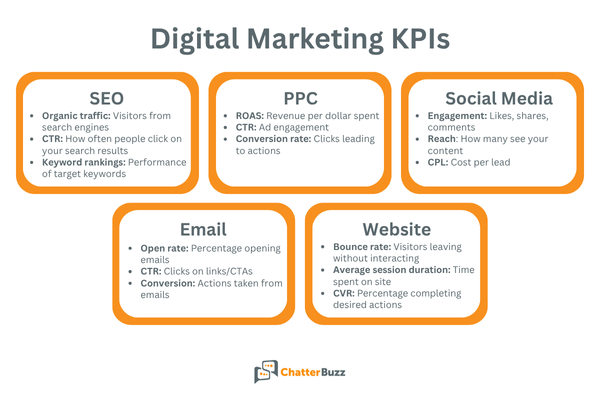
Focus on channel-specific metrics that tie directly to business outcomes.
Here’s a breakdown.
SEO Metrics
Search engine optimization is a long-term investment, and the right metrics help you see how well your content attracts and engages prospects.
- Organic traffic: Tracks the number of visitors coming to your site from search engines. Growth over time signals improved visibility
- Click-through rate (CTR): Measures how often people click on your content in search results. Higher CTR means your meta titles and descriptions are compelling
- Keyword rankings: Shows how your target keywords perform in search engines. Moving up in rankings indicates your SEO strategy is working
Remember, SEO is all about bringing in traffic, not leads. If you want leads, consider PPC.
PPC Metrics
Paid campaigns deliver immediate traffic, but success depends on monitoring ROI and efficiency.
- Return on ad spend (ROAS): Measures revenue generated for every dollar spent
- CTR: Indicates how well your ads resonate with your target audience
- Conversion rate: Tracks how many clicks lead to desired actions, like a form submission or purchase
Social Media Metrics
Social platforms build awareness, engagement, and customer loyalty, but you need data to optimize performance.
- Engagement: Likes, shares, comments, and interactions reveal audience interest
- Reach: The number of people who see your content
- Cost per lead (CPL): Evaluates the efficiency of paid social campaigns in generating leads
Email Marketing Metrics
Email remains one of the highest ROI channels when executed properly.
- Open rate: How many recipients open your emails?
- Click-through rate: Shows engagement with links and CTAs
- Conversion: Tracks how many email recipients take the desired action
Website Metrics
Your website is the hub of all digital marketing activity.
- Bounce rate: Measures visitors who leave without engaging. Lower is better.
- Average session duration: Indicates how long visitors spend interacting with your content.
- Conversion rate (CVR): Tracks the percentage of visitors completing desired actions, tying traffic to revenue.
When tracked correctly and holistically, these metrics tell the full story of how marketing efforts impact your bottom line. SEO, PPC, social, email, and web performance aren’t just numbers; they’re signals that guide optimization, improve ROI, and accelerate business growth.
Pricing & Cost Transparency
Investing in digital marketing services is not one-size-fits-all. Costs vary depending on your business size, industry, and specific growth objectives.
To make it easier to plan, we offer flexible packages tailored to different needs:
- Basic: $5,000 — Ideal for small businesses or those just starting to scale digital efforts.
- Pro: $10,000 — Perfect for businesses looking to expand reach and optimize campaigns for measurable results.
- Growth: $20,000 — Designed for companies aiming to accelerate growth with a full suite of marketing services.
- Enterprise: $40,000+ — Tailored for large organizations or complex campaigns, with full customization based on ROI targets and business goals.
Your ROI will depend on several factors, including the mix of services, execution quality, and ongoing optimization. The key is not just how much you spend, but how effectively your investment drives measurable growth that outweighs costs.
We believe in full transparency. That’s why we provide a detailed breakdown of each package, so you can see exactly what you’re investing in and how it contributes to your business objectives. Explore our packages and find the one that aligns with your growth goals.
Don’t know how to determine your business’s marketing budget? Read our full Marketing Budget guide.
FAQs
1. What’s included in digital marketing services?
Digital marketing services cover strategies to attract, engage, and convert your audience.
This typically includes:
- SEO for search visibility
- PPC and paid media for immediate traffic
- Content marketing to educate and nurture leads
- Social media management to grow awareness
- Email marketing and automation to maintain relationships
- Branding and design for a consistent identity
- Web design and CRO to optimize conversions
- Analytics and reporting to track performance
Together, these services ensure campaigns are strategic and aligned for measurable growth.
2. How long before I see results from digital marketing services?
Results depend on the channels used. Paid media, like Google Ads or social campaigns, can generate traffic and leads almost immediately, while SEO, content, and organic social growth typically take 3–6 months to build authority and produce measurable results.
A balanced strategy combines short-term wins from paid campaigns with long-term growth through organic channels.
3. What’s the ROI?
ROI varies by goals, industry, and investment, but well-executed digital campaigns often deliver 2–3x the returns of traditional marketing.
Tracking metrics like conversions, customer acquisition cost, and revenue ensures every dollar spent is measurable. Integrated campaigns across multiple channels amplify results and maximize the lifetime value of leads.
4. Do I need all channels?
Not necessarily. The most effective strategies prioritize channels that deliver the highest ROI for your audience. A B2B business might focus on LinkedIn and email, while a consumer brand may prioritize Instagram, TikTok, or Google Ads.
The goal is efficiency; invest in channels that drive meaningful results.
5. How do you measure success?
Success is measured through KPIs tied to revenue and engagement, including leads, sales, traffic, click-through rates, and conversions. These metrics allow data-driven decisions, campaign optimization, and a clear demonstration of ROI.
6. Can you work with my internal team?
Yes. Chatter Buzz integrates seamlessly with your internal marketing, sales, and operations teams. We collaborate on strategy, content, and reporting to ensure campaigns are aligned and executed efficiently.
7. How much does digital marketing cost?
Costs vary by strategy, scope, and business size. Small businesses might invest $2,000–$5,000/month, while mid-market companies may spend $5,000–$20,000/month for fully integrated campaigns.
The focus is on ROI, not just cost; well-executed campaigns generate measurable growth.
8. Can I see results faster with paid media?
Yes. Paid campaigns target high-intent audiences immediately, complementing long-term strategies like SEO.
When integrated, paid media provides short-term wins while organic channels build sustainable growth.
Boost Your Marketing With A True Marketing Partner
Digital marketing isn’t optional anymore; it’s the engine that drives modern business growth. At Chatter Buzz, we bring together award-winning expertise, data-driven strategy, and years of proven success helping businesses of all sizes thrive online.
Our team doesn’t just run campaigns; we build scalable systems that attract, engage, and convert your ideal customers. Whether you’re looking to increase leads, strengthen your brand, or accelerate ROI, we’re ready to help you get there.
Ready to grow smarter, faster, and stronger? Book a Strategy Call or Get a Free Marketing Audit today.