
 321-341-2327
Home Builder Marketing: 20 Strategies That Actually Work in 2026
The home builders I work with tell me the same thing over and over: they’re spending more on marketing than they ever have, but lead quality is getting worse and cost-per-sale keeps climbing.
It’s not because the tactics stopped working. It’s because the buyer changed.
In 2026, the people shopping for a new home do almost all their research online before they ever fill out a contact form. They’ve visited your community page three times, watched your virtual tour, read two reviews, and compared you against four competitors — before any of your sales reps know they exist. If your marketing isn’t engineered for that reality, you’re losing buyers you never even saw.
So this guide is built differently from most “home builder marketing” lists floating around. I’m grouping the 20 strategies by where they sit in the buyer’s funnel — Attract, Engage, Nurture, Close — because isolated tactics don’t win anymore. Integrated systems do. Each section includes what to actually do, how to measure it, and realistic timelines for when it pays back.
📌 Key Takeaways (Read This Before You Build Your 2026 Plan)
- ✅ 78% of new-home buyers start their search online. If your digital foundation is weak, nothing else matters — the buyer never reaches you.
- ✅ Stop treating marketing as a list of tactics. Group your spend by funnel stage (Attract, Engage, Nurture, Close) or you’ll overspend on awareness and starve conversion.
- ✅ Your website is your most important salesperson. Not your signage. Not your billboards. If the site isn’t engineered for conversion, everything upstream is wasted.
- ✅ Realtor marketing is still one of the highest-ROI channels in 2026. 88% of buyers still use an agent. Most builders under-invest here.
- ✅ Track cost per sale, not cost per lead. Lead volume is vanity. Contracts closed is the only number that matters.
Why This Matters in 2026: The Buyer Has Changed
Before we get into the 20 strategies, you need to understand what’s actually happening in the market — because every recommendation in this guide is a response to it.
Four shifts I want you to understand before you spend another dollar:
1. The buyer comes pre-educated. By the time they reach out, they’ve visited your site multiple times, read reviews, watched videos, and compared you to competitors. Your job isn’t to inform them anymore. It’s to remove the last few objections.
2. Realtors still matter — a lot. Even with Zillow, Redfin, and direct-to-builder buying platforms, the majority of new home buyers still work with an agent. Builders who ignore realtor marketing leave money on the table.
3. Trust is the new conversion lever. Reviews, testimonials, and reputation now matter more than ad creative. A builder with 50 four-star Google reviews will out-convert a competitor running twice the ad spend with a weaker reputation.
4. AI is rewriting the buyer journey. Prospects are asking ChatGPT and Google’s AI Overviews questions like “best home builder in Orlando” and making decisions based on those answers. If your content doesn’t feed those AI systems, you’re invisible to a growing share of buyers.
The Strategic Framework: 20 Strategies in 4 Funnel Stages
Here’s how I’d break the 20 strategies into the four stages of the buyer journey. You don’t need to run all of them. You need to invest in the stages where your specific funnel is weakest — which is almost always the one you’ve been ignoring.
Stage 1 — Attract (Strategies 1–10): Get found by buyers actively shopping. Website, SEO, social media, paid search, display, geofencing, third-party portals, signage, direct mail, billboards.
Stage 2 — Engage (Strategies 11–14): Build interest and trust through content and experiences. Content marketing, events, TV/radio, influencer partnerships.
Stage 3 — Nurture (Strategies 15–16): Keep leads warm until they’re ready to buy. Consumer email, realtor email.
Stage 4 — Close (Strategies 17–20): Convert interest into signed contracts. Broker presentations, partnerships, experiential marketing, referrals.
Now the playbook.
Stage 1: Attract — Get Found by Buyers Who Are Already Shopping
1. Build a Conversion-Optimized Website With a Live Home Listing Feed
This is strategy #1 for a reason. Your website is your single most important salesperson. It works 24/7, it never takes a day off, and if it’s underperforming, nothing else you do in marketing can save you.
Too many builders treat their website as a brochure. In 2026, it has to be a sales tool — engineered for conversion, indexed by Google, fast on mobile, and integrated with live inventory.
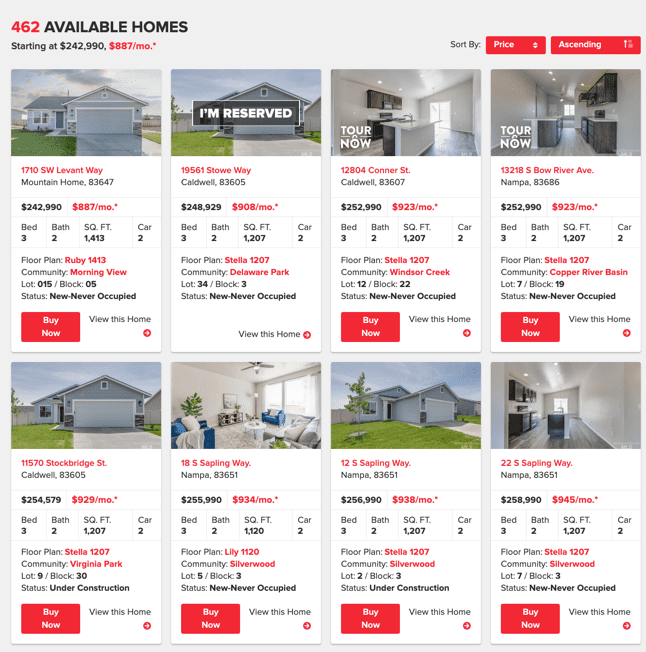
What your site needs in 2026:
- A live MLS or inventory feed that pulls real-time availability, pricing, floor plans, and photos. If a buyer sees a home listed and it’s already sold when they call, they bounce and don’t come back.
- Mobile-first design. Most traffic to home builder sites is mobile. If pages render poorly on a phone, you’ve lost the lead before they read the first headline.
- Sub-3-second page load speed. Every extra second of load time drops conversion by about 7%. Page speed is now a direct revenue lever.
- Conversion-optimized lead forms. Short forms (3–5 fields max). Clear CTAs. Progressive profiling for longer decisions. Never bury the form.
- Interactive 3D or virtual tours. Buyers expect to “walk through” a home before they schedule a visit. A static gallery of photos is 2015-era thinking.
- Schema markup for each listing. Structured data tells Google exactly what each page is about and dramatically improves your chance of showing up in rich search results.
(For more specifics on this, here’s a deeper look at how to build first-rate websites for home builders.)
How to measure it: conversion rate (visitors to leads), cost per lead by page, bounce rate, time on listing pages, and eventually cost per booked tour.
2. Claim Every Third-Party Real Estate Marketplace
Zillow, Realtor.com, Redfin, Trulia, New Home Source. Your listings need to be on all of them, with the same fresh data as your own site, and the same high-quality photos.
These portals have massive organic traffic that you’re never going to out-SEO on your own. Ignoring them to “keep traffic on our site” is a classic mistake I’ve watched builders make for years.
A few things that most builders get wrong here:
- Inconsistent pricing or availability between the portal and your site (kills credibility)
- Photos that look like they were taken on a 2018 phone
- No response strategy for inquiries coming in through the portal
- Skipping reviews — the builder profiles on these sites are as important as any listing page
How to measure it: lead volume per portal, cost per lead per portal (if paid tiers), lead quality by source, and — most importantly — contract-to-close rate by source. Not all portals produce equal buyers.
3. Dominate Local SEO (The Highest-ROI Channel Most Builders Under-Invest In)
Let me say this directly: if you’re spending $50K/month on paid ads and almost nothing on SEO, you’re running the business backwards. Paid ads stop working the day you stop paying. SEO compounds.
SEO for home builders is not “write some blog posts.” It’s a layered system that combines local search, on-page signals, content, and technical foundation.
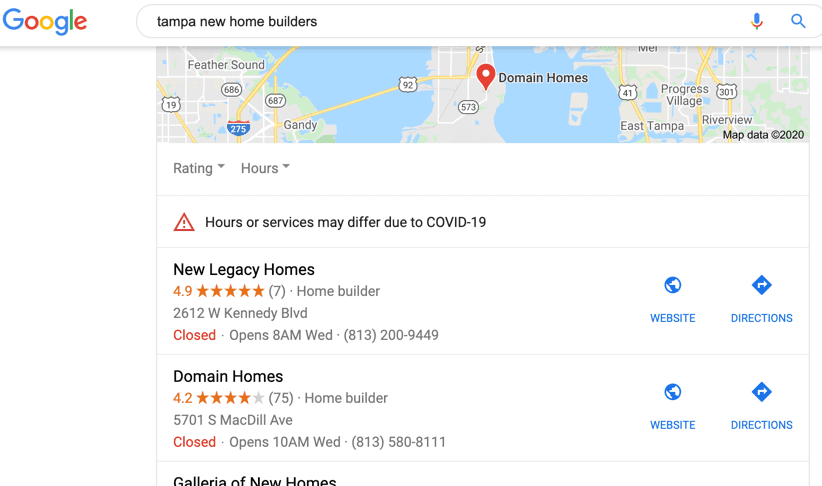
Local SEO (where most home builder searches actually happen)
Local SEO for home builders is a specific discipline. Three layers have to work together:
- Google Business Profile. Claim it, fully optimize it, add photos monthly, answer every question, solicit reviews consistently. This is the single highest-ROI SEO task for a local builder.
- Local citations. Listings in local business directories with consistent Name, Address, Phone (NAP) data. Google uses citation consistency as a trust signal.
- Neighborhood landing pages. Build a dedicated page for every community you build in. Each page should target the neighborhood name plus terms like “new homes in [neighborhood]” or “home builders near [neighborhood].”
On-page SEO
- Title tags and meta descriptions tuned for each page’s target keyword
- Clean H1 → H2 → H3 hierarchy (don’t skip levels, don’t have multiple H1s)
- Descriptive alt text on every listing photo — this is where many builders leak both SEO value and accessibility compliance
- Fast-loading images (WebP format, lazy loading)
Content-based SEO
- First-time buyer guides
- Financing FAQ pages
- Floor plan comparison content
- Local market updates (quarterly)
- Community-specific “living guides” for each neighborhood you build in
Technical SEO
- Mobile optimization (Google indexes mobile-first)
- Structured data markup for property listings, FAQs, and articles
- Clean internal linking structure and an intentional link-building strategy
- HTTPS, fast Core Web Vitals, no crawl errors
How to measure it: organic traffic to community pages, keyword rankings for “[city] home builder” and “new homes in [neighborhood],” Google Business Profile views and actions, and organic-sourced leads and contracts. SEO results compound over 4–12 months — any agency promising rankings in 30 days is lying.
4. Leverage Social Media to Build Trust and Demonstrate Lifestyle
Social media for home builders isn’t about going viral. It’s about showing up consistently in front of buyers who are researching you, building trust, and demonstrating the lifestyle of living in your community.
Platform-by-platform, here’s what actually works:
Facebook. Still the dominant platform for home builders because it’s where your buyer demographic lives. Run community-specific pages if you have multiple neighborhoods. Post a mix of listings, resident stories, construction milestones, and local community content. Facebook Groups centered around your communities are a trust-building goldmine most builders don’t touch.
Instagram. Visual storytelling. Home tours, behind-the-scenes construction, interior styling reels, model home walkthroughs. Instagram Stories and Reels outperform static posts for reach by a wide margin in 2026.
Pinterest. Underrated for home builders. Pinterest users are actively planning home-related decisions and Pinterest pins have an organic traffic tail that lasts for years. Pin your interior design, kitchen layouts, floor plans, and home staging.
TikTok and YouTube Shorts. Don’t ignore these. The younger buyer segment shopping for starter homes is there. Short, authentic, walkthrough-style video performs best — no production polish required.
Brand Voice
Your content should sound like a trusted neighbor, not a corporate real estate listing. Feature real residents, actual construction teams, and community moments. Avoid the over-polished stock-photo look — buyers see through it instantly.
Social Proof
Every positive review, every happy customer handoff, every community event should be captured and shared. Social proof is the single most underused asset most builders have.
Posting frequency I’d target: 3–5 posts per week on Facebook and Instagram, 1–2 Reels per week, 2–3 Pinterest pins per week, monthly YouTube long-form (community tour or buyer education). (For a broader take on social strategy, here’s our approach to social media marketing.)
How to measure it: engagement rate, reach, inbound DMs and inquiries, social-sourced website traffic, and assisted conversions (buyers who touched social during their research).
5. Google and Bing Paid Search (Intent-Based PPC)
Paid search is the fastest way to put yourself in front of buyers with active intent — people typing “new homes in [city]” or “home builders near me” right now. (For the broader set of channels we run alongside PPC for home builders, here’s an overview of our digital marketing services.)
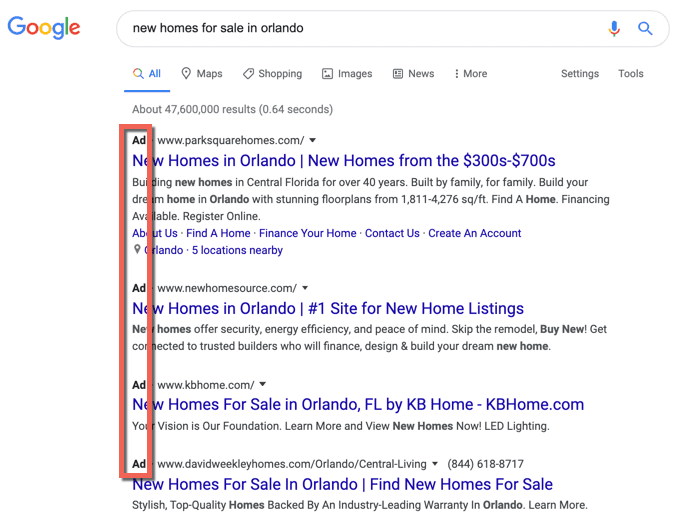
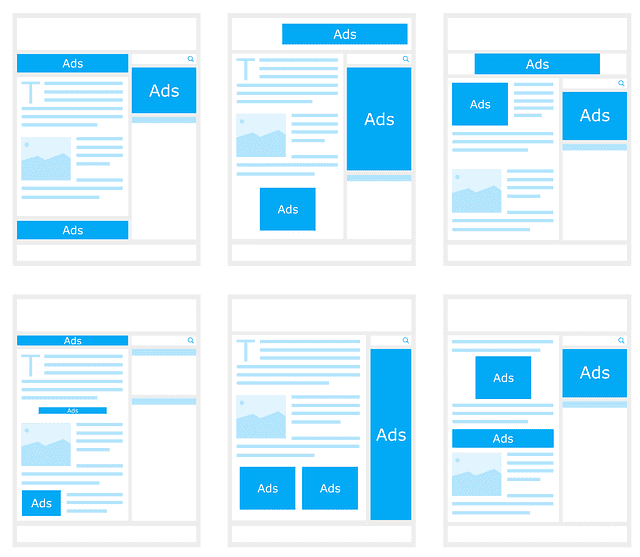
A few rules I apply with every home builder PPC account:
- Avoid Performance Max for pure lead gen. PMax is a black box that prioritizes volume over quality. For home builders, I’ve rarely seen it work better than well-structured Search campaigns with manual bidding.
- Geo-target tightly. Bidding on “home builder” nationwide wastes your budget. Target the specific cities and neighborhoods where you actually build.
- Separate brand and non-brand campaigns. Brand terms convert at 5–10x the rate of generic terms. Don’t let them share a budget.
- Send traffic to specific landing pages. Never to your homepage. Each campaign should have a landing page built for the specific community or offer.
- Negative keywords are half the job. Terms like “jobs,” “DIY,” “free,” “rental,” or “foreclosure” — exclude them aggressively.
(For a deeper take on paid search timelines, here’s how long Google Ads actually takes to work.)
How to measure it: cost per lead (CPL) — expect $50–$150 for most home builders depending on market; cost per tour booked; and, most importantly, cost per contract closed. Top performers hit 5–8% conversion from lead to contract.
6. Display and Video Advertising (Re-Engagement at Scale)
Display and video ads are not for cold buyers. They’re for the 97% of website visitors who leave without converting. That’s who you’re trying to reach.

Run retargeting display and YouTube video campaigns aimed at people who’ve visited your site, viewed a listing, or watched a community tour. These audiences convert at 2–3x the rate of cold display audiences for a fraction of the CPM.
For new audiences, video works better than static display. A 30-second community tour or resident testimonial on YouTube TrueView will outperform a banner ad almost every time.
How to measure it: view-through conversions, assisted conversions, cost per video view, and — the metric most display agencies ignore — lift in branded search volume (a good video campaign should drive a visible bump in searches for your builder name).
7. Programmatic and Geofence Advertising
Geofencing lets you draw a virtual fence around specific locations — competitor model homes, real estate offices, home and garden expos, mortgage brokerages — and serve ads only to people who physically visit those locations.
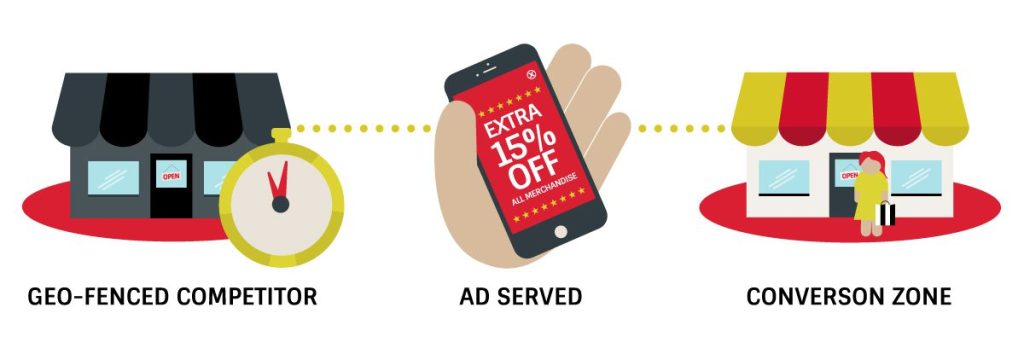
The use case I like most for builders: fence competitor model home parking lots for 30 days, then serve those visitors ads for the next 60 days showing why your community is a better fit. It’s a high-intent, low-competition audience, and the conversion rates are usually excellent.
(If you’re new to this channel, here’s a rundown on how local geofencing advertising works.)
How to measure it: walk-in attribution (visits to your model home from fenced audiences), view-through conversions, and cost per tour booked.
8. Street and Directional Signage (Still Matters)
Physical signage drives two things nothing digital can: awareness among drivers who live and work near your community, and the last-mile direction to your model home from the main road.
A few specifics:
- Directional signage at every major intersection leading to your community, refreshed at least annually
- Large-format signs at the entrance with the community name, builder logo, and a clear call-to-action (“Model home open daily — tour now”)
- Flag and banner treatments that signal active construction and open models
- QR codes on signs that drop buyers directly into a community landing page on their phone
The QR code addition is one of the most underused upgrades — it lets you attribute signage leads in a way that was impossible five years ago.
9. Direct Mail (Still Alive, Still Works — If You Do It Right)

Direct mail isn’t dead. It’s just harder to do well.
What works in 2026:
- Tight targeting. Don’t mail a whole ZIP code. Use property data to target homeowners in specific square footage ranges, ages of home, or estimated income brackets who are the right fit for your community.
- High-quality print. Thick stock, full-color, professional photography. A flimsy postcard gets tossed.
- A specific offer. “Tour this weekend and get a $5,000 design credit.” Vague branding mailers don’t move the needle.
- Integrated with digital. Follow up mailed prospects with display retargeting using their address-matched identity. This multi-touch approach converts far better than mail alone.
How to measure it: match-back (cross-reference mailed addresses against new leads and contracts) and redemption rate on the specific offer.
10. Billboard Advertising (Brand, Not Direct Response)
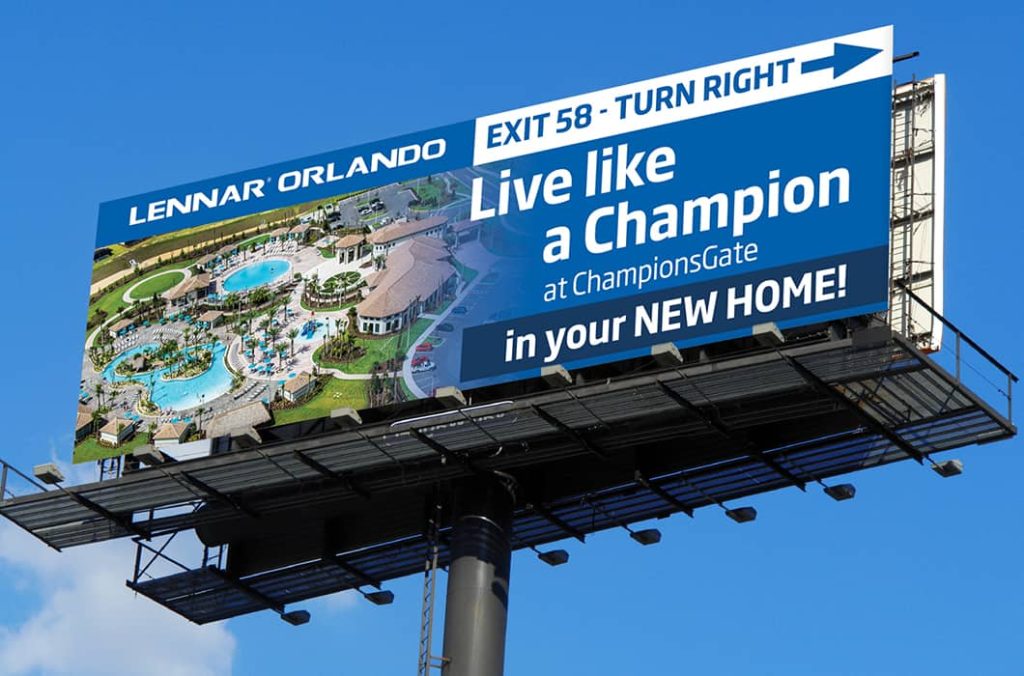
Billboards don’t generate leads directly. They generate branded search volume and brand recognition. A buyer who sees your billboard three times on their commute is far more likely to click your Google ad when they eventually start searching.
Rules I apply for billboards:
- Keep the message to six words or fewer. Drivers have about 3 seconds.
- One clear visual, one clear benefit, one easy-to-remember URL or brand name
- Only buy placements near the communities you’re actively selling — not cheap rural routes
- Measure lift in branded search and direct traffic during and after billboard flights
Stage 2: Engage — Build Interest and Trust
11. Event Marketing for Consumers and Realtors

Events are one of the last high-trust marketing channels left. They also compound: a well-run model home grand opening feeds your email list, your realtor relationships, your social content library, and your PR footprint all at once.
What to run:
- Grand openings for each new community launch
- Twilight tours — model home open houses in the evening with light food and drinks, targeting buyers who can’t visit during the workday
- Realtor-only preview events before public grand openings, giving agents an inside look and a reason to bring their clients
- First-time buyer seminars covering financing, the building process, and neighborhood life
- Community events for current residents that double as aspirational content for prospects
12. Content Creation and Marketing (This Should Be a Core Strategy, Not a Footnote)
In the old version of this post, content marketing was tactic #20 — the last thing on the list. That was a mistake. In 2026, content marketing is the foundation of your organic visibility, your authority, and increasingly your presence in AI-powered search tools.
The content that works for home builders:
Buyer Education Content
- First-time home buyer guides
- Financing and mortgage explainers (FHA vs. conventional, builder incentives, rate buydowns)
- New construction vs. existing home pros and cons
- Homebuilding process walkthroughs (what to expect month by month)
Community and Lifestyle Content
- Neighborhood guides (schools, parks, dining, commute times)
- “Life in [Community Name]” resident stories
- Local market updates
- Pet-friendly features, family-friendly features, active-adult amenities
Design and Inspiration Content
- Floor plan deep-dives
- Interior design trend pieces
- Kitchen and bathroom inspiration
- Small-space and flexible-use room ideas
Video Content (Non-Negotiable in 2026)
- Full community tours
- Individual home walkthroughs
- Construction timelapses
- Customer testimonial videos (the highest-converting video format, period)
- Drone footage of the community and surrounding area
Every piece of content should be built to do two jobs: rank organically in Google for a specific buyer question, and be discoverable by AI tools (ChatGPT, Perplexity, Google AI Overviews) through clear structure, specific data, and schema markup.
Publishing cadence I’d target: 2 long-form blog posts per month, 2–4 videos per month, and quarterly “pillar” resources like buyer guides or market reports.
How to measure it: organic traffic growth, keyword rankings, time on page, content-assisted conversions, and — increasingly important — citations in AI-generated answers for home-building queries.
13. TV and Radio Advertising (Complement, Not Core)

I’ll be direct: TV and radio are rarely the right first investment for a growth-stage home builder. The tracking is weak, the minimum budgets are high, and the attribution is murky.
But for established builders with multi-community operations and brand recognition goals, TV and radio can reinforce everything else. Use connected TV (CTV) over traditional broadcast when possible — the targeting is dramatically better and the measurement is cleaner.
When it makes sense: you’re the market leader, you’re launching a major community, or you need to drive brand recognition to improve the performance of your digital channels. Otherwise, reinvest that budget into SEO and paid search.
14. Influencer and Content Partnerships
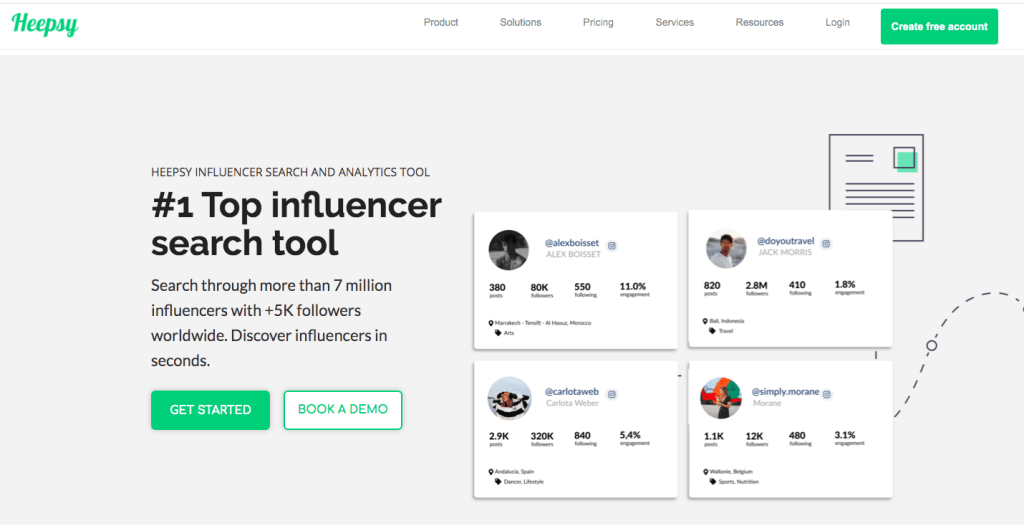
Influencer marketing for home builders isn’t about Kardashians. It’s about local creators with genuine reach in your market — home design influencers, local lifestyle bloggers, neighborhood Facebook group admins, regional real estate personalities.
What works:
- Partnering with a home design influencer to tour and stage one of your model homes
- Local lifestyle bloggers creating neighborhood guide content featuring your community
- YouTube real estate personalities doing builder reviews and comparisons
- Micro-influencer campaigns (10K–50K followers) targeting specific neighborhoods or buyer profiles
You can find the right influencers through influencer marketplaces and platforms, or just by watching who’s already talking about real estate in your market.
Stage 3: Nurture — Keep Leads Warm Until They’re Ready
15. Email Marketing to Consumers
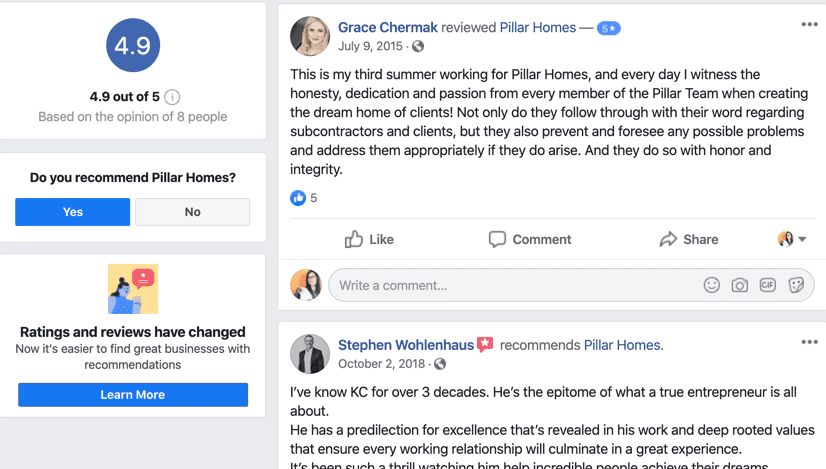
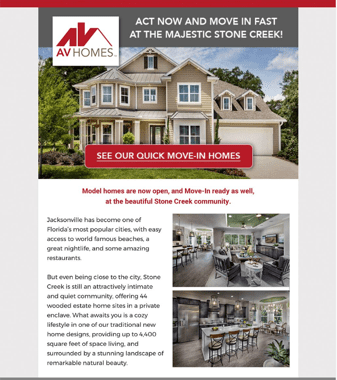
Home buying is a long decision. 8–18 months from first interest to signed contract is common. Email is the only channel that can keep you in front of that buyer consistently for that entire window without becoming annoying or burning budget.
The campaigns that work:
- Welcome series for new leads — 4–6 emails over 2 weeks introducing the builder, the community, the buying process, and financing options.
- Listing alerts — automated emails when a home matching the subscriber’s criteria comes on the market.
- Open house and event invitations — segmented by geography and expressed interest.
- Milestone nurture sequences — if a lead expressed interest 60 days ago and hasn’t toured yet, a timed sequence brings them back.
- Re-engagement campaigns for cold leads — a final “are you still house-hunting?” email with a strong offer.
The rule I apply: segment everything, personalize where possible, and never send the same email to every lead on your list. Generic email blasts are why people think email is dead. Targeted email is as effective in 2026 as it was in 2010.
(For more on email specifically, here’s our approach to email marketing.)
How to measure it: open rates (benchmark 25–35% for home builders), click-through rates (2–5%), email-attributed tours booked, and email-attributed contracts closed.
16. Email Marketing to Realtors and Brokers
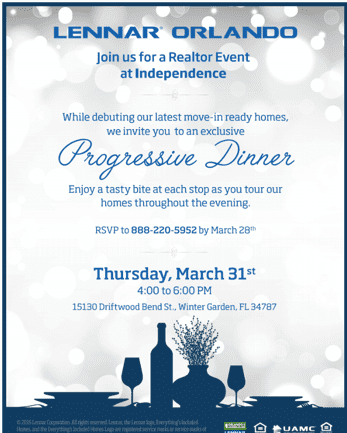
This is one of the highest-ROI channels in new home marketing, and most builders under-invest in it dramatically.
Realtors still represent the majority of new home buyers. A realtor who trusts you and understands your inventory will send you five qualified buyers a year for a decade. That’s a relationship worth protecting with real investment.
What to send:
- New community announcements — giving realtors first look before public launch
- Quarterly commission and incentive programs — structured bonuses for closed deals
- Co-marketing opportunities — MLS features, open house collaborations, joint social content
- Inventory updates — weekly or bi-weekly emails showing what’s available, what’s selling, what’s coming
- Educational content — financing updates, builder incentives, construction status, anything that helps the agent sell more effectively
Do not send realtors the same emails you send consumers. They will unsubscribe immediately.
Stage 4: Close — Turn Interest Into Contracts
17. In-Person Builder Presentations to Broker Offices

The single most effective realtor marketing play I’ve seen: a monthly rotation of 30-minute presentations at local brokerage offices.
You show up with coffee and breakfast. You present your current inventory, upcoming communities, pricing, incentives, and commission structure. You answer questions. You leave business cards and physical materials.
That presence compounds. Agents who meet you face-to-face and walk your model homes are 5–10x more likely to bring clients to you than agents who’ve only seen your MLS listings.
This is the kind of boring, un-sexy tactic that separates the builders who consistently hit their sales targets from the ones who don’t.
18. Strategic Partnerships

The partnerships that pay off for home builders (and map cleanly to how we approach real estate marketing more broadly):
- Mortgage lenders (including joint venture relationships where you can steer buyers to preferred financing)
- Title companies
- Insurance providers with builder programs
- Local employers (especially large ones) with employee home-purchase incentive programs
- Relocation services and corporate HR departments
- Furniture and home décor retailers for staged design packages
- Material suppliers for co-marketing campaigns
The best partnerships have a two-way benefit and a clear referral mechanism. A handshake deal without a tracking system will fizzle out inside six months.
19. Experiential Marketing and Event Sponsorship
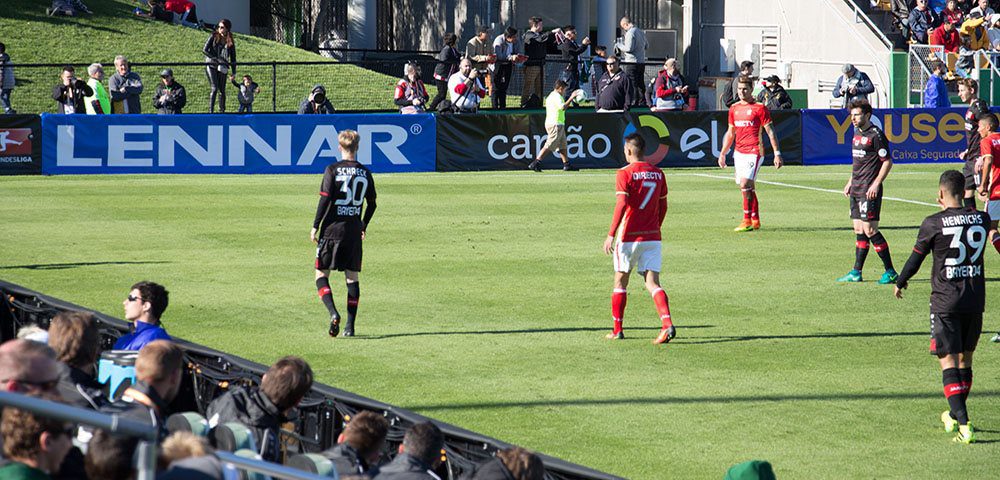
Sponsoring a local 5K or community festival puts your brand in front of the right buyers in a positive context. Experiential marketing — doing something memorable, not just displaying a logo — moves the needle even more.
One Orlando home builder I know of sponsored a local soccer league and used that presence to score more new home sales for the division. That’s the kind of creative brand-building integration that most builders never consider.
Ideas that work:
- Sponsor community events (5Ks, farmer’s markets, festivals) in the cities where you build
- Sponsor youth sports leagues with team jerseys and field signage
- Partner with charities or nonprofits on home-related causes (Habitat for Humanity, home rebuilds after disasters)
- Host your own signature annual event that people look forward to
20. Internal and External Referrals

Your happiest residents are your highest-leverage sales channel. If you’re not systematically harvesting referrals, you’re leaving one of the cheapest sources of contracts on the table.
Internal referrals (current residents)
- Formal resident referral program with a specific reward ($2,500 in home upgrades, $1,500 gift card, etc.)
- Signed at closing — make sure every buyer knows about the program the day they move in
- Quarterly reminders to existing residents
- Featured “resident referral success stories” in your email and social content
External referrals (realtors, past buyers, partners)
- Realtor commission structure that rewards repeat referrers
- Past-buyer reactivation campaigns (people who bought 5+ years ago and may be looking to upsize or relocate)
- Partner referral fees with the mortgage, title, and insurance ecosystem
A good referral program should contribute 15–25% of annual closings for an established builder. If yours is under 10%, you have a huge opportunity.
Traditional vs. Digital: How to Balance the Mix in 2026
This question comes up in every conversation I have with home builders (and with the adjacent construction marketing clients we work with): “How much should go to traditional versus digital?”
The honest answer: stop thinking about it that way. Traditional and digital don’t compete for budget — they reinforce each other. A billboard boosts branded search. A Google ad closes a buyer who first saw you on TV. Direct mail converts when paired with display retargeting.
That said, if I’m advising a growth-stage builder on a blank-sheet 2026 plan, the mix I’d typically target:
- Digital (website, SEO, paid search, social, email, display, geofence): 55–70% of total marketing spend
- Traditional (signage, direct mail, billboards, TV/radio, print): 15–25%
- Realtor and partnership programs: 10–20%
- Events and experiential: 5–10%
Your mix will shift based on where you build, how mature your brand is, and what your competitors are doing. (We work with home builders across Florida — our teams in Orlando and Tampa see the local market dynamics daily.) The point isn’t to hit these exact percentages — it’s to make sure no stage of your funnel is starving because you overspent on awareness.
Frequently Asked Questions About Home Builder Marketing
How much should a home builder spend on marketing?
Most growth-stage home builders should budget between 3% and 7% of gross revenue for marketing, depending on market competitiveness, growth goals, and whether you’re actively launching new communities. Builders in high-growth markets or launching multiple communities often push to 8–10%. Established builders in mature markets can sometimes operate efficiently at 2–3%. The better question isn’t the percentage — it’s the return. If your marketing is generating 10x return on spend, invest more. If it’s under 3x, fix the system before you scale it.
What are the best marketing channels for home builders in 2026?
The highest-ROI channels for most home builders are, in order: your conversion-optimized website, local SEO (including Google Business Profile), Google paid search for active-intent buyers, realtor and broker marketing, and email nurture for long-cycle leads. Beyond those five, the right mix depends on your market and growth stage. Geofencing, content marketing, and referral programs all outperform average when executed well.
How long does it take for home builder marketing to work?
Paid channels (Google Ads, display, geofencing) can produce leads within 30–45 days of launch. Email nurture typically shows contract impact in 60–90 days. Realtor outreach and content marketing build over 4–6 months. SEO is the longest payback — 6–12 months to meaningful rankings — but also the most durable. A realistic 12-month plan invests in short-cycle channels for immediate pipeline and long-cycle channels for compounding returns.
What’s the difference between marketing for custom builders and production builders?
Custom builders sell a longer, higher-touch decision — their marketing needs to emphasize craftsmanship, portfolio, and process trust. Content marketing, high-production video, and referrals drive the majority of custom builder sales. Production builders sell against a defined inventory and floor plan set — their marketing needs to emphasize availability, pricing, incentives, and community features. Paid search, third-party portals, and geofencing tend to dominate the production builder mix. Both need strong SEO and realtor relationships.
What metrics should home builders track?
The metrics that matter: cost per lead (CPL), cost per tour booked, cost per contract closed, lead-to-contract conversion rate, sales cycle length (first touch to signed contract), and marketing-sourced contracts as a percentage of total closings. Most builders track the first metric (CPL) religiously and ignore the others — which is why they can’t tell whether a channel is actually profitable. Lead volume is vanity. Contracts closed is the only number that matters.
Do home builders still need realtor marketing in 2026?
Yes, and arguably more than ever. Despite the rise of direct-to-builder digital platforms, the majority of new home buyers still work with a real estate agent. A realtor who trusts you and knows your inventory sends you qualified buyers for years. Builders who cut realtor marketing to shift budget into digital usually regret it within 12 months. Treat it as a core channel, not a nice-to-have.
How do I measure home builder marketing ROI?
The cleanest measurement is contract-level attribution: for every signed contract, track the first touch, the last touch, and every marketing touch in between. Divide marketing spend by contracts sourced, then compare to your average contract value and margin. Builders using CRM + marketing automation platforms can do this cleanly. Builders without that infrastructure have to approximate through lead-source tagging and sales-team attribution. Either way, don’t measure by channel in isolation — most modern home buyer journeys touch 5–10 marketing touchpoints before contract.
Where to Start (If You Can Only Do Three Things)
Most home builders I talk to don’t need 20 strategies. They need to fix the 3 that matter most and then add the rest over time.
If I had to pick the top three to prioritize for a growth-stage home builder starting fresh in 2026:
- Your website, fully engineered for conversion (live inventory, mobile-first, fast, with clear lead capture). Without this, everything else leaks.
- Local SEO plus Google Business Profile optimization. Compound, durable, and the highest-ROI long-term investment most builders under-fund.
- A real realtor marketing program — not just MLS listings, but email outreach, broker presentations, and commission structures that reward loyalty.
Fix those three. Then layer in paid search and email nurture. Then expand into content, geofencing, and the rest. That’s the build order I use with growth-stage builders, and it’s what keeps marketing from becoming a $500K line item with nothing to show for it. (For a sense of how this typically scales as a full retainer, here are our digital marketing packages.)
If you want a second set of eyes on your current marketing mix — what’s working, what’s leaking budget, and where to prioritize first — that’s the kind of work I do every day with home builders and other growth-stage companies. You can learn more about how I work as a fractional CMO here.

Shalyn Dever
Shalyn is the Founder & Chief Growth Consultant at Chatter Buzz. An engineer recruited by Google, she loves solving the most complex business growth problems and utilizing technology as solutions. She loves amazing UI/UX, out of the box SEO tactics and forward thinking paid campaigns.