
 321-236-2899
How to Create an Irresistible Offer: 7 Steps + Real Examples (2026 Update)

Most pricing pages, sales pitches, and landing pages I review have the same problem.
The product is solid. The traffic is fine. The targeting isn’t broken. What’s broken is the offer itself — the way value, risk, time, and effort are packaged for the buyer.
I’ve found that when growth-stage companies tell me their conversion rate is “stuck,” it’s almost never the campaign. It’s the offer they’re asking the campaign to sell. You can’t out-spend a weak offer, and you can’t out-design one either.
 So in this guide I’m going to give you the same framework I use when I sit down with a CEO or marketing director to fix this. The Value Equation that drives it, the seven steps to apply it, and three real examples across SaaS, professional services, and e-commerce.


 How to apply this in your business:
So in this guide I’m going to give you the same framework I use when I sit down with a CEO or marketing director to fix this. The Value Equation that drives it, the seven steps to apply it, and three real examples across SaaS, professional services, and e-commerce.
📌 Key Takeaways (Read This Before You Touch Your Landing Page)
- ✅ An irresistible offer is engineering, not creativity. Same components every time: outcome, proof, speed, effort.
- ✅ The Value Equation: (Dream Outcome × Perceived Likelihood) ÷ (Time Delay × Effort & Sacrifice). Hormozi’s formula. Proven across industries.
- ✅ Most companies optimize the wrong 20%. The 40-40-20 rule says audience and offer matter twice as much as creative.
- ✅ Strong guarantees raise conversion without raising refunds. Counterintuitive but consistent in the data.
- ✅ Your offer is not your product. The product is what you deliver. The offer is how you frame it.
What Is an Irresistible Offer?
An irresistible offer is a proposition where saying no feels irrational. Not “interesting.” Not “I’ll think about it.” Irrational. That standard is high on purpose. If your offer doesn’t make a qualified buyer feel like declining is a mistake, it’s not irresistible — it’s just average.Anatomy of a Stellar Offer
Most business owners I work with use “offer” and “product” interchangeably. They’re not the same thing, and conflating them is the first mistake. Your product is what you deliver. Your offer is how you frame the delivery — the price, the terms, the bonuses, the guarantee, the proof, the urgency. Two companies can sell the exact same product with wildly different conversion rates because one structured the offer well and the other didn’t. A great offer answers four questions in the buyer’s head simultaneously:- What outcome will I actually get?
- How likely is it to work for me specifically?
- How fast will I see something real?
- How hard is this going to be on my end?
So, What Is an Irresistible Offer in Practice?
Here’s the contrast I show clients all the time. Standard offer: “Buy our project management software. $49/month. 14-day free trial.” Irresistible offer: “Cut project delivery time by 30% in your first 60 days — or we refund 100% and pay you $500 for wasting your time. Free to start, no card required. Our team migrates your current projects at no charge, and you get 1-on-1 onboarding with a dedicated specialist.” Same product. Different offer. The second one answers every objection before the buyer can form it. That’s the work.Why Your Current Offer Isn’t Converting
Before you blame your messaging, your sales team, or your ad targeting, ask yourself the harder question: is the offer itself good enough to deserve a yes? I get pushback on this. Owners want to believe the problem is the channel, the agency, or the algorithm. Sometimes it is. More often it isn’t.The 40-40-20 Rule (And Why You’re Probably Spending Wrong)
Direct marketing legend Ed Mayer ran the numbers across thousands of campaigns and found the breakdown that drives response:- 40% is the audience you reach
- 40% is the strength of the offer
- 20% is the creative — the copy, the design, the headline
Marketing Versus Offer: A Question of Leverage
Marketing amplifies. That’s the whole job. If your offer is weak, marketing just scales mediocrity faster. Run the math yourself. Would you rather have 10,000 visitors hitting a 0.5% conversion rate, or 5,000 visitors hitting a 4%? The second scenario delivers four times the customers on half the traffic — at lower cost per acquisition. That’s the leverage a good offer creates. This is also why I push back on the instinct to fix conversion problems by buying more traffic. (For the math on what you should actually be spending on marketing in the first place, here’s how I think about calculating your digital marketing budget.)
Seven Mistakes That Kill an Offer
These are the patterns I see over and over when I audit a stuck conversion funnel:- Too complex. If the buyer needs a spreadsheet to understand the pricing tiers, you’ve already lost. Confusion kills.
- No urgency. Without a real reason to act now, the default decision is always “later.” Later usually means never.
- Weak or missing guarantee. If you won’t carry the risk, why should they? No guarantee tells the buyer that even you don’t believe in the offer.
- No proof. Claims without evidence are noise. Specific results from someone who looks like the buyer change everything.
- Features instead of benefits. “24/7 support” means nothing on its own. “Get unstuck at 2 AM the night before a launch” is what people actually buy.
- Wrong pricing psychology. Leading with price, no anchoring, no payment plan options — every one of these compresses perceived value.
- Stale offer. What worked in 2023 doesn’t necessarily work now. Buyer expectations move. Competitors evolve. Your offer has to too.
The Value Equation: The Foundation Every Good Offer Sits On
If you’ve spent any time studying high-converting offers in the last few years, you’ve seen Alex Hormozi’s name. His book $100M Offers reduced offer psychology to a simple equation that holds up across industries — SaaS, services, coaching, e-commerce, the lot. This is one of the few frameworks I use without modification, because the math is sound.The Formula
Value = (Dream Outcome × Perceived Likelihood of Achievement) ÷ (Time Delay × Effort & Sacrifice) Maximize the top. Minimize the bottom. That’s the whole game.Component 1: Dream Outcome
This is the deep transformation the buyer actually wants — not the surface-level product they think they need. Surface: “I want project management software.” Dream outcome: “I want to stop working weekends, eliminate the client complaints, and feel confident that nothing is slipping.” The bigger and more emotionally resonant the dream outcome you can credibly promise, the higher the perceived value. Pull the language straight from customer interviews, support tickets, and review screenshots — don’t invent it from your conference room.Component 2: Perceived Likelihood of Achievement
Even a massive dream outcome doesn’t move people if they don’t believe it’ll work for them. Belief is built three ways:- The solution works in general (data, testimonials)
- It works for people who look like the buyer (case studies that match their situation)
- You’ll personally make sure it works for them (onboarding, support, guarantee)
Component 3: Time Delay
Humans discount future rewards aggressively. A result in six months is psychologically worth far less than the same result in two weeks — even if rationally they’re identical. You don’t always have to compress the final outcome. You just have to compress the first proof point. Show meaningful progress in days or weeks, even if full transformation takes months.Component 4: Effort & Sacrifice
This is everything the buyer has to give beyond money — time, complexity, learning curve, lifestyle change, opportunity cost. The more effort required, the lower the perceived value, no matter how big the dream outcome. The fix is done-for-you elements: templates, automation, hands-on setup, anything that takes lift off the buyer’s plate. “Set up your marketing automation in 90 days by learning our platform” loses to “Our team sets it up in five business days. You review and approve.” Same outcome. Different effort. Wildly different conversion.
How to Create an Irresistible Offer: The 7-Step Framework
This isn’t a creative exercise. It’s an engineering one. Run these seven steps in order, and you’ll have an offer your market can’t ignore.Step 1: Pair an Attractive Solution With a Desirable Proposition
The solution solves the problem. The proposition makes saying yes feel smart, safe, and urgent. You need both.Start With the Real Dream Outcome
I’ve never had a client who interviewed 10–15 customers and didn’t immediately find a sharper way to talk about what they sell. Use this framework:- Interview 10–15 recent customers. Ask: “What were you hoping would change in your business when you bought this?”
- Read your own support tickets and cancellation reasons. The pain points are right there.
- Read competitor reviews on G2, Trustpilot, Reddit. Mine the complaints for unmet needs.
- Listen to your sales call recordings. The objections tell you what your offer isn’t addressing.
Structure Pricing to Enhance Perceived Value
Pricing isn’t just a number — it’s a positioning decision. Five things that consistently work:- Anchoring: show a higher-priced option first to make your target tier feel reasonable.
- Tiered pricing: three tiers with the middle one as your target. Most buyers go to the middle by default.
- Payment plans: “$12,000 a year” feels heavy. “$1,000 a month” feels manageable. Annual cost is the same.
- Value-first presentation: establish the transformation and the proof before introducing the price.
- Decoy options: include a deliberately less-appealing tier that makes the target tier look better by comparison.
The Value-First Approach: Give Before You Ask
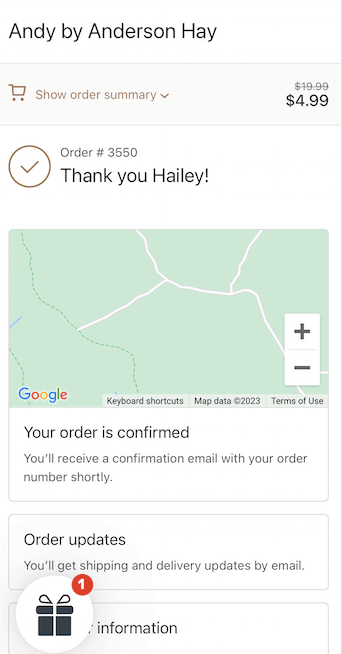
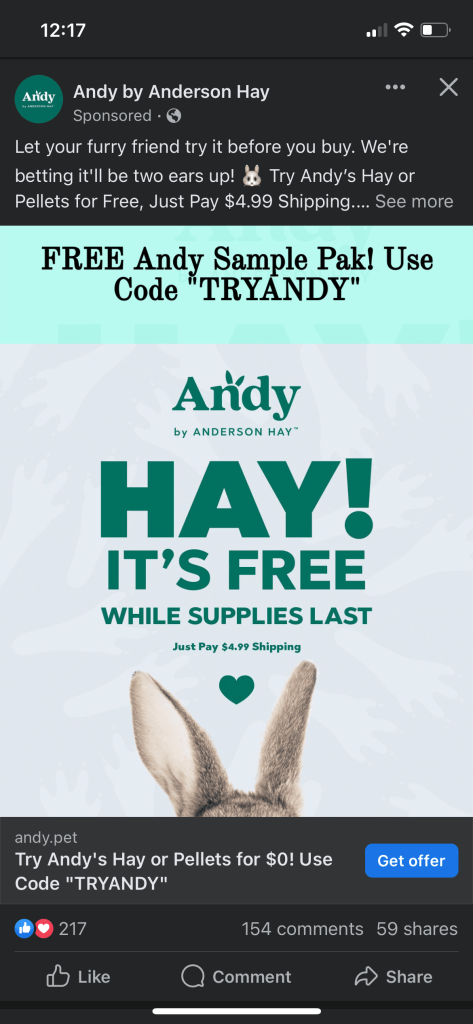
One of the strongest moves in offer design is delivering value before asking for payment. It builds trust, demonstrates capability, and triggers reciprocity — and it works in B2B as well as B2C. A clean example is Andy’s Hay, a guinea pig food subscription. They let buyers order the first box and try it for 30 days. If the pet doesn’t love it, full refund, no return required. The product is doing the selling — not the marketing copy.
How to apply this in your business:
- Free tools or calculators that deliver immediate, real value
- Extended trials — 30 to 60 days instead of the standard 14
- Freemium tiers that are genuinely useful, not crippled
- Free audits or assessments that surface specific opportunities
- Risk-free onboarding before paid subscription kicks in
Step 2: Communicate Benefits, Not Features
Features describe what something is. Benefits describe what it does for the buyer. Emotions describe how it makes them feel. Most offers stop at level one.The Three-Level Benefit Framework
Level 1: Functional benefits. The practical, tangible result. ❌ “24/7 customer support” ✅ “Get unblocked at 2 AM when you’re racing to ship before a client call” Level 2: Dimensional benefits. The ripple effects in the buyer’s life or business. ❌ “Automated reporting” ✅ “Spend six fewer hours a week on manual reports — reinvest that time in strategy or just go home earlier” Level 3: Emotional benefits. The identity transformation. ❌ “Project management tool” ✅ “Sleep at night knowing nothing is falling through the cracks. Stop apologizing for missed deadlines. Be the operator your clients brag about.” Your offer should hit all three levels. Most stop at level one and wonder why nobody’s converting.Build a Solution List That Makes the Value Obvious
This is one of the highest-leverage moves you can make in a single afternoon. List everything a buyer receives — not just the headline product, but the full scope of value. The point is to make the offer feel comprehensive. Buyers underestimate what they’re getting unless you spell it out, and the act of writing it all down often shows you that your offer is more valuable than the price suggests.Step 3: Eliminate Risk With a Strategic Guarantee
Risk is the silent conversion killer. Even buyers who love the offer hesitate at the line because of three unspoken fears:- What if it doesn’t work for me?
- What if I waste the money?
- What if I look stupid for choosing this?
Six Guarantees That Actually Work
- Unconditional money-back. “Try it risk-free for 60 days. If you’re not satisfied, full refund. No questions.” Best for products with proven retention.
- Conditional performance guarantee. “Generate 50+ qualified leads in 90 days, or we work for free until you do.” Best for results-based services.
- Better-than-money-back. “If you don’t see ROI in 90 days, full refund AND we pay you $500 for wasting your time.” For premium offers with strong track records.
- Outcome guarantee. “You’ll master [skill] in [timeframe] or we coach you 1-on-1 until you do — no extra cost.” For education and training.
- Trial plus post-trial guarantee. “Free for 30 days. If you’re unhappy in your first 60 days as a paying customer, full refund.” For SaaS and subscription.
- Partial guarantee. “If you don’t hit X result, 50% refund plus [bonus] free.” When full refund risk is too high but you still want to reduce hesitation.
Why Strong Guarantees Lower Refund Rates
This is the part most people get wrong. They assume bold guarantees mean more refunds. The data says the opposite, and there are four reasons:- Selection bias. Bargain hunters and scammers avoid bold guarantees. Serious buyers are attracted to them.
- Commitment effect. Buyers who commit under a guarantee are more invested in making it work, because they had an out and chose to commit anyway.
- Trust signal. A bold guarantee implies you have proof. That confidence becomes a self-fulfilling prophecy.
- Reduced buyer’s remorse. Buyers don’t have to justify the purchase to themselves as heavily. The escape hatch makes them less likely to want it.
Step 4: Promote Fast Results (Even When the Final Result Takes Time)
The Value Equation says time delay decreases perceived value. If your full transformation takes six months, you’re fighting human psychology — and you’ll lose unless you fix it. The fix isn’t lying about timelines. It’s reframing what counts as “results.”The Quick Win Strategy
Break the transformation into milestones. Deliver something the buyer can see, feel, or measure within days or weeks.- Original: “Build a profitable online course business in 12 months.” Reframed: “Validate your course idea and pre-sell to your first 10 students in 30 days. Then build and scale over the next 11 months.”
- Original: “Implement enterprise SEO for long-term traffic growth.” Reframed: “Identify and fix your top 10 technical SEO issues in week one (the ones competitors are exploiting right now). Then build sustainable growth over 6–12 months.”
What If You Genuinely Can’t Promise Fast Results?
Some transformations take time and shouldn’t be rushed — SEO, weight loss, culture change, deep skill development. Lying about timelines isn’t an option. Here’s how I handle it with clients:- Set honest expectations upfront. “Real SEO results take 4–6 months. Anyone promising rankings in 30 days is lying. Here’s why.” Educated buyers reward honesty.
- Show leading indicators. Technical issues fixed in week one. Content strategy finalized in week two. First optimized pages in week three. The proof is the progress, not just the final number.
- Build in engagement mechanisms. Weekly reports, monthly reviews, dashboards — anything that keeps the buyer seeing forward motion.
- Use case studies to compress perceived time. “Most clients see meaningful results in 4–6 months. Here’s what that journey looked like for a B2B SaaS we worked with.” Storytelling makes the timeline feel shorter.
Step 5: Use Social Proof to Build Belief
Even the strongest offer falls flat without credibility. Social proof answers the unspoken question: “Has this actually worked for people like me?” A few rules from running a lot of these.Specific Beats Vague — Always
“Great service, highly recommend!” does almost nothing. “We generated 127 qualified leads in 90 days, up from 23 the previous quarter — ROI was 340%” moves people. If a testimonial doesn’t have a number, a name, and a context, it’s barely working. Get the specifics.Volume Metrics Build Consensus
“Trusted by 2,800+ agencies.” “Over $1B+ in managed ad spend.” “14,000+ students across 92 countries.” Big numbers signal that the decision is safe because so many others have already made it.Match the Proof to the Buyer
If you’re selling to credit unions, show credit union results. To home builders, show home builder case studies. To $20M B2B companies, show $20M B2B companies. Generic proof is weaker proof. (For a longer take on this, here’s how we approach digital marketing for financial services — the principle of matching proof to industry holds across every vertical.)Where to Place It
Don’t bury social proof at the bottom. Integrate it everywhere:- Headline area: a volume metric or named-brand line
- After each major benefit: an inline testimonial that proves it
- Pricing section: a case study result anchored next to the price
- Guarantee section: a quote about how the guarantee gave them confidence
- Final CTA: one more authority signal or volume metric
Step 6: Update Your Offer as the Market Evolves
Your offer is not static. Market conditions shift. Competitors adapt. Buyer expectations move. Economic pressure changes what feels valuable. What worked in 2023 may already be underperforming. The companies winning right now aren’t using two-year-old offers.
Signals Your Offer Needs Refreshing
- Conversion rate declining despite consistent traffic quality
- Prospects asking “what makes you different” more often
- Competitors launching similar offers or stronger guarantees
- Customer feedback raising concerns the offer doesn’t address
- Sales team reporting more objections or longer cycles
- Market conditions shifting — economy, regulations, tech
How to Keep It Fresh
Quarterly offer audits. Every 90 days, ask: is the dream outcome still the biggest desire in the market? Are the proof points current? Have competitors launched stronger guarantees? What new objections are showing up on sales calls? Bonus rotation. Keep the core offer stable but rotate bonuses. “This month, add [new bonus] when you join” creates urgency and freshness without rebuilding from scratch. Economic adaptation. In uncertain times, lean into ROI and guarantees. In growth periods, lean into scale and speed. Same offer skeleton, different emphasis.Step 7: Test and Optimize the Performance
You’ve engineered the offer. Now you have to validate it with data.The Metrics That Matter
| Metric | What It Measures | Benchmark |
|---|---|---|
| Conversion rate | % of visitors who accept the offer | 2–5% cold, 10–25% warm, 30–60% sales-qualified |
| Average order value | $ per initial purchase | +10–30% lift after offer optimization |
| Customer LTV | Total $ per customer relationship | 3–5× your CAC |
| Cost per acquisition | Marketing spend ÷ new customers | Should drop as CVR rises |
| Sales cycle length | Days from first touch to close | 15–40% compression with stronger offer |
| Refund/cancellation rate | % who leave early | ≤ 5% — strong offers attract better-fit buyers |
What to A/B Test (One Variable at a Time)
Don’t test everything at once. Isolate one variable per experiment, run until statistical significance (usually 100+ conversions per variant minimum), implement the winner, move to the next.- Guarantee strength: 30-day vs. 60-day vs. performance-based
- Pricing presentation: annual vs. monthly vs. weekly
- Bonus inclusion: with vs. without vs. different bonus types
- Social proof placement: above vs. below pricing
- Offer framing: lead with outcome vs. lead with guarantee vs. lead with proof
- Payment options: full pay only vs. plans vs. both
- Trial length: 7 vs. 14 vs. 30 days vs. no trial with strong guarantee
The Qualitative Layer Most Companies Skip
Numbers tell you what. Qualitative tells you why. Both matter.- Exit surveys: ask non-converters “What stopped you from taking action today?”
- Customer interviews: ask new customers “What almost stopped you from buying? What finally convinced you?”
- Session recordings: Hotjar, Microsoft Clarity. Watch how people interact with the offer page.
- Sales call analysis: record calls (with permission) and identify the top three repeating objections. Address them in the offer.
Real Irresistible Offer Examples by Industry
Theory only goes so far. Here’s the framework applied to three real-world business models.B2B SaaS Example: Project Management for Agencies
Standard offer: “Streamline your projects. $99/month for up to 10 users. 14-day free trial.” Irresistible version: Headline: “Ship Client Projects 30% Faster — Or We Refund 100% and Pay You $500 for Wasting Your Time.” The complete package:- ✅ 60-day free trial, no card required
- ✅ Done-for-you migration of all current projects, clients, and files
- ✅ 1-on-1 onboarding with a specialist who knows agency workflows
- ✅ Custom workflow templates for the 12 most common agency project types
- ✅ Dedicated Slack channel for questions during the first 90 days
- ✅ Performance guarantee: measurably faster delivery in 60 days, or 100% refund + $500
- ✅ Cancel anytime with 30 days notice
- Dream outcome: ship faster, impress clients, reduce weekend work
- Perceived likelihood: trial + migration + 2,800+ agencies + performance guarantee = high
- Time delay: see improvement in 60 days
- Effort: minimal — done-for-you migration plus templates
Professional Services Example: Fractional Marketing Leadership
Standard offer: “Marketing strategy services. $8,000/month.” Irresistible version: Headline: “Get the Marketing Leadership Mid-Market Companies Can’t Afford to Build Internally — Without the $500K Build-Out Cost.” You get:- ✅ Senior marketing executive with 20+ years of experience (not a coordinator)
- ✅ Custom growth roadmap aligned to your revenue targets
- ✅ Weekly strategic calls with your leadership team
- ✅ Monthly revenue reporting tied to pipeline impact, not vanity metrics
- ✅ Vetted execution team across SEO, ad creative testing, content, and CRO
- ✅ 90-day performance guarantee: measurable pipeline growth or we work free until you get it
- ❌ $250K–$400K for a full-time CMO
- ❌ $500K–$800K to build an internal marketing team
- ❌ 6–12 months to hire, onboard, and see results
- ❌ Strategy-to-execution gaps where consultants hand off slide decks and disappear
E-Commerce Example: Specialty Pet Food Subscription
This one is real — Andy’s Hay, the guinea pig food brand referenced earlier. Standard offer: “Subscribe to monthly hay delivery. $29/month. Free shipping. Cancel anytime.” Irresistible version: Headline: “Your Guinea Pig Will Devour This Hay — Or Your First Month Is 100% Free.” The package:- ✅ Order the first box, let your pet try it for 30 days
- ✅ Zero-risk guarantee: if your pet doesn’t love it, full refund, no return required
- ✅ Freshness promise: harvested within 60 days, vacuum-sealed for nutrition
- ✅ Flexible delivery: adjust frequency, skip months, cancel anytime, no penalties
- ✅ Free hay feeder ($24 value) included with first order
- ✅ Subscribe and save: 15% off versus one-time purchase
The Pattern
Notice what every example shares:- A specific, named outcome (not a vague promise)
- A guarantee that transfers risk to the seller
- Proof with numbers and context
- Done-for-you elements that lower effort
- Bonuses that increase perceived value without lowering price
- Transparent pricing with a comparison anchor
- Some form of urgency or scarcity
Frequently Asked Questions
What is an irresistible offer?
An irresistible offer is a proposition structured so the ideal buyer perceives saying no as irrational. It combines a valuable solution with desirable terms, eliminates risk through a guarantee, proves results are likely with social proof, and minimizes effort through done-for-you delivery. The framework is built on Hormozi’s Value Equation: (Dream Outcome × Perceived Likelihood) ÷ (Time Delay × Effort & Sacrifice).What is the Value Equation?
The Value Equation is the formula buyers subconsciously use to calculate value: (Dream Outcome × Perceived Likelihood of Achievement) ÷ (Time Delay × Effort & Sacrifice). To create an irresistible offer, maximize the top variables (promise a transformational outcome and prove it’s achievable) and minimize the bottom variables (deliver results quickly with minimal buyer effort). It comes from Alex Hormozi’s $100M Offers.How do I create an irresistible offer Hormozi style?
Identify the buyer’s dream outcome — the deep transformation they actually want. Maximize perceived likelihood through guarantees, social proof, and credentials. Minimize time delay by delivering quick wins or early proof points. Minimize effort and sacrifice through done-for-you services, templates, and low-friction implementation. Then structure pricing, bonuses, and terms so the decision feels automatic.What should be in a guarantee?
Effective guarantees include: clear conditions (unconditional, performance-based, or outcome-based), a specific timeframe (30–90 days is common), a simple claim process (no hoops), what happens if triggered (refund amount or extended service), and the reasoning behind it (your confidence in the outcome). Make it prominent and honor it fast — within 24–48 hours. Strong guarantees typically increase conversions far more than they increase refunds.How long should my offer be valid?
Evergreen offers should remove time pressure but use other urgency mechanisms — limited bonuses, enrollment caps, seasonal variations. Campaign-based offers work in 5–10 days for high-intent audiences, 14–30 days for considered purchases, and 60–90 days for complex B2B decisions. The key is authentic urgency. Expiring bonuses outperform fake countdown timers.Should I discount to make my offer irresistible?
No. Price cuts aren’t what makes offers irresistible — value perception is. Discounting often decreases perceived value and attracts price-sensitive buyers who churn quickly. Add bonuses, extend guarantees, include done-for-you services, or improve payment terms instead. If you do discount, frame it as a reward for fast action rather than as desperation.How do I know if my offer is working?
Track conversion rate first. For cold traffic, 2–5% is good; for warm leads, 10–25%; for sales-qualified prospects, 30–60%. Also monitor average order value, lifetime value, refund rate, and time to decision. Qualitative signals matter too: are buyers referring others, are sales conversations getting easier, are objections decreasing? Give it 90 days and 500+ visitors before making major changes.The Real Question Isn’t Whether to Optimize Your Offer
It’s whether you can afford not to. The companies winning in your market right now aren’t necessarily the ones with the best products. They’re the ones with the best offers — engineered to make the buying decision feel inevitable. Audit yours against the Value Equation. Pick one element to improve first — usually the guarantee or the proof. Test it with split traffic for 60 days. Measure, learn, iterate. If you’d like a second set of eyes on your current offer and the marketing system around it — what’s working, what’s leaking, where executive-level strategy could move the number — that’s the kind of work I do every day with growth-stage companies. You can learn more about how I work as a fractional CMO here.Need help with SEO? Explore our SEO agency services.
Hailey Ingeman
Hailey Ingeman is an SEO copywriter at Chatter Buzz. She uses her strong creative writing skills and SEO expertise to draw in organic traffic. Hailey loves to write engaging copy that inspires leads to become paying customers.