
 321-236-2899
We’ve talked to a lot of B2B founders from varying industries, and a lot of them have said outbound just isn’t cutting it anymore.
Week after week, more teams are finding the same thing… cold outreach was getting colder, ad costs were rising, and sales cycles were stretching longer than ever.
Then they began inbound marketing, and everything changed. Companies that shift to a structured inbound strategy generate higher-quality leads, build trust faster, and create a content engine that fuels pipeline growth month after month.
And now it’s your turn.
In this guide, you’ll learn exactly what inbound marketing is, how it works, and how B2B brands can use modern inbound methodology to attract, engage, and convert their ideal customers.
You’ll also see how Chatter Buzz helps teams build scalable inbound ecosystems that blend content, automation, SEO, and data into one predictable growth machine.
Ready for a real, sustainable pipeline? Request an inbound growth strategy session today.
Key Takeaways:
- Inbound pulls, not pushes: Attract high-quality prospects with helpful content and relevant digital experiences instead of cold outreach.
- Content fuels growth: Blogs, guides, webinars, videos, and case studies educate buyers and build trust throughout the funnel.
- SEO ensures discoverability: Optimized content and technical SEO help your audience find you when they’re actively searching.
- Automation scales impact: Segmented nurture tracks, workflows, and lead scoring move prospects efficiently through the buyer journey.
- Data drives optimization: Track MQLs, SQLs, conversion rates, and revenue sourced from inbound to continuously improve performance.
What Is Inbound Marketing?
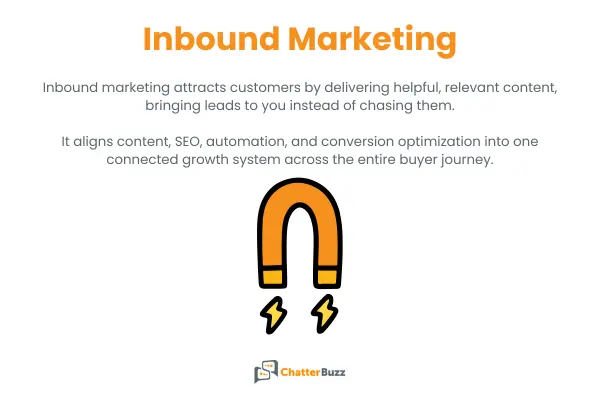
Inbound marketing is a value-first growth methodology that attracts customers by creating helpful content and relevant digital experiences, rather than interrupting them with ads, cold calls, or pushy outreach.

Instead of chasing leads, inbound brings them to you.
At its core, inbound marketing is built on one powerful idea: Your audience is already searching for answers, and your brand should be the one providing them.
That’s why inbound marketing focuses on:
- Content marketing that educates
- SEO strategy that helps buyers find you
- Marketing automation that nurtures leads
- Conversion optimization that turns traffic into revenue
- Lifecycle content that supports prospects across every stage
Inbound isn’t just a marketing strategy; it’s a growth system that connects marketing, sales, and customer success into one streamlined engine.
According to Zipdo, inbound marketing generates about 54% more leads than traditional outbound strategies while costing roughly 62% less per lead.
The Inbound Methodology
HubSpot popularized the three-stage inbound framework, Attract, Engage, Delight, a proven model that guides prospects from first touch to loyal customers.
Each stage plays a strategic role in building trust, delivering value, and creating a seamless buyer experience.
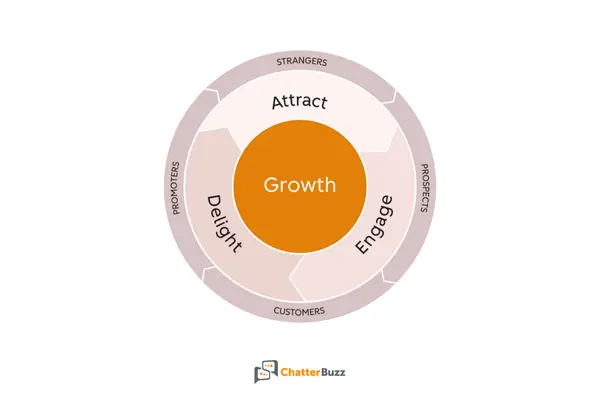
1. Attract: Pull the Right People In
The goal of the Attract stage is simple: get in front of buyers who are already searching for answers. Instead of interrupting audiences with ads or cold outreach, inbound attracts visitors through high-value, educational content that positions your brand as the trusted expert.
- SEO
- Blogs & articles
- Video content
- Thought leadership
- Organic social posts
- Paid amplification
The goal isn’t volume, it’s relevance. Inbound brings in visitors who are far more likely to become qualified leads because they self-select based on interest and need.
2. Engage: Turn Interest Into Leads
Once you attract the right audience, the next step is to convert them. The Engage stage focuses on transforming anonymous visitors into real leads through value-driven offers and frictionless experiences.
- Landing pages
- Lead magnets
- Smart form
- Conversational marketing tools
- Email follow-ups
- Personalized website experiences
This stage is all about creating mutual value. Your prospect gets something useful, knowledge, tools, and insights, and in exchange, you gain the information needed to nurture the relationship.
3. Delight: Turn Customers Into Promoters
Inbound doesn’t end when a deal closes; in fact, that’s where the most powerful phase begins.
The Delight stage ensures that customers feel supported, informed, and valued long after the contract is signed. This is how you turn clients into loyal advocates who refer, renew, and expand.
- Onboarding content
- Automated welcome and training sequences
- Customer success check-ins
- Educational emails
- Satisfaction surveys and feedback loops
- Upsell and cross-sell content
- Review generation
When clients have a great experience, they leave positive reviews, share testimonials, and recommend your brand, which, in turn, attracts more qualified buyers.
How Inbound Works Across Teams
Inbound touches every revenue function:
- Marketing creates content and drives traffic
- Sales receives nurtured, educated leads
- Customer success boosts retention and upsell opportunities
Tools like HubSpot, Salesforce, Marketo, Google Analytics, Google Search Console, SEMrush, and automation platforms help execute and measure this process at scale.
How Inbound Marketing Works
So how does inbound marketing actually work? Let’s break it into clear, predictable steps, the same ones we use when building high-performing B2B inbound funnels for our clients.
These steps create a system that attracts buyers, educates them, and moves them smoothly toward revenue without relying on aggressive sales tactics.
Step 1: Attract the Right Audience
Everything begins with visibility and relevance. Your ideal buyers need to discover you at the exact moment they’re searching for answers, solutions, and industry expertise. That’s where inbound shines.
You attract qualified visitors through:
- SEO-optimized content built around real buyer intent
- High-value blogs and guides that educate, not sell
- Social content that sparks curiosity and drives micro-engagement
- Thought leadership articles that position your brand as an authority
- Video, webinars, and podcasts that simplify complex concepts
- Paid amplification to boost your best content and accelerate inbound reach
The mission here is simple: earn trust before your audience ever fills out a form. When prospects feel educated and understood, they stick around, and they convert.
Step 2: Convert Traffic Into Leads
Once visitors arrive, they need a clear path to raise their hand. This is where conversion optimization comes into play.
You turn interest into a real lead using:
- Focused landing pages with one goal and zero distractions
- Strategic CTAs placed throughout your content
- Helpful downloads like checklists, templates, and guides
- Irresistible lead magnets matched to the buyer stage
- Smart forms that segment prospects without overwhelming them
This process transforms raw traffic into marketing-qualified leads (MQLs), and eventually sales-qualified leads (SQLs) that your sales team can confidently work.
Step 3: Nurture Leads Into Opportunities
Here’s the reality: Most B2B buyers are not ready to buy immediately. That’s why inbound relies on lead nurturing, a system designed to guide prospects from awareness to consideration with timely, relevant content.
Effective nurturing includes:
- Automated email sequences tailored to the buying stage
- Persona-based nurture tracks with targeted messaging
- Sales-assisted content to support early conversations
- Product education workflows for deeper evaluation
- Case study follow-ups to reinforce credibility
- Behavior-based triggers that respond to real-time actions
This is how inbound bridges the gap between interest and revenue.
Step 4: Delight Customers Into Promoters
Most companies stop once the deal is closed, but inbound keeps going. The goal is to create exceptional post-sale experiences that turn customers into long-term advocates.
Delight strategies include:
- Onboarding automation to accelerate time-to-value
- Success sequences that guide new clients
- Training content and resources that build confidence
- Upsell and cross-sell workflows based on actual customer needs
- Review and testimonial generation
- Customer advocacy programs that encourage referrals
When customers feel supported, informed, and appreciated, they naturally become promoters, fueling your inbound engine with referrals and social proof.
Types of Inbound Strategies
There’s no one-size-fits-all inbound approach. Your ideal playbook depends on where your company is in its growth journey, how complex your product is, and how long your sales cycle typically runs.
Below are the core inbound strategies B2B companies rely on, plus guidance on which tactics work best for early-stage, growth-stage, and mature organizations.
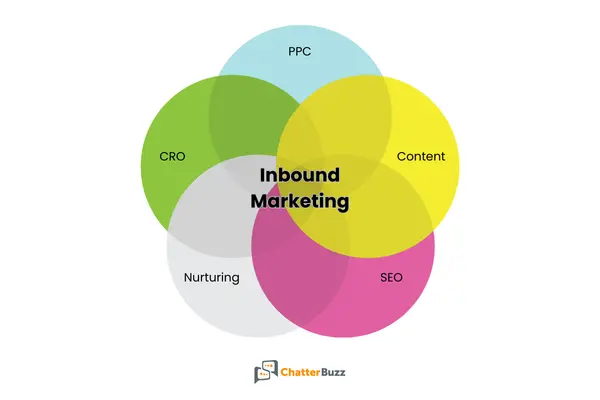
1. Content Marketing
Content is the engine of inbound. Blogs, guides, case studies, videos, podcasts, and webinars all serve different roles but ultimately help educate prospects, build trust, and position your brand as the expert.
Best for:
- Early-stage companies building credibility and awareness
- Growth-stage companies needing to scale demand with thought leadership
- Long sales cycles, where nurture-focused content (webinars, deep guides) helps keep prospects warm
2. SEO-Driven Inbound
SEO ensures your content can be discovered organically. This includes keyword research, on-page optimization, technical SEO, link building, search intent mapping, and ongoing monitoring to keep rankings strong.
Best for:
- Growth-stage companies ready to invest long-term in organic acquisition
- Mature companies with strong content catalogs that need optimization
- Industries with high-intent searches for solutions
SEO is a long game; expect 3–9 months to see compounding results, so it’s ideal for companies aiming for a sustainable, lower-cost pipeline.
3. Lead Nurturing & Lifecycle Automation
Automation supports the full buyer journey. Workflows, segmentation, lead scoring, and persona-based sequences help guide prospects from first interaction through evaluation and purchase. This ensures no lead slips through the cracks.
Best for:
- Companies with complex or multi-step sales cycles
- Teams using CRMs like HubSpot that want predictable, repeatable follow-up
- Mature companies that need to scale sales support without adding headcount
4. CRO-Focused Inbound
CRO (conversion rate optimization) enhances every touchpoint, from landing pages to forms to CTAs. Improving UX, simplifying conversion paths, and testing variations help increase lead volume from existing traffic.
Best for:
- Companies already generating consistent website traffic
- Growth or mature-stage teams looking to improve efficiency before investing more in acquisition
- CRO ensures you’re not pouring more water into a leaky bucket
5. Paid Amplification for Inbound Content
Paid ads can be used inbound style by promoting educational assets rather than hard sells. Think LinkedIn thought leadership ads, retargeting, Google Search for high-intent keywords, or paid promotion of webinars and guides.
Best for:
- Early-stage companies that need traffic quickly
- Growth-stage teams amplifying their best content
- Products with long sales cycles, where retargeting keeps you top of mind
Putting It All Together
Smart inbound teams layer these strategies based on maturity:
- Early stage: Paid amplification + lightweight content for awareness.
- Growth stage: SEO + robust content + CRO for scalable pipeline.
- Mature stage: Automation + deep content + SEO dominance + CRO refinement.
The best inbound programs are adaptive, meeting prospects where they are and guiding them to take the next step at their own pace.
Core Components of an Effective Inbound Program
Below are the critical building blocks of a powerful inbound ecosystem.
1. Ideal Customer Profile (ICP) & Buyer Persona Development
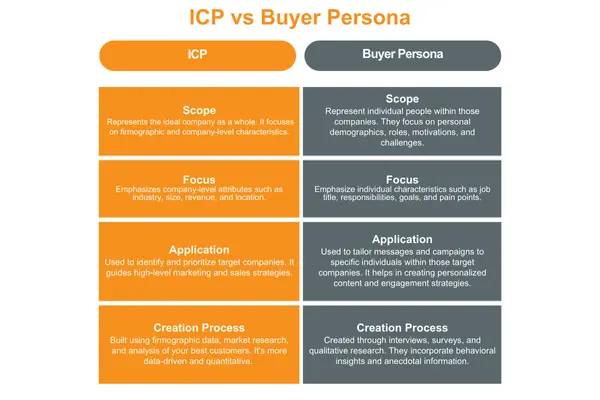
Every effective inbound strategy begins with clear buyer insight. That insight comes from defining both your Ideal Customer Profile (ICP) and your buyer personas, two distinct but equally important components of inbound success.
What is an ICP?
Your ICP identifies which companies are the best fit for your solution. It focuses on firmographic and operational attributes such as:
- Industry and vertical
- Company size and revenue
- Geographic location
- Tech stack and infrastructure
- Business maturity and growth stage
A strong ICP ensures your inbound efforts attract accounts that are likely to convert, retain, and deliver long-term value.
Learn more in our blog: How to Identify ICPs.
What are Buyer Personas?
Buyer personas describe who within those companies you’re speaking to. They capture:
- Job roles and responsibilities
- Goals and success metrics
- Pain points and challenges
- Common objections
- Level of buying influence
While the ICP narrows your target market, personas shape how you communicate.
Benefits of Personas
- Guide Content & Messaging – Personas determine what you say and how you say it. They help teams create content that answers real buyer questions, addresses objections, and aligns with each stage of the buyer journey, making messaging more relevant and persuasive.
- Drive SEO Strategy – Understanding how personas search allows marketers to target the right SEO keywords and align content with search intent. This helps capture high-quality traffic tied to real problems, not vanity terms.
- Inform Lead Scoring & Nurturing – Personas also inform lead scoring, segmentation, and nurture sequences, enabling more personalized, timely experiences across the funnel.
Without personas, inbound becomes guesswork, and guesswork kills results. With them, every inbound touchpoint feels relevant, helpful, and intentional.
2. SEO & Organic Traffic Strategy
SEO is the foundation of sustainable inbound growth. It ensures your content is discoverable when prospects are actively researching problems, solutions, and vendors.
Keyword Research With Intent
Effective inbound SEO starts with keyword research that prioritizes buyer intent, not just search volume. The goal is to identify terms tied to real business challenges, evaluation questions, and decision-stage needs. These keywords directly influence what content gets created.
On-Page Optimization
On-page optimization aligns individual pages with targeted keywords. This includes optimized headlines, meta descriptions, headers, and body copy. Strategic internal linking connects related content, strengthens topical authority, and guides users through your inbound funnel.
Technical SEO Foundation
Technical SEO ensures search engines can crawl, index, and rank your site properly. This includes site speed, mobile responsiveness, clean URLs, schema markup, and fixing errors that limit visibility.
Search Intent Alignment
Each keyword must align with the right content format. Blogs support awareness, in-depth guides support consideration, and comparison or solution pages support buying decisions.
Content Calendar Planning
SEO insights feed directly into content calendar planning. By organizing topics into clusters and publishing consistently, teams build authority, improve rankings, and drive long-term organic traffic.
SEO compounds over time, making it the backbone of any inbound strategy.
Learn the basics of SEO with our blog, Top 25 SEO Terms Every Beginner Should Know.
3. Content Creation & Thought Leadership
Content is the engine that powers inbound marketing. It’s how B2B brands attract attention, earn trust, and position themselves as credible problem-solvers long before a sales conversation begins.
The goal is simple: educate your buyers better than anyone else.
Educational Blogs & Guides
Blogs and long-form guides address common questions, industry challenges, and emerging trends. They support SEO, build authority, and help buyers move from awareness to consideration.
Videos & Webinars
Video explainers and webinars bring complex topics to life. They humanize your brand, increase engagement, and work especially well for product education, demos, and live Q&A sessions.
Templates & Tools
Templates, calculators, and checklists provide immediate value. These assets perform well as lead magnets and help convert traffic into qualified leads.
Case Studies & Whitepapers
Case studies showcase real-world results and validate your expertise. Whitepapers dive deeper into strategic topics and support decision-stage buyers.
Social Thought Leadership
Social thought leadership extends your content’s reach. Short insights, commentary, and repurposed content shared on LinkedIn position your brand as a trusted voice and keep you visible throughout long B2B buying cycles.
When executed consistently, content turns expertise into trust and trust into revenue.
Learnmore in our blog: How To Quickly Grow Your Audience with 5 Amazing Content Marketing Assets.
4. Lead Conversion & UX Optimization
Traffic alone doesn’t grow the pipeline; conversions do. That’s why conversion rate optimization (CRO) and user experience (UX) are essential components of any inbound program.
Landing Page Design
Landing pages are where visitors become leads. Clear headlines, compelling value propositions, and minimal distractions create a focused path to conversion.
Form Strategy
Forms capture critical lead information without creating friction. Smart forms balance required fields with user convenience and often include progressive profiling for deeper insights over time.
CTAs (Calls-to-Action)
Effective CTAs guide prospects to the next step, whether it’s downloading a guide, registering for a webinar, or requesting a demo. Placement, color, and messaging all impact performance.
Optimizing these elements ensures your inbound traffic consistently generates high-quality leads.
Learn how to create a high-converting landing page in our blog, How To Use the StoryBrand Framework To Create a Landing Page That Converts.
A/B Testing Enhances Optimization
A/B testing validates design, copy, form, and CTA changes, allowing teams to make data-driven improvements. Even small percentage gains in conversion rates can significantly increase marketing-qualified leads and revenue over time.
5. Marketing Automation & Lead Nurturing
76% of companies use automation for inbound marketing. Marketing automation transforms inbound marketing into a predictable, scalable engine. By delivering the right message to the right prospect at the right time, automation accelerates the buyer’s journey and improves lead quality.
Workflows & Multi-Step Nurture Sequences
Workflows allow teams to create multi-step nurture sequences that guide leads from awareness to decision. Automated emails, follow-ups, and content delivery ensure prospects stay engaged without manual intervention.
Segmented Nurture Tracks
Segmentation lets you tailor messages based on:
- Persona-Based Segmentation: Tailor messaging to specific roles, responsibilities, and challenges, ensuring content resonates with the right decision-makers.
- ICP Alignment: Focus efforts on accounts most likely to convert and deliver long-term value, ensuring your nurture tracks target high-potential leads.
- Industry & Company Size: Customize content for sector-specific pain points, trends, or regulations, and adjust messaging based on organizational scale.
- Buyer Journey Stage: Deliver content that matches a lead’s current research or decision-making stage, moving them progressively toward conversion.
- Behavioral Triggers: Use actions such as content downloads, webinar attendance, page visits, or email engagement to automatically adjust nurture paths or alert sales for timely outreach.
Personalized nurture tracks increase engagement, build trust, and make content more relevant.
Lead Scoring
Lead scoring assigns points based on engagement, fit, and intent signals. It helps prioritize high-value prospects and triggers alerts for sales outreach at the optimal moment.
Together, workflows, segmented nurture tracks, and scoring shorten sales cycles, improve pipeline quality, and ensure consistent lead management.
Learn more with our blog, What Is an Email Sequence, and How Can It Help You Nurture Leads?
6. Sales Enablement Support
Inbound marketing doesn’t stop at attracting and nurturing leads; it extends to empowering sales teams to convert them efficiently. Effective sales enablement aligns marketing and sales around content, processes, and performance metrics.
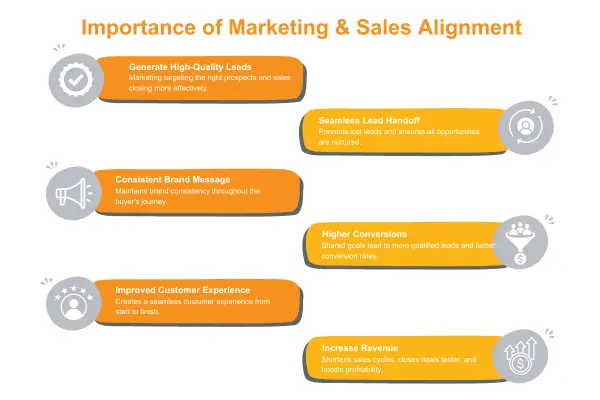
Here are a few ways to improve alignment:
- Content Alignment: Marketing provides sales with battlecards, case studies, email templates, and persona-specific content so reps can deliver consistent, relevant messaging.
- Sequences: Automated outreach sequences ensure follow-up is timely and personalized, keeping leads engaged throughout the funnel.
- Playbooks: Structured marketing & sales playbooks guide reps on the marketing/sales handoff, messaging, touchpoints, and best practices for each persona or stage in the buyer journey.
- Shared KPIs: Both teams track common metrics such as MQL-to-SQL conversion rates, opportunity velocity, and revenue influenced by inbound campaigns. Shared KPIs promote accountability and collaboration, ensuring marketing and sales work toward the same goals.
- Persona Insights: Detailed persona data helps sales tailor conversations to buyer needs and challenges, increasing engagement and conversion rates.
By integrating content, sequences, and performance metrics, sales enablement makes the marketing-to-sales handoff seamless and maximizes pipeline efficiency.
See our Sales & Marketing Alignment Guide for details.
7. Tech Stack & Tools
Your inbound ecosystem is only as strong as the technology that supports it. Modern B2B teams rely on a robust tech stack to streamline processes, measure performance, and scale inbound efforts efficiently.

- CRM & Marketing Automation: Platforms like HubSpot, Salesforce, Marketo, and Pardot centralize customer data, automate nurture workflows, and track lead activity across the funnel.
- SEO & Analytics Tools: SEMrush, Google Analytics, and Google Search Console provide insights on traffic, keyword performance, and content effectiveness, helping teams optimize campaigns over time.
- User Experience & Conversion Tools: Hotjar and other UX analytics platforms monitor user behavior, heatmaps, and session recordings to improve landing pages and conversion rates.
- Data Enrichment & Integration Tools: Zapier and Clearbit connect systems, automate workflows, and enhance lead data for more accurate segmentation and personalization.
A well-integrated tech stack ensures your inbound marketing runs smoothly, supports data-driven decisions, and delivers measurable pipeline growth across marketing and sales.
Explore our list of Top Marketing Tools for Your Business.
8. Performance Analytics & Optimization
Inbound marketing is a data-driven discipline, and consistent measurement is key to scaling results. Without tracking performance, even high-quality content and campaigns can fall short.
Top-performing B2B teams monitor a range of metrics across the funnel, including:
- Organic traffic: Understand how well your content attracts your target audience.
- MQL volume: Track the number of leads meeting marketing qualification criteria.
- SQL conversion rate: Measure how effectively marketing-qualified leads are accepted by sales.
- Lead velocity: Monitor how quickly leads move through the funnel.
- Funnel conversion rates: Identify bottlenecks and optimize each stage from visitor to customer.
- Cost per lead (CPL): Assess the efficiency of your inbound investment.
- Revenue sourced from inbound: Link content and campaigns directly to pipeline impact.
By analyzing these metrics with CRM dashboards, analytics platforms, and attribution tools, teams can continuously optimize messaging, content, and campaigns, ensuring the inbound engine becomes smarter, more efficient, and revenue-focused over time.
Common Inbound Marketing Challenges
Every B2B marketing team faces obstacles when implementing inbound. The good news? Most challenges have straightforward fixes, and when addressed consistently, inbound marketing compounds over time, building sustainable growth.
Here’s a closer look at the most common roadblocks and how to overcome them.

1. Low Organic Traffic
Many teams struggle to attract enough visitors to generate leads. Low traffic is often a symptom of weak SEO, thin content, or poor targeting.
Quick Solutions:
- Strengthen SEO with keyword research aligned to buyer intent
- Develop content clusters around core topics to capture search demand
- Update and repurpose old blog posts to improve rankings
- Build high-quality backlinks through partnerships and guest content
- Optimize technical SEO, including site speed, mobile responsiveness, and structured data
Consistency matters, organic growth compounds over months, turning small improvements into significant traffic gains.
2. Inconsistent Content Publishing
Irregular publishing slows lead generation and undermines authority. Prospects expect regular insights from trusted brands.
Quick Solutions:
- Create a content calendar with publishing cadence and deadlines
- Repurpose existing content into multiple formats (blogs → videos → social posts)
- Assign clear ownership for production, review, and approval
- Use automation tools to schedule distribution
A consistent content rhythm strengthens SEO, builds audience trust, and keeps your inbound engine running.
3. Poor Lead Quality
Generating leads is only half the battle; poor-quality leads waste sales time and reduce conversion rates.
Quick Solutions:
- Refine your ideal customer profile (ICP) to attract the right prospects
- Tighten keyword targeting in content and paid campaigns
- Improve messaging to clearly communicate value
- Implement lead scoring to prioritize high-quality opportunities
Over time, lead quality improves as data informs better targeting and messaging decisions.
4. Slow Lead Follow-Up
Even high-quality leads lose interest if not contacted promptly.
Quick Solutions:
- Automate notifications and round-robin lead assignment
- Use instant alerts to sales teams for new MQLs
- Standardize follow-up with sales playbooks and pre-written email sequences
Quick follow-up ensures leads stay engaged and improves conversion velocity.
5. Weak Nurturing Sequences
Leads with long consideration cycles can slip away without targeted nurturing.
Quick Solutions:
- Build persona-based workflows with tailored messaging
- Segment lists by behavior, stage, and interests
- Include case studies, product guides, and educational content to move prospects closer to purchase
Strong nurturing turns warm leads into ready-to-buy opportunities.
6. Disconnected Tools or Data
Disjointed systems create gaps in visibility and hinder optimization.
Quick Solutions:
- Integrate your tech stack (CRM, automation, analytics)
- Unify dashboards for a single view of performance
- Maintain clean, accurate CRM data to ensure reliable reporting
When your tools are aligned, you can analyze, optimize, and iterate faster, compounding results over time.
Inbound vs Outbound Marketing
Both inbound and outbound can drive revenue, but they work very differently.
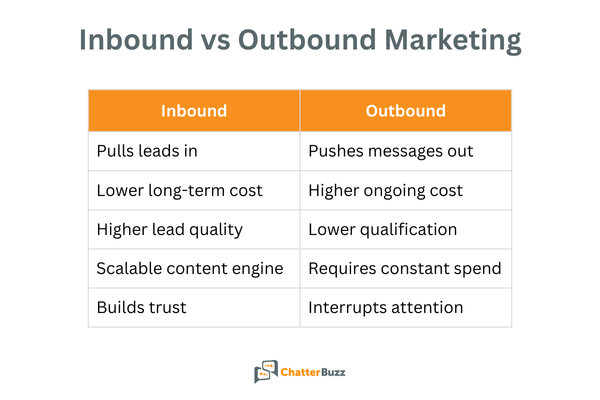
Inbound supports demand-gen efforts by warming up leads before they reach sales. Outbound supports inbound by amplifying your best content and creating more touchpoints.
Let’s dive a little deeper into their key differences.
Targeting
Inbound marketing attracts prospects who are actively searching for answers or solutions. It relies on content, SEO, and thought leadership to naturally pull the right audience to your brand. This “pull” strategy ensures that your messaging reaches people with genuine interest and intent.
Outbound marketing, on the other hand, is a “push” strategy. It reaches audiences proactively via cold emails, ads, direct mail, and telemarketing. Outbound can target specific accounts or personas, even if they aren’t currently seeking your solution. While this expands reach, it may also generate lower engagement from uninterested leads.
Cost Efficiency
Inbound often has a higher upfront investment in content creation, SEO, and automation tools, but its results compound over time. A single well-optimized blog or resource can continue to generate traffic and leads for months or even years.
Outbound tends to be more expensive on a per-lead basis because it relies on paid ads, prospecting, and manual outreach. While it can deliver quick results, sustaining outbound requires ongoing budget, making it less cost-efficient over the long term.
Lead Quality
Inbound generates leads that are typically more qualified because these prospects self-select by engaging with your content. They already have a problem and are seeking a solution, which shortens the sales cycle.
Outbound can produce a higher volume of leads quickly, but many may not be a good fit. Without proper targeting and follow-up, the quality of outbound leads can vary widely.
ROI Timeframe
Inbound is a long-term play. Expect 3–12 months before seeing significant ROI, but once your content library and automation workflows are established, lead generation becomes predictable and scalable.
Outbound delivers faster results, often in weeks, but results can drop off immediately when campaigns stop. It’s better suited for short-term promotions, event-driven campaigns, or targeted account outreach.
Scalability
Inbound scales by building a content engine and automation framework that consistently attracts, nurtures, and converts leads. The more content and assets you create, the greater the long-term return.
Outbound scales primarily through increased budget and manual effort, hiring more sales reps, sending more outreach, or expanding ad spend.
Together, they form a powerful omnichannel strategy.
Key Metrics to Measure Inbound Success
Inbound marketing only works when it’s measured. Without clear visibility into performance, even strong content and SEO efforts can fall short. High-performing B2B teams track a defined set of inbound metrics across the entire funnel to understand what’s driving growth, where leads stall, and how inbound contributes to revenue.
Below are the most important metrics used to evaluate inbound success, along with how they’re tracked and calculated.
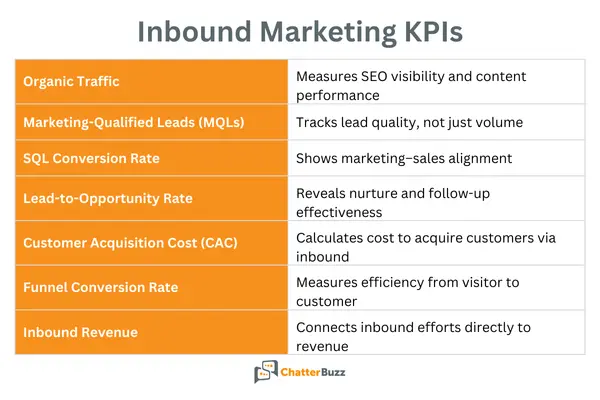
Organic Traffic
Organic traffic measures how effectively your inbound strategy attracts visitors through SEO and content. It reveals whether your website is visible for high-intent searches and if your content aligns with buyer needs.
Using tools like Google Analytics, Google Search Console, and SEO platforms, teams monitor traffic trends, keyword rankings, and landing-page performance.
If you find that you are getting a lot of traffic but not many leads, it means your SEO and PPC are working, but the landing page is not.
Formula:
Organic Traffic = Total sessions from organic search
Marketing-Qualified Leads (MQLs)
MQLs represent inbound leads that meet predefined engagement and fit criteria. This metric ensures inbound efforts prioritize quality over volume.
MQLs are tracked in your CRMs and marketing automation platforms (such as HubSpot or Marketo) based on form submissions, content engagement, and lead-scoring thresholds.
Formula:
MQLs = Total leads meeting qualification criteria
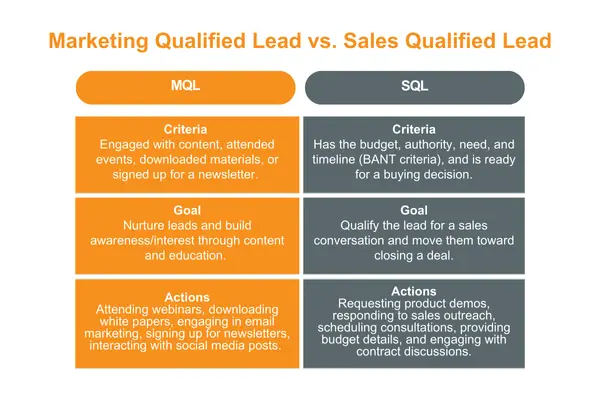
SQL Conversion Rate
The SQL conversion rate measures how many MQLs sales teams accept as legitimate prospects. It reflects the health of marketing–sales alignment.
CRMs like Salesforce track lead status changes and acceptance points, allowing teams to report on MQL-to-SQL handoffs.
Formula:
SQL Conversion Rate = (SQLs ÷ MQLs) × 100
Lead-to-Opportunity Conversion
This metric shows how many inbound leads progress into active sales opportunities. It highlights the effectiveness of nurturing and sales follow-up.
Opportunity creation and stage progression are recorded in the CRM, where inbound source data is tied to pipeline stages.
Formula:
Lead-to-Opportunity Conversion = (Opportunities ÷ Leads) × 100
Customer Acquisition Cost (CAC)
CAC measures how much it costs to acquire a customer through inbound, including content creation, tools, and paid distribution.
Marketing spend data is combined with CRM deal data to calculate cost per customer by channel.
Formula:
CAC = Total inbound marketing costs ÷ New customers acquired
Funnel Conversion Rate
Funnel conversion rate tracks how efficiently prospects move through each stage, from visitor to customer.
CRM and analytics dashboards visualize stage-to-stage conversion and drop-off points.
Formula:
Funnel Conversion Rate = (Customers ÷ Total visitors) × 100
Revenue Sourced From Inbound
This is the ultimate inbound metric, tying marketing directly to revenue impact.
CRM reporting and multi-touch attribution models connect closed-won deals to inbound touchpoints, proving ROI.
Formula:
Inbound Revenue = Sum of closed-won revenue attributed to inbound channels
Want to learn more about metrics? See: An Insider Guide to the Best Marketing KPIs that Measure Agency Results.
Budgeting & Resource Planning for Inbound
Inbound marketing budgets look fundamentally different from traditional marketing budgets. Instead of paying for short-term visibility, such as impressions, clicks, or sponsorships, inbound focuses on long-term asset creation that compounds value over time.
Every investment contributes to a system that continues generating leads well after the initial spend.
Traditional marketing often requires constant budget allocation to maintain results. Inbound, by contrast, builds momentum. High-quality content, optimized SEO, and automation workflows become reusable assets that reduce acquisition costs as performance improves.
Content Production
Content is the foundation of inbound marketing and one of the most important budget considerations. This includes blog articles, guides, case studies, videos, webinars, and downloadable resources designed to educate buyers at every stage of the funnel.
B2B companies should budget for strategy, writing, design, and subject-matter expertise. While content requires upfront investment, evergreen assets continue driving traffic and leads long after publication, delivering compounding returns.
SEO & CRO Support
Together, SEO and CRO ensure your content actually performs. SEO investments cover keyword research, technical optimization, internal linking, content optimization, and ongoing performance tracking. CRO investments focus on improving landing pages, CTAs, forms, and user experience to increase conversion rates.
Together, SEO and CRO maximize the return on every content and traffic dollar. Even small improvements in rankings or conversion rates can significantly impact lead volume without increasing spend.
Marketing Automation Tools
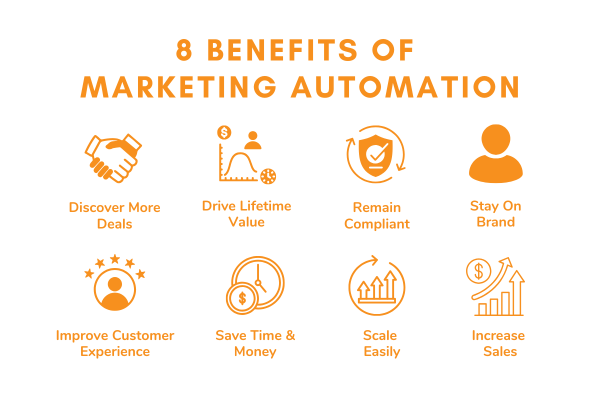
Inbound relies heavily on automation to scale efficiently. Marketing automation platforms such as HubSpot or Marketo enable lead nurturing, segmentation, scoring, analytics, and CRM integration.
While these tools represent a recurring cost, they reduce manual effort, shorten response times, and improve lead quality. Automation allows your teams to grow their pipeline without adding headcount, making it a critical inbound investment.
Paid Distribution to Accelerate Results
Although inbound prioritizes organic growth, paid distribution plays an important supporting role. Paid search, LinkedIn ads, and retargeting are used to amplify high-performing inbound content, reach new audiences faster, and support account-based initiatives.
Paid efforts help bridge the gap while organic channels gain traction and ensure consistent visibility for priority campaigns.
Inbound Budget Benchmarks
Most B2B companies allocate 20–40% of their total marketing budget to inbound, increasing investment as performance compounds and cost per lead decreases. Over time, inbound becomes one of the most cost-efficient growth channels available.
Ready to build a budget that drives predictable pipeline growth? Get a tailored inbound marketing proposal and see how Chatter Buzz can align strategy, execution, and ROI.
FAQs
Below are the most common questions B2B teams ask when evaluating inbound marketing, along with clear, practical answers.
1. How long does inbound marketing take to work?
Inbound is a long-term growth strategy, not a quick win. Most companies begin seeing early traction within 3–6 months, such as increased organic traffic, improved engagement, and initial lead growth. It typically takes 6–12 months to build a consistent inbound engine that generates a predictable pipeline and revenue.
Timelines vary based on competition, industry, existing website authority, content quality, and budget. The key advantage is that results compound over time, lowering cost per lead as assets continue performing.
2. What tools do I need for inbound marketing?
A successful inbound program requires an integrated tech stack. Core tools include a CRM to track leads and revenue, a marketing automation platform for nurturing and scoring, an SEO platform for keyword and performance tracking, and analytics tools to measure traffic and conversions.
Most teams also rely on a content management system (CMS) and UX or behavior-tracking tools to optimize user experience and conversion paths. The goal is centralized data and full-funnel visibility.
3. How often should I publish inbound content?
Quality matters more than quantity. For most B2B organizations, publishing one to two high-quality content pieces per month is sufficient to build authority and traction, especially when content is well-optimized and strategically promoted.
More mature programs may publish more frequently, but consistency and relevance are far more important than volume.
4. Is inbound effective for long sales cycles?
Yes. Inbound is particularly effective for long, complex B2B sales cycles. Buyers typically conduct extensive research before engaging sales, and inbound content supports this behavior by educating prospects at each decision stage.
Guides, case studies, webinars, and nurture emails build trust, answer objections, and keep your brand top-of-mind until prospects are ready to convert.
5. Can inbound work without marketing automation?
Inbound can function without automation, but it becomes significantly less efficient. Automation improves response speed, lead consistency, personalization, and scalability.
Without automation, teams struggle to nurture leads effectively, prioritize sales outreach, and track performance accurately. For most B2B companies, automation is essential to realizing full inbound ROI.
6. What industries benefit most from inbound marketing?
Inbound works best for industries with high-consideration purchases. This includes B2B SaaS, professional services, IT and managed services, manufacturing, healthcare, finance, and technology-driven businesses.
Any organization that requires buyer education, trust-building, and multiple decision-makers will benefit from inbound strategies.
7. How do you measure inbound ROI?
Inbound ROI is measured by connecting marketing activity to revenue. Key metrics include leads generated, conversion rates, pipeline velocity, customer acquisition cost, and revenue influenced or sourced from inbound.
CRM reporting and attribution tools track how inbound touchpoints contribute to closed deals, providing clear visibility into performance and return on investment.
Get More Leads with Successful Inbound Marketing
Inbound marketing works because it aligns with how today’s B2B buyers want to learn, research, and purchase. It builds real trust, nurtures long-term demand, and fuels predictable pipeline growth.
Now you know every component of the inbound ecosystem, from SEO and content to automation, analytics, and CRO.
And as you’ve seen, inbound isn’t just posting blogs or sending emails. It’s a strategic, scalable growth engine. And that’s exactly what Chatter Buzz builds for B2B teams every day.
If you’re ready to attract better leads, strengthen your brand authority, and build a content system that compounds over time, book a discovery call today and get your custom inbound marketing plan.