
 321-341-2327
If you’re investing in marketing but struggling to create a consistent, high-quality pipeline, you’re not alone. Most B2B teams focus on leads, not demand, and that’s where growth stalls.
We’ve seen this firsthand working with B2B brands across tech, SaaS, healthcare, and professional services at Chatter Buzz Media.
The companies that win don’t chase leads; they build demand. Here’s what you’ll learn next.
This guide breaks down b2b demand generation, how it works, how to measure it, and how to build a system that drives long-term revenue, not just form fills. Let’s dive in.
Key Takeaways:
- B2B growth stalls when teams chase leads instead of building demand: Pipeline quality suffers when marketing optimizes for volume over buying intent.
- Demand generation creates future buyers, not just immediate conversions: It influences awareness, trust, and readiness long before prospects talk to sales.
- The strongest demand engines align marketing and sales around revenue: Shared accounts, messaging, and metrics drive warmer conversations and faster deal velocity.
- High-performing teams measure momentum, not vanity metrics: Engagement from ICP accounts, pipeline influence, and sales cycle speed matter more than form fills.
What Is B2B Demand Generation?
B2B demand generation is the strategic process of creating awareness, interest, and trust for your product or service across your ideal customer profile. It focuses on educating and influencing buyers long before they’re ready to talk to sales.
Here’s the key difference. Demand generation creates future buyers, not just immediate leads.
Instead of asking, “How do we capture emails?” Demand generation asks, “How do we become the obvious choice when buyers are ready?”
That shift changes everything.
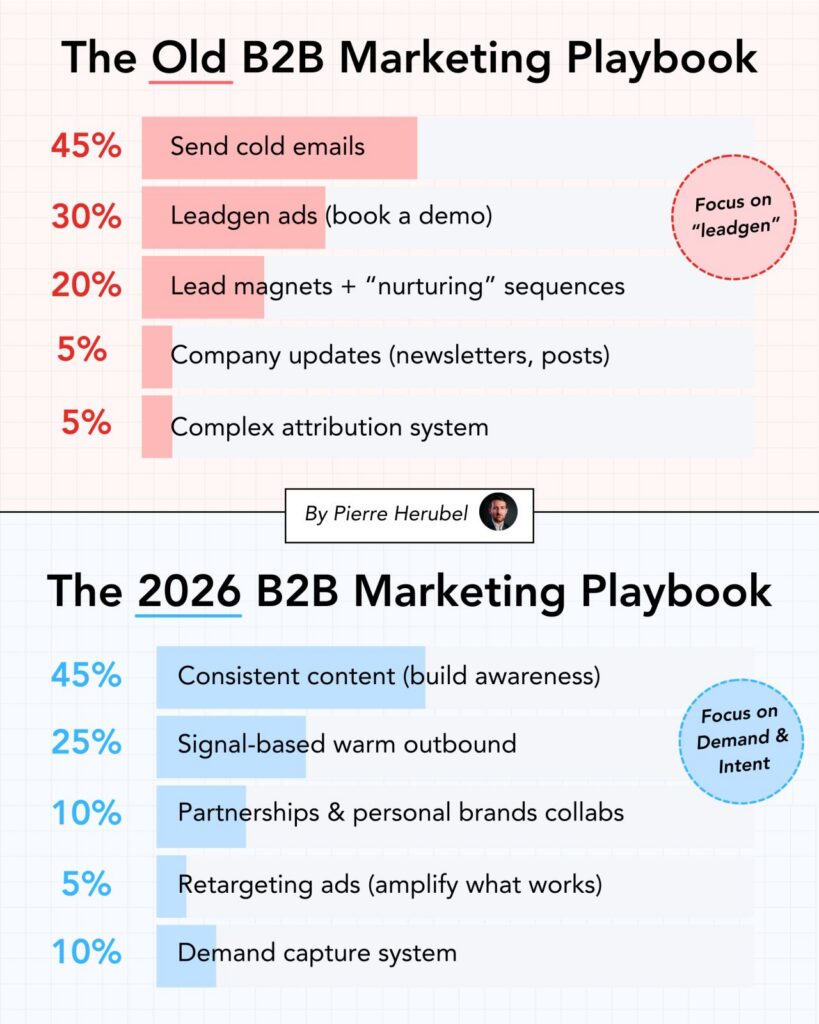
At Chatter Buzz Media, we treat b2b demand generation as a full-funnel revenue engine, not a campaign. It connects brand, content, paid media, sales enablement, and customer insights into one growth system.
What Are the Different Types of Demand Generation?
B2B demand generation isn’t one tactic. It’s a blend of inbound and outbound strategies working together.
Let’s break it down.
Inbound Demand Generation
Inbound demand generation attracts buyers by solving their problems first. It builds trust before a sales conversation ever starts.
Common inbound demand generation channels include:
- SEO-driven blog content
- Thought leadership and pillar pages
- Educational webinars and videos
- Organic social media
- Email nurturing programs
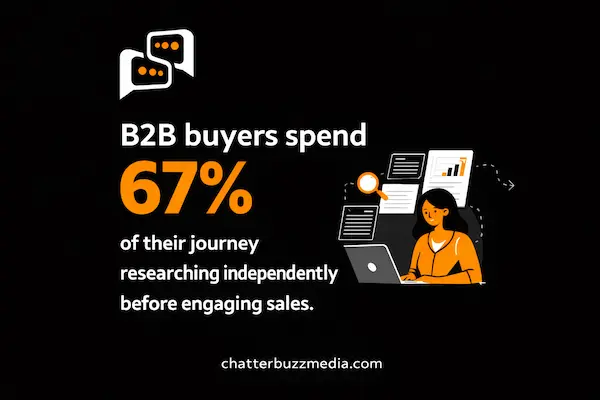
Here’s why inbound works. B2B buyers spend 67% of their journey researching independently before engaging sales.
Inbound demand generation positions your brand as the expert. That’s why SEO-optimized content around b2b demand generation is foundational.
Outbound Demand Generation
Outbound demand generation proactively puts your message in front of the right accounts. It accelerates awareness and shortens buying cycles.
Key outbound channels include:
- LinkedIn and paid social advertising
- Programmatic display
- Account-based marketing (ABM)
- Sales development outreach
- Sponsored content and partnerships
But here’s the catch. Outbound without demand feels pushy.
At Chatter Buzz Media, we believe outbound works best when fueled by inbound insights, strong messaging, proven content, and clear value propositions.
What’s the Difference Between Lead Generation and Demand Generation?
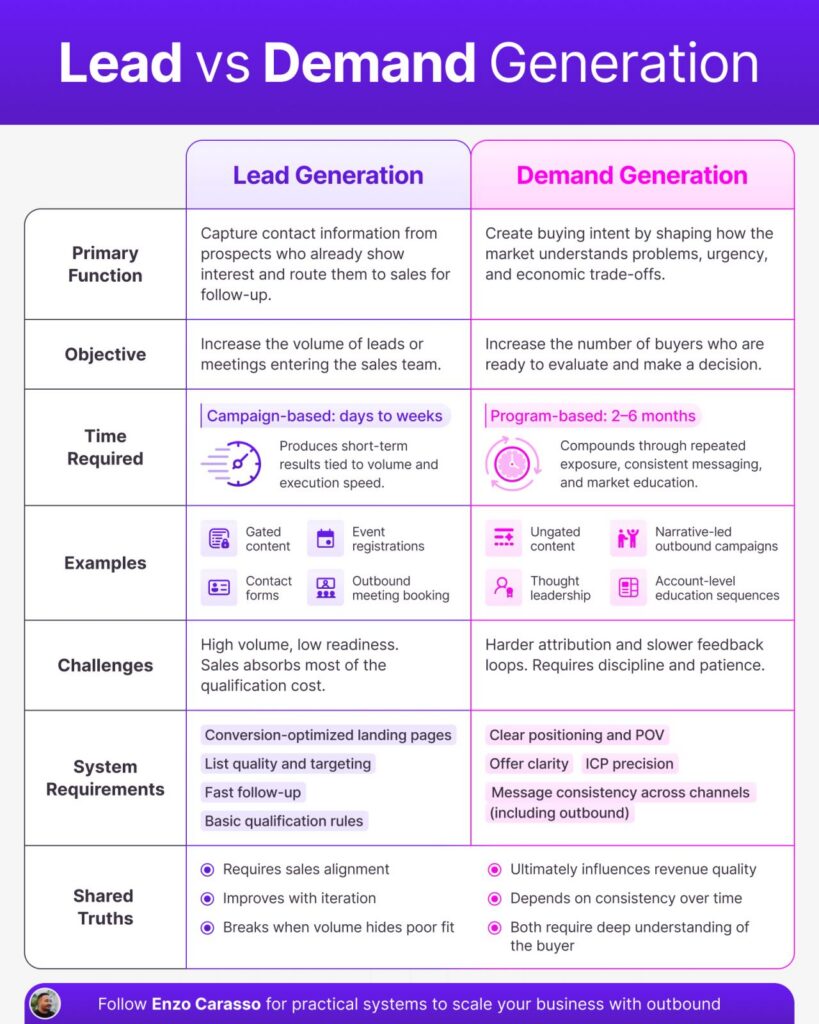
This is where many B2B marketing strategies break down. Lead generation and demand generation are often treated as interchangeable, but they solve very different problems.
Lead Generation
Lead generation focuses on capturing contact information from prospects who show interest.
Lead generation asks surface-level questions:
- How many leads did we generate?
- What was our cost per lead?
- How many form fills came from this campaign?
Demand Generation
Demand generation focuses on building buying intent across the entire market.
Demand generation asks deeper, revenue-driven questions:
- Are we influencing the right accounts?
- Are buyers moving through the funnel faster?
- Are sales conversations warmer and more informed?
You can generate thousands of leads and still fall short of revenue goals if those leads lack intent, context, or readiness.
Demand generation shifts marketing away from volume and toward pipeline impact. It aligns efforts with how B2B buyers actually research, evaluate, and make decisions.
Scope: Broad Influence vs. Targeted Capture
Demand generation operates at a broader level. It builds awareness, trust, and interest across your entire ideal customer profile.
This includes buyers who are not yet ready to convert. The goal is to shape perception early so your brand becomes familiar and credible before buying intent spikes.
Lead generation is narrower by design. It focuses on capturing known prospects who are already showing interest and are willing to exchange their information.
Both matter, but they serve different moments in the buyer’s journey.
Goals: Long-Term Demand vs. Short-Term Conversion
The goal of demand generation is to create sustained market demand. It builds brand authority, educates buyers, and influences decisions over time.
Lead generation is focused on conversion. Its purpose is to turn interest into marketing-qualified leads that sales teams can pursue.
Without demand, lead generation becomes inefficient. Without lead generation, demand goes unmeasured.
Tactics: Education vs. Exchange
Demand generation relies on ungated, value-driven content such as:
- Blogs
- Thought leadership
- Social media and video content
- Webinars and events
These tactics remove friction and prioritize education.
Lead generation tactics introduce an exchange:
- Gated content
- Landing pages and forms
- Email campaigns
- Conversion-focused paid ads
They work best when demand already exists.
How Do You Move From Lead Generation to Demand Generation?
Moving from lead generation to demand generation requires a fundamental mindset shift. And while it may feel uncomfortable at first, it’s absolutely worth it. Lead generation prioritizes immediate capture.

Demand generation prioritizes long-term influence. The transition begins by rethinking how value is delivered to buyers.
1. Stop Gating Everything
The first step is removing unnecessary friction. Not every asset needs a form.
Educational content should educate first, not immediately ask for an email address. When everything is gated, you limit reach and reduce trust.
High-performing demand generation strategies lead with:
- Ungated blog content
- Thought leadership articles
- SEO-driven pillar pages
- Social and video content
These assets build awareness and credibility at scale. Once trust is established, buyers are far more willing to engage later.
2. Map Content to Buying Stages
Demand generation only works when content matches buyer intent. That means aligning assets to each stage of the journey.
Top-of-funnel content builds awareness:
This includes blogs, guides, and videos that help buyers understand their challenges.
Mid-funnel content builds confidence:
Case studies, webinars, and comparison content help buyers evaluate options.
Bottom-of-funnel content supports decisions:
Sales enablement assets, demos, and ROI tools help buyers justify action.
This structure ensures marketing supports the entire funnel, not just lead capture.
3. Shift Metrics Away From Volume
To move beyond lead generation, teams must stop obsessing over quantity. More leads do not equal more revenue.
Demand generation tracks signals such as:
- Engagement from target accounts
- Content consumption depth
- Funnel velocity
- Sales feedback on lead quality
These insights reveal whether marketing is influencing real buying behavior.
4. Align Sales and Marketing Around Demand
This is where most transitions fail. Demand generation only works when sales and marketing operate as one team.

Both teams must align on:
- Target accounts and ideal customer profiles
- Core messaging and value propositions
- Shared success metrics tied to the pipeline and revenue
When alignment exists, marketing creates informed buyers. Sales then enters conversations with context, credibility, and momentum.
How can you align them? Read our blog, Align Marketing & Sales: How to Spot & Fix Misalignment in the B2B Market.
At Chatter Buzz Media, this alignment is not optional. It’s baked into every b2b demand generation strategy we build.
By shifting from capture-first tactics to demand-first systems, companies create stronger pipelines, shorter sales cycles, and more predictable growth. And that’s the real payoff.
Benefits of B2B Demand Generation
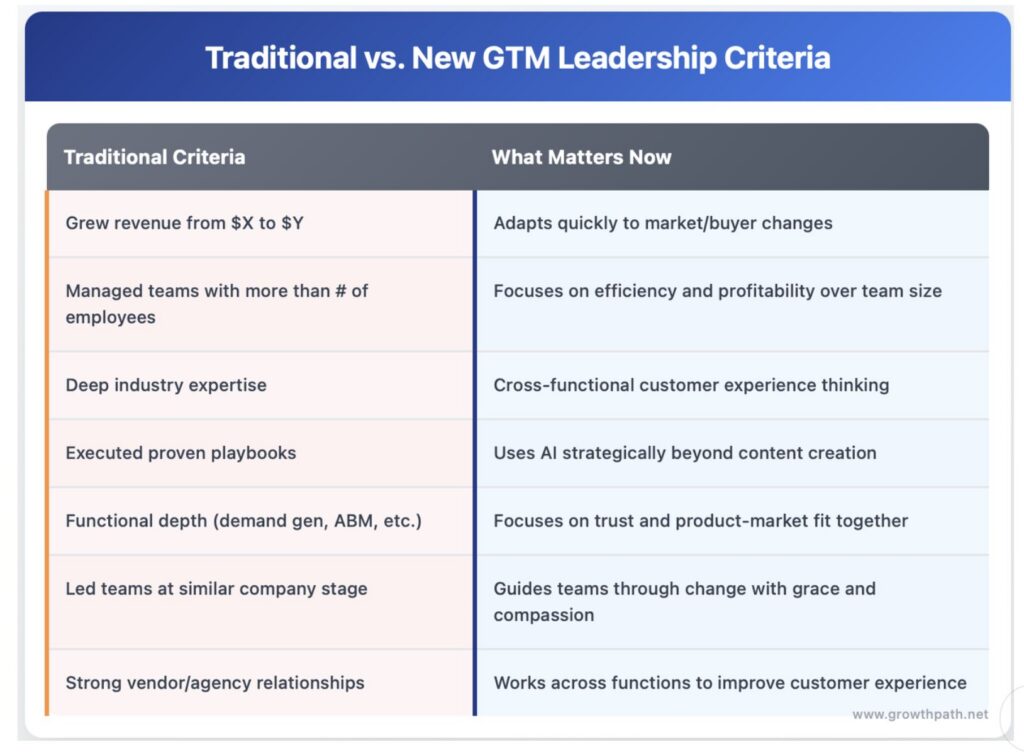
Investing in demand generation transforms the way B2B companies attract, engage, and convert buyers. Unlike traditional lead-focused tactics, demand generation builds a system that influences buyers throughout their journey, creating long-term growth, trust, and predictable revenue.
Here are the key benefits of demand generation.
1. Builds Long-Term Brand Authority
Demand generation prioritizes educating and influencing buyers over time. By consistently producing high-value content, blogs, webinars, whitepapers, and thought leadership, your company becomes a trusted resource in the market.
When buyers are ready to make a decision, your brand is already top-of-mind, which reduces friction in the buying process and increases the likelihood of conversion.
2. Creates a Predictable Pipeline
Instead of chasing short-term lead volume, demand generation nurtures prospects across the entire funnel, from awareness to purchase. This approach generates a steady stream of qualified opportunities and allows marketing and sales teams to forecast pipeline and revenue more accurately.
Predictable pipeline growth reduces uncertainty and enables more strategic business planning.
3. Aligns Marketing and Sales
Demand generation encourages collaboration between marketing and sales teams. By aligning on target accounts, messaging, and shared success metrics, marketing drives opportunities that sales actually want to pursue.
This partnership results in warmer conversations, faster deal cycles, and higher win rates because prospects enter sales conversations informed, confident, and primed for engagement.
4. Improves Lead Quality and Buyer Intent
Rather than focusing solely on quantity, demand generation emphasizes intent, engagement, and education. Prospects that interact with your content are more informed about your solutions and their own business needs.
This leads to higher-quality leads, more meaningful interactions, and faster progression through the sales funnel.
5. Supports Account-Based Marketing (ABM)
Demand generation provides the foundation for ABM strategies by identifying and nurturing high-value accounts. Multi-touch campaigns targeting key decision-makers build trust and accelerate decision-making, ensuring your organization can focus on accounts that have the highest revenue potential.
6. Drives Measurable Business Impact
Demand generation moves the focus from vanity metrics to pipeline and revenue influence. Engagement, content consumption, and opportunity influence provide actionable insights, enabling teams to optimize campaigns and invest in strategies that drive measurable results.
7. Enables Sustainable Growth
Each touchpoint, piece of content, and interaction compounds over time, creating a self-reinforcing system that continually fuels the pipeline. Demand generation isn’t just a campaign; it’s a long-term engine for predictable, scalable growth.
Components of an Effective B2B Demand Generation Strategy
Now let’s get tactical. A high-performing b2b demand generation strategy includes several core components working together.
1. Ideal Customer Profile (ICP) Definition
Everything starts with clarity. If you target everyone, you resonate with no one.
Your ICP should define:
- Industry
- Company size
- Revenue range
- Pain points
- Buying triggers
This ensures demand efforts attract qualified buyers, not random traffic.
To learn more, read our blog, High-Value Clients: How to Identify Ideal Customer Profiles.
2. Messaging and Positioning
Strong demand depends on sharp positioning.
You must clearly answer: Why you?
Effective messaging focuses on:
- Outcomes, not features
- Differentiation, not buzzwords
- Buyer pain, not internal goals
3. Content Strategy
Content is the fuel of demand generation. Without it, everything else stalls.
Your strategy should include:
- Pillar pages (like this one)
- SEO blog clusters
- Case studies
- Video and webinar content
- Sales enablement assets
Every asset should support b2b demand generation, not just traffic goals.
4. Paid Media and Distribution
Even the best content needs amplification. Paid media accelerates reach and learning.
Top channels include:
- LinkedIn Ads
- Google Search and Display
- Retargeting campaigns
At Chatter Buzz Media, paid demand programs are optimized for engagement and intent, not just clicks.
5. Marketing Automation and CRM
Demand generation requires visibility. You need to know what buyers engage with and when.
Key tools include:
- Marketing automation platforms
- CRM systems
- Attribution software
These systems turn engagement into insight.
The Best Demand Generation Software
Technology enables scale, efficiency, and measurable impact.
But here’s the key: tools alone won’t drive results. Strategy comes first. Without a plan, even the most advanced software becomes a dashboard full of data with little actionable insight.
Demand generation software is designed to help B2B marketers capture intent, nurture buyers, and measure pipeline influence. The right platforms integrate content, automation, analytics, and CRM capabilities into a unified system.
Here are some of the most widely used platforms in B2B demand generation:
HubSpot
HubSpot offers a full suite of tools for growing companies, including:
- CRM: Track accounts, deals, and buyer interactions in one place.
- Marketing Hub: Automate campaigns, manage content, and nurture leads.
- Sales Hub: Support sales teams with contextual insights and engagement tools.
- Service Hub: Provide post-sale support and maintain customer satisfaction.
- Content Hub: Centralize content management, SEO, and reporting.
HubSpot is ideal for organizations seeking all-in-one software that aligns marketing and sales while scaling demand generation efforts.
Marketo
Marketo, part of Adobe, is another leading demand generation platform. It specializes in marketing automation, lead nurturing, and engagement tracking, making it a strong choice for mid-market and enterprise B2B companies.
Marketo excels at building multi-touch campaigns and measuring campaign influence across the full buyer journey.
Salesforce
Salesforce remains a cornerstone for B2B organizations, particularly when paired with its Marketing Cloud.
Salesforce helps unify sales and marketing data, enabling teams to track engagement, automate workflows, and forecast pipeline impact.
6sense and Demandbase
For Account-Based Marketing (ABM) initiatives, 6sense and Demandbase provide advanced AI-powered targeting. They help companies identify in-market accounts, prioritize outreach, and deliver personalized content at scale.
These platforms are particularly useful when your demand generation strategy targets high-value accounts rather than broad audiences.
Choosing the Right Software
The key is alignment. Software should support your growth stage, target accounts, and overall demand generation goals, not dictate your strategy.
At Chatter Buzz Media, we help clients evaluate, select, and implement platforms that match their unique needs. We focus on integration, automation, and measurement, ensuring the technology you invest in actually drives pipeline, revenue, and ROI. Schedule a strategy session today!
How to Measure Demand Generation
This is where many teams struggle. Demand generation isn’t measured the same way as traditional lead generation. While lead gen focuses on form fills, MQL volume, and short-term conversions, demand generation is about shaping buyer perception, intent, and readiness long before a prospect ever raises their hand.
Because of that, success isn’t always immediate or linear. Demand builds over time through repeated exposure, education, and trust. Instead of chasing surface-level metrics, teams need to focus on indicators of real buying behavior and momentum across the entire funnel.
Here are the key demand generation metrics that actually signal progress.
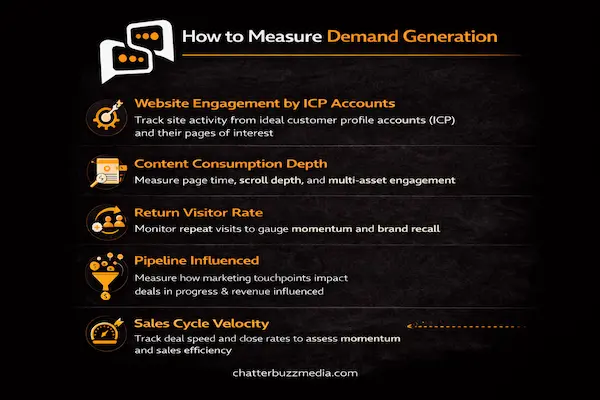
1. Website Engagement by ICP Accounts
Rather than measuring total traffic, focus on who is visiting your site. Track activity from ideal customer profile (ICP) accounts, how often they return, and which pages they engage with.
Increased visits to high-intent pages like solutions, pricing, case studies, and integrations indicate growing awareness and consideration. Rising engagement from target accounts is one of the strongest early indicators that demand is forming, even if no form has been filled out yet.
2. Content Consumption Depth
Demand-driven buyers don’t skim content; they explore it. Measure time on page, scroll depth, multi-asset consumption, and content pathways to understand whether prospects are actively educating themselves.
When buyers move from blogs to guides, webinars, videos, or case studies, it signals deeper interest and self-directed research. Strong content consumption shows your messaging is resonating and supporting real buying decisions.
3. Return Visitor Rate
Repeat visits are a clear signal of growing interest and brand recall. A rising return visitor rate, especially among ICP accounts, indicates your brand is staying top of mind and pulling prospects back into your ecosystem.
This metric reflects momentum. Buyers may not convert immediately, but consistent return visits show intent is developing over time.
4. Pipeline Influenced
Not all demand turns into net-new opportunities right away. Measure how marketing touchpoints influence deals already in the pipeline. Influenced pipeline and influenced revenue reveal how content, ads, and campaigns support deal progression, reinforce confidence, and help sales move opportunities forward.
This shifts measurement from “lead creation” to “revenue contribution.”
5. Sales Cycle Velocity
One of the clearest indicators of effective demand generation is speed. When prospects enter sales conversations more informed, aligned, and confident, deals move faster with fewer objections and less friction.
Shorter sales cycles and higher close rates often signal that demand generation is doing its job upstream.
If sales conversations are warmer, buyers are more educated, and deals are closing faster, demand generation is working. The goal isn’t more leads, it’s stronger intent, better momentum, and a pipeline that converts more efficiently.
The Demand Generation Funnel
The traditional sales funnel, linear and predictable, is no longer how buyers operate. Modern B2B buyers conduct research independently, consult peers, engage with multiple touchpoints, and move through the journey at their own pace.
This shift makes the demand generation funnel a more accurate framework. Rather than focusing solely on lead capture, it emphasizes guiding buyers from awareness to purchase, and beyond, while building trust and intent at every stage.
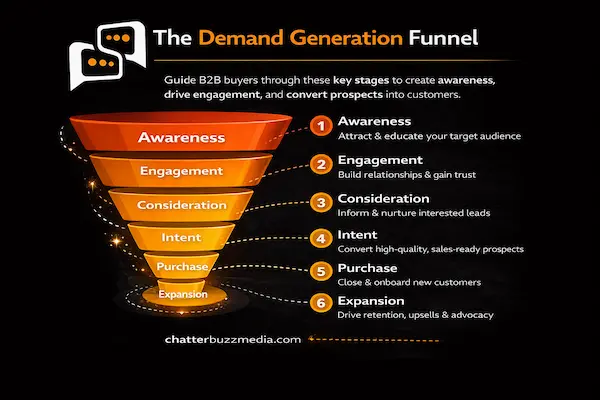
1. Awareness
At the top of the funnel, the goal is to introduce your brand and educate the market. Content here should be high-value, ungated, and designed to capture attention.
Examples include:
- Blog posts and SEO content
- Social media campaigns
- Educational videos
- Thought leadership articles
This stage positions your company as a knowledgeable, credible resource and lays the foundation for long-term engagement.
2. Engagement
Once buyers are aware, the next stage is engagement. This is where meaningful interactions happen, whether it’s subscribing to a newsletter, attending a webinar, or interacting with social posts.
The focus here is on building relationships and trust, not pushing for a sale. Engagement metrics such as repeat visits, content downloads, and email interactions signal buyer interest.
3. Consideration
In the consideration stage, buyers are evaluating solutions.
Your content should answer specific questions and demonstrate value.
Examples include:
- Case studies
- Comparison guides
- Product webinars
- ROI calculators
Marketing begins to nurture buyers with targeted messaging while reinforcing credibility.
4. Intent
Intent signals indicate readiness to make a decision. This is where demand generation and sales alignment become critical.
Content shifts toward enabling evaluation, such as:
- Product demos
- Free trials
- Customized presentations
- Tailored proposals
Marketing supports sales by providing insights, context, and content that accelerate decision-making.
5. Purchase
The purchase stage focuses on removing friction. Marketing ensures buyers have the confidence, information, and reassurance needed to move forward.
Clear messaging, proof points, and enablement assets help finalize the decision.
6. Expansion
Demand generation doesn’t stop after conversion. Expansion focuses on upselling, cross-selling, retention, and advocacy.
Satisfied customers become repeat buyers and powerful brand advocates, fueling future demand and long-term growth.
The Dark Funnel
Not all buyer activity is visible. This is the “dark funnel.”
The dark funnel includes:
- Peer recommendations
- Private Slack communities
- Offline conversations
- Untracked content sharing
This is why brand and trust matter in b2b demand generation. You can’t track everything, but you can influence it.
How to Structure a Demand Generation Team
Building a high-performing demand generation program requires more than tactics. It requires clear ownership, accountability, and alignment across teams.
While the exact structure depends on company size, budget, and growth stage, every effective demand generation team shares one thing in common: clearly defined roles that connect strategy, execution, and measurement.
Without this clarity, campaigns become fragmented, reporting loses meaning, and leads fail to convert. Strong teams operate as a unified system, aligning content, channels, data, and sales enablement around pipeline impact.
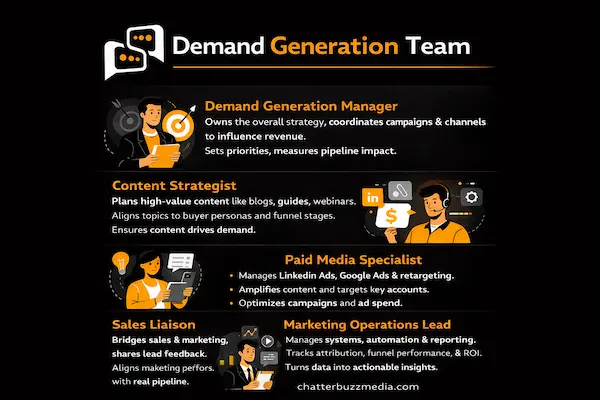
Demand Generation Manager
The demand generation manager owns the overall strategy. This role ensures campaigns, channels, and content work together to influence revenue.
They coordinate efforts across marketing, sales, and analytics teams, set priorities, and measure success based on pipeline contribution, not vanity metrics.
This role keeps the entire program focused on outcomes, not activity.
Content Strategist
Content is the engine of demand generation. The content strategist plans and oversees educational, high-value content aligned to buyer personas and funnel stages.
They ensure blogs, videos, webinars, guides, and whitepapers:
- Address real buyer pain points
- Build trust and credibility
- Support sales conversations
This role ensures content fuels demand, not just traffic.
Paid Media Specialist
Paid media accelerates awareness and engagement. This specialist manages platforms such as LinkedIn Ads, Google Ads, and retargeting campaigns.
Their responsibility is to:
- Amplify high-performing content
- Reach target accounts
- Test messaging and offers
- Optimize spend for efficiency
Paid media must complement organic efforts, not operate in isolation.
Marketing Operations Lead
Marketing operations is the backbone of the team. This role manages systems, automation, reporting, and data integrity.
They track engagement, attribution, funnel performance, and ROI, turning data into actionable insights. Without strong operations, even the best campaigns struggle to scale or prove impact.
Sales Liaison
Demand generation only works when sales and marketing are aligned.
The sales liaison ensures constant feedback between teams.
They:
- Share insights on lead quality
- Surface real buyer objections
- Help activate content in sales conversations
This role ensures marketing efforts influence the real pipeline, not just form fills.
Scaling With the Right Partner
Not every company can staff all these roles internally. That’s where flexibility matters. At Chatter Buzz Media, we often act as an extension of internal teams, filling gaps while building scalable demand generation systems.
In some cases, we serve as all roles rolled into one, delivering strategy, execution, and analytics under one roof. The result is a demand engine built for growth, alignment, and measurable revenue impact.
Get a full demand generation team at the cost of one in-house employee. Start working with Chatter Buzz today!
What Is the Role of Sales in Demand Generation?
In many B2B organizations, sales is treated as the “downstream” recipient of leads. But in a modern demand generation strategy, that mindset is outdated. Sales is not downstream; sales is a true demand partner.
When sales and marketing operate in silos, leads can go cold, content is underutilized, and the full potential of your demand strategy is lost. Aligning sales with demand generation ensures that marketing efforts influence real buying decisions and that pipeline growth is sustainable.
How Sales Contributes to Demand Generation
Sales teams provide critical, first-hand insights that shape the effectiveness of demand programs:
Sharing Real Buyer Objections
Sales interacts with prospects daily. They understand common questions, concerns, and objections better than anyone else. Feeding this information back into marketing allows content to address real buyer pain points, not assumptions.
Providing Feedback on Lead Quality
Not all leads are created equal. Sales can identify which leads are high-intent, which are unqualified, and which require nurturing. This feedback refines targeting, prioritization, and campaign optimization.
Activating Content in Conversations
Demand generation content isn’t just for email and social campaigns. Sales can leverage blogs, case studies, whitepapers, and videos in live conversations, creating personalized engagement that accelerates buying decisions.
Aligning on Target Accounts
When sales and marketing agree on which accounts matter most, demand generation efforts are focused and efficient. This alignment is essential for Account-Based Marketing (ABM) initiatives and ensures messaging resonates with the right buyers.
Why Sales and Marketing Alignment Matters
When sales and marketing collaborate, demand doesn’t just exist; it compounds. Marketing educates and nurtures buyers, while sales activates relationships and provides context. Together, they build trust and momentum, accelerating the buyer journey and shortening sales cycles.
This partnership also enables data-driven insights, allowing both teams to measure what’s actually driving pipeline growth. Over time, this results in predictable revenue, not just high lead volume.
At Chatter Buzz Media, we treat sales as an integral part of every b2b demand generation strategy. By bridging marketing strategy and sales execution, we ensure every campaign delivers measurable impact, higher-quality leads, and sustainable pipeline growth.
Best Places to Learn About Demand Generation
Demand generation is not static. Buyer behavior changes, platforms evolve, and tactics that worked last year can lose effectiveness quickly.
To stay competitive, B2B teams must continuously learn, test, and adapt. The best demand generation leaders invest in trusted, data-backed resources that go beyond surface-level tactics.
Here are the most valuable places to stay sharp.
Gartner and Forrester Research
Gartner and Forrester provide deep, research-driven insights into B2B buying behavior, demand trends, and technology adoption. Their reports help teams understand how buyers evaluate vendors, what influences decisions, and where demand strategies are heading next.
These insights are especially valuable for enterprise and mid-market organizations building long-term demand systems.
HubSpot and Salesforce Blogs
HubSpot and Salesforce publish practical, actionable content on demand generation, inbound marketing, ABM, and sales alignment. Their blogs combine strategy, real-world examples, and platform-specific guidance, making them ideal for marketers who want to connect theory with execution.
They also offer benchmarks and trends that help teams validate performance.
Demand Gen Report
Demand Gen Report is one of the most trusted publications dedicated specifically to B2B demand generation. It covers topics like buyer intent, ABM, content strategy, marketing automation, and pipeline measurement.
Their research and expert commentary help teams understand what’s working across the B2B landscape, not just within one company.
LinkedIn Thought Leaders
LinkedIn is where demand generation practitioners share real-time insights. Following experienced demand gen leaders, CMOs, and revenue marketers gives teams visibility into emerging strategies, experiments, and lessons learned.
This is where you’ll see how theory plays out in real campaigns.
Agency Insights From Proven Teams
Finally, agencies that specialize in B2B demand generation offer practical, experience-backed perspectives. At Chatter Buzz Media, we share insights drawn from hands-on work across tech, SaaS, healthcare, and professional services.
These lessons reflect what actually drives demand, pipeline, and revenue, not just what sounds good in theory. Staying informed isn’t optional. In demand generation, learning is part of the strategy.
How an Agency Can Help With B2B Demand Generation
Building an effective B2B demand generation engine in-house takes time, resources, and specialized expertise. Most internal teams are already stretched thin managing day-to-day marketing execution, campaign launches, content production, reporting, and stakeholder requests, leaving little capacity to design, test, and optimize a true demand strategy.
Demand generation isn’t a single tactic or channel. It’s a connected system that blends strategy, content, paid media, data, and sales alignment. This is where the right agency becomes a growth accelerator rather than just an execution partner.
A specialized B2B demand generation agency helps by doing the following.
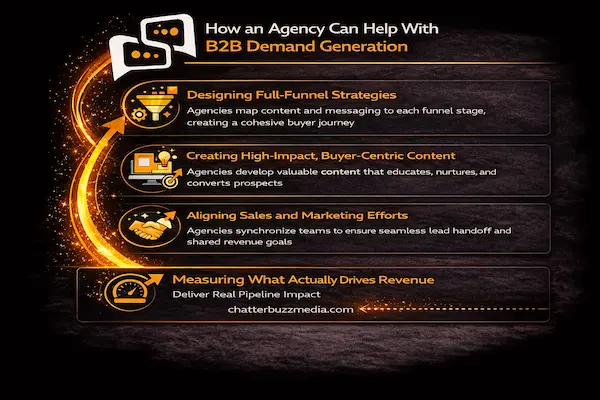
1. Designing Full-Funnel Strategies
Demand generation isn’t about isolated campaigns; it’s about creating a cohesive buyer journey from first touch to closed deal. Agencies design end-to-end strategies that map content, channels, and messaging to each stage of the funnel: awareness, engagement, consideration, intent, and purchase.
This ensures prospects are nurtured with purpose, receiving the right information at the right time instead of being pushed prematurely into sales conversations. The result is a more natural buying experience and higher-quality opportunities entering the pipeline.
2. Creating High-Impact, Buyer-Centric Content
Content is the fuel of demand generation, but only when it’s built for real buyers. Agencies bring experience translating complex products, services, and value propositions into content that resonates with decision-makers.
From thought leadership and case studies to gated assets, landing pages, and sales enablement materials, agencies create content that educates, builds trust, and addresses real buyer objections. Every asset is created with clear intent, supporting awareness, influencing consideration, or accelerating conversion.
Managing Paid Demand Programs with Precision
Paid media is a powerful demand driver when executed strategically. Agencies manage and optimize paid search, LinkedIn, programmatic, and retargeting campaigns with a focus on qualified engagement, not vanity clicks.
Through continuous testing of audiences, creative, messaging, and budget allocation, agencies refine performance over time and ensure paid programs contribute to pipeline growth and revenue impact.
3. Aligning Sales and Marketing Efforts
Demand generation only works when sales and marketing operate as one team. Agencies help align messaging, lead definitions, handoff processes, and feedback loops so marketing delivers opportunities sales actually want, and sales know how to activate demand once it’s created.
This alignment reduces friction, shortens sales cycles, and improves win rates.
4. Measuring What Actually Drives Revenue
Vanity metrics don’t build a pipeline. Agencies focus on what truly matters: engaged accounts, opportunity influence, pipeline velocity, and revenue contribution. Clear reporting gives leadership visibility into what’s working and where to scale.
At Chatter Buzz Media, B2B demand generation isn’t a one-off service; it’s a system. We build integrated strategies designed to create sustained demand, strengthen brand authority, and drive long-term revenue growth, not just short-term lead volume.
Start Generating Demand Seamlessly
B2B demand generation isn’t about quick wins. It’s about building a predictable engine that fuels growth quarter after quarter. You’ve learned how demand differs from leads, how to structure a strategy, how to measure success, and how teams and tools fit together.
Now comes the most important question. Is your current marketing creating real demand, or just activity? If you’re ready to move beyond lead chasing and build a system that sales actually trusts, it’s time to act.
Chatter Buzz Media helps B2B brands design, execute, and scale demand generation programs that drive measurable revenue. Talk to our team to build a b2b demand generation strategy that works today and compounds tomorrow.